









403
Sorry!!
Error! We're sorry, but the page you were looking for doesn't exist.
US-Russia Missile Race Raises Europe's Nuke War Risk
(MENAFN- Asia Times)
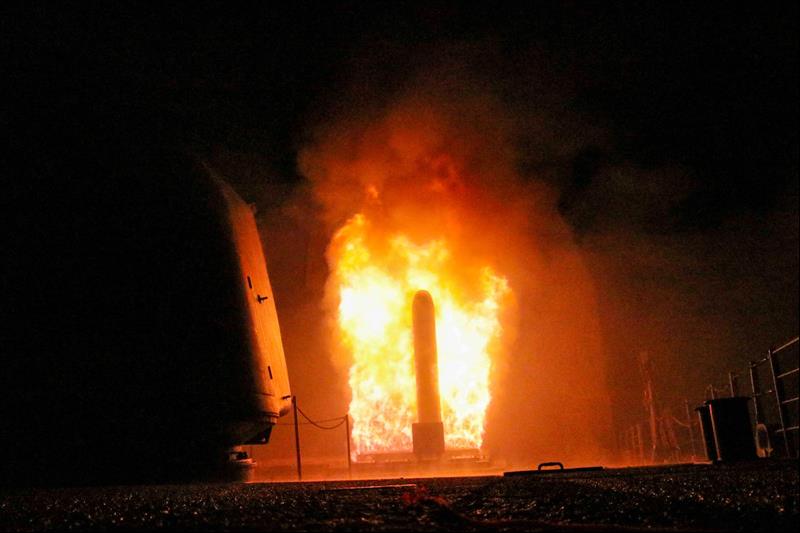
During July's NATO summit, the United States and Germany reached an agreement for the US to start what it referred to as “episodic deployments” of missiles in 2026.
This will include Tomahawk cruise missiles, SM-6 ballistic missiles and a new generation of hypersonic systems currently under development. The main condition of the agreement is that none of these missiles will be equipped with nuclear warheads.
Russia responded by condemning the plan and hinting that it would consider deploying nuclear warheads to locations within range of Western Europe.
And according to the Financial Times , which has obtained a leak of classified Russian military domuments, Russia's navy has been training to target sites across Europe as“far-flung as the west coast of France and Barrow-in-Furness in the UK.”
It's an indication of how military tensions have been rising, even before the February 2022 invasion of Ukraine.
Washington announced its agreement with Germany on July 10. It stated:“Exercising these advanced capabilities will demonstrate the United States' commitment to NATO and its contributions to European integrated deterrence.”
It's a strong signal to both Russia and NATO allies that the alliance is dramatically enhancing its already formidable conventional force capabilities in response to what it perceives as growing Russian militarism.
According to current NATO military doctrine, Russia's defense strategy depends on using massive ballistic and cruise missile strikes to prevent NATO forces from coming within range of its forces. This concept is known as anti-access/area-denial (A2/AD) and dates back to the early days of the Cold War, although the idea has been refined over the years.

Legal Disclaimer:
MENAFN provides the
information “as is” without warranty of any kind. We do not accept
any responsibility or liability for the accuracy, content, images,
videos, licenses, completeness, legality, or reliability of the information
contained in this article. If you have any complaints or copyright
issues related to this article, kindly contact the provider above.
Most popular stories
Market Research







Comments
No comment