



403
Sorry!!
Error! We're sorry, but the page you were looking for doesn't exist.
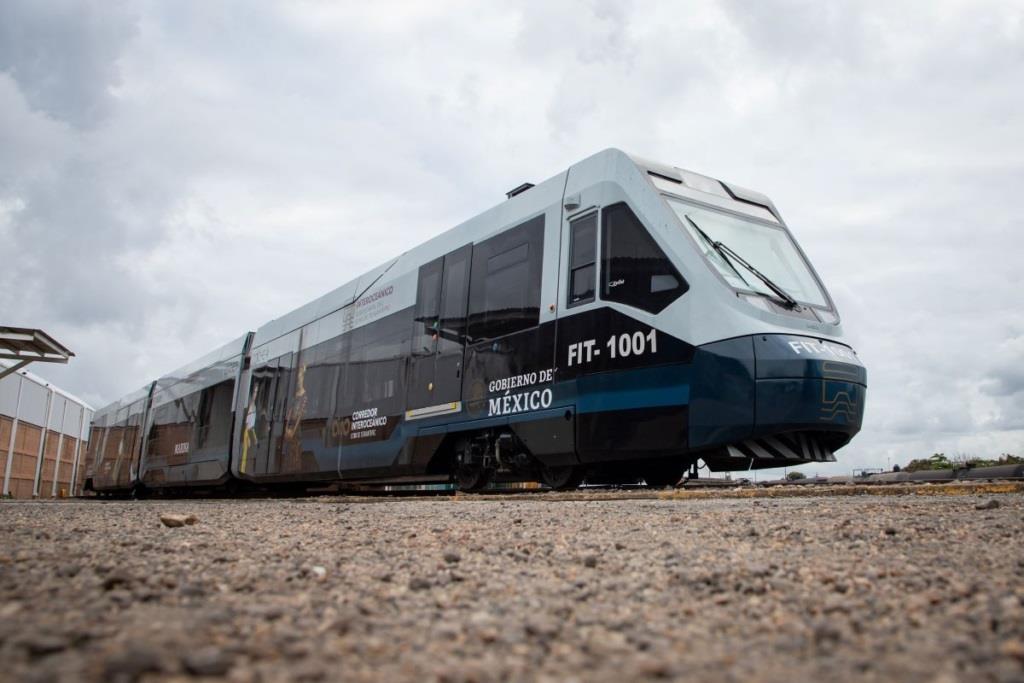
The Interoceanic Corridor Version Of Mexican Train Hopes To Rival The Panama Canal
(MENAFN- Newsroom Panama)
For over a century, the Panama Canal has defined global trade, linking the Pacific and Atlantic Oceans. Now, Mexico's $5 billion Interoceanic Corridor of the Isthmus of Tehuantepec emerges as a transformative alternative. Strategically positioned in the narrowest stretch of land between these oceans, this ambitious project integrates advanced railways, highways, and ports to streamline global logistics. For over a century, the Panama Canal has stood as a monumental conduit for maritime trade, linking the Pacific and Atlantic oceans. Yet, nestled in southern Mexico, another ambitious pathway, the Interoceanic Corridor of the Isthmus of Tehuantepec, seeks to challenge this maritime supremacy. Imagined long before the Panama Canal was completed, this corridor has been a dream laden with both risk and ruin. Backed by a $5 billion investment, this corridor promises to transform how the world moves goods. Embroiled in controversy, environmental debates, and even marred by incidents of violence, this project stands at a critical juncture. Will it redefine global trade networks, or will it falter under the weight of its historical ambitions? The strategic impact of the Interoceanic Corridor on global logistics: Positioned in Mexico's narrowest strip between the Pacific and Atlantic Oceans, it aims to outpace the congested Panama Canal through upgraded rail networks, highways, and ports. At its core, the corridor promises to create numerous jobs and stimulate economic activity in historically overlooked regions. The path of the Mexican Train is below:
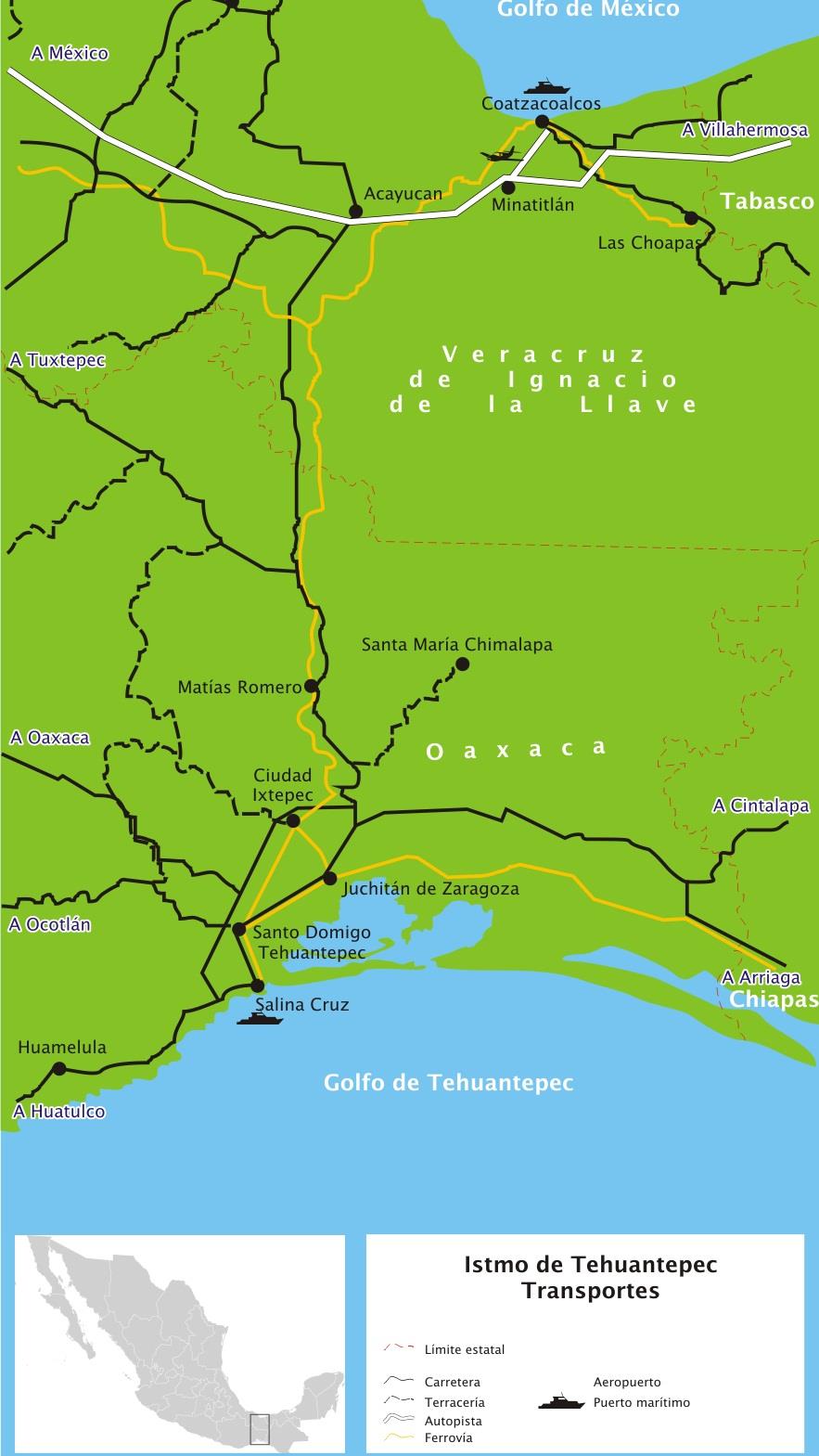
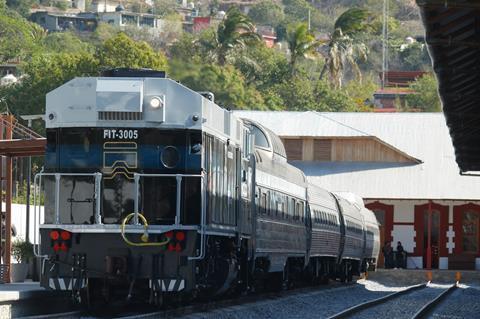
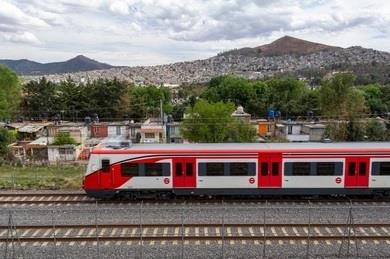
Special Economic Zones along the route offer attractive incentives, such as tax exemptions, making it a magnet for the automotive and technology industries. These zones are set to transform the corridor into a bustling industrial hub, enticing global brands to establish operations and invest in Latin America's future. As we witness the unfolding of this grand venture, it is poised not only to enhance Mexico's position in global logistics but also to impact international trade dynamics significantly. How Mexico's Interoceanic Corridor is taking shape. A significant milestone was reached on December 22, 2023, with the inauguration of 'Line Z' of the Interoceanic Railway Mexico's President Andrés Manuel López Obrador. This 192-mile (309-km) line, stretching from Coatzacoalcos to Salina Cruz, integrates advanced machinery and technology, such as Ballast Regulators, to ensure stability and efficiency. As the corridor develops, it is expected to handle up to a million containers annually, demonstrating its potential to become a vital alternative to the Panama Canal.
The construction alone aims to generate around 15,000 jobs, improving the local economy significantly. Our video offers visual insights into the construction and technological advancements that drive this project, allowing viewers to examine how these elements come together to form a cohesive and functional trade route. The historical journey of the Tehuantepec route: The quest to connect these oceans through Tehuantepec carries a fascinating legacy. The Panama Canal's story is particularly illustrative, beginning with a French endeavor in the late 19th century led by Ferdinand de Lesseps, the architect of the Suez Canal. His ambitious project faltered disastrously due to severe engineering obstacles and the debilitating impact of the tropical environment, leading to significant human and financial losses. Before the French efforts, the Kingdom of Scotland's Darien Scheme aimed to establish a colony and trade route in Panama during the late 1600s. This scheme tragically ended due to harsh conditions and isolation, exacerbating Scotland's economic woes and influencing its political future.
These historical episodes paved the way for the successful American completion of the Panama Canal in 1914, utilizing then-modern engineering and medical advancements to navigate formidable logistical challenges and reshape global maritime trade routes. In parallel, historical figures like Hernán Cortés in the 16th century also recognized the potential of Mexico's Isthmus of Tehuantepec as a strategic link between two major oceans. Although Cortés' initial proposals did not come to fruition, the idea persisted, underscoring the region's geographic and strategic significance. Environmental and social stakes in the Interoceanic Corridor project: Today's project faces its challenges. Environmental sustainability remains crucial as the corridor traverses some of Mexico's most bio diverse regions. The construction and ongoing operation of the corridor pose potential threats to these ecosystems, raising critical questions about conservation and environmental impact. Indigenous communities along the route face potential upheavals to traditional lifestyles. Balancing economic development with cultural heritage and environmental conservation requires careful consideration. As Mexico stands at the threshold of realizing a centuries-old dream, the question remains: What price are we willing to pay for progress?

Legal Disclaimer:
MENAFN provides the
information “as is” without warranty of any kind. We do not accept
any responsibility or liability for the accuracy, content, images,
videos, licenses, completeness, legality, or reliability of the information
contained in this article. If you have any complaints or copyright
issues related to this article, kindly contact the provider above.
Most popular stories
Market Research

More Story








Comments
No comment