








403
Sorry!!
Error! We're sorry, but the page you were looking for doesn't exist.
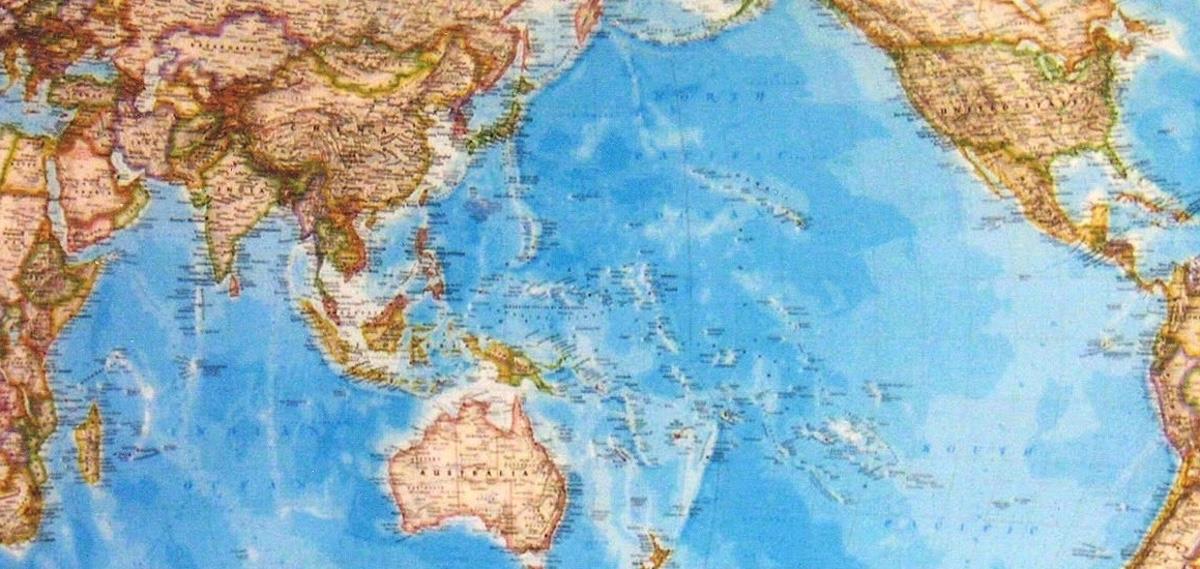
The Indo-Pacific Is Too Vast To Be Termed, Meaningfully, A Region
(MENAFN- Asia Times)
Over the past decade, the idea of an important geopolitical space called the“Indo-Pacific” has become integral to the grand strategizing of countries inside and outside this vast geographical area.
The term is not new, however. Australia – one of a few truly Indo-Pacific countries – used it during the 1970s to paint an optimistic vision of a future in which it was interlinked economically and politically with its neighbors in the Indian and Pacific oceans.
However, since Japan (under the leadership of Shinzo Abe) first used the term in 2007 as a way of conceptualizing relations with India in the context of“a broader Asia,” Indo-Pacific has evolved significantly.
And with the advent of the AUKUS security pact in 2021, it is now common to refer to the Indo-Pacific as either a region or super-region. But this oversimplifies what is, in fact, a far more complex geopolitical reality.
What is a region?A region is best thought of as a geographically enclosed complex. According to political scientist David Lake, regions are“so interrelated in terms of their security that actions by any one member, and significant security-related developments inside any member, have a major impact on others.”
The problem with thinking of the Indo-Pacific as a region or super-region is that at its widest definition – stretching from the east coast of Africa to the west coast of South America – it comprises more than half the geographic space of the surface of the Earth.
Simply put, the Indo-Pacific is too large to meaningfully conceive of as a region or even a super-region.

Legal Disclaimer:
MENAFN provides the
information “as is” without warranty of any kind. We do not accept
any responsibility or liability for the accuracy, content, images,
videos, licenses, completeness, legality, or reliability of the information
contained in this article. If you have any complaints or copyright
issues related to this article, kindly contact the provider above.
Most popular stories
Market Research

More Story







Comments
No comment