




403
Sorry!!
Error! We're sorry, but the page you were looking for doesn't exist.
New Global Study: Long After War, Nearly 4 In 10 People Injured By Landmines And Explosives Die
Author: Stacey Pizzino
(MENAFN- The Conversation) When a war ends and peace agreements are signed, most people assume the danger is over. But for many communities around the world the danger remains in the ground, waiting.

Landmines and other explosives left behind after a conflict can stay active for decades – buried in the paths to school, in the fields that feed families and in the areas where children play.
In some countries, such as Laos and the Solomon Islands, bombs from conflicts decades ago still injure and kill.
This quiet danger isn't a distant problem. Today, at least 57 countries are contaminated by landmines and other explosive ordnance, including mortars and grenades.
At the same time, some governments are stepping back from the Landmine Ban Treaty, the first comprehensive treaty aimed at eliminating landmines in conflicts. Decisions made in parliaments today can translate into hazards underfoot for years to come.
Our new research is aimed at understanding the ongoing risk landmines pose. The study is the world's largest analysis of landmine and explosive ordnance casualties. And the data allows us to answer critical questions: who dies from these weapons, and why?
What do the numbers tell us?In our study, we analysed 105,913 casualties across 17 conflict-affected countries, using operational data. These are the real world operational records routinely collected by national mine action authorities, the UN and other humanitarian organisations.
These records let us see what communities are facing without adding any burden to these often stretched services.
Across all settings, the case fatality rate was 38.8%. Put simply: for every ten people injured by landmines or other explosive ordnance around the world, nearly four die. This is extraordinarily high.
For comparison, the fatality rate for blast injuries among military personnel or civilians treated in well-resourced trauma centres is around 2%.
The gap highlights the brutal disparity between those who are injured in environments with functioning surgical and trauma care and those who are not.
Not all explosive threats are equal, either.
Improvised explosive devices (IEDs) were the most lethal weapon type in our analysis.
IEDs are increasingly used in many modern conflicts and are often remotely detonated to maximise casualties. Their explosive force and unpredictability cause devastating injuries that many local health systems are simply not equipped to manage.
Who is most affected?Although most casualties from landmines and explosive ordnance are men, women had significantly higher odds of dying from their injuries. This likely reflects unequal access to health care, delayed treatment, and social barriers that limit mobility and decision making in many conflict-affected settings.
Children's risks are different – they are both vulnerable and resilient.
Children are particularly at risk of detonating landmines when playing, when caught up in active conflict, or simply as bystanders.
The reason is often tragic. Children tend to play together in groups, meaning when one child encounters an explosive remnant, several are injured at once.
Yet, overall, children in our data were more likely to survive their injuries than adults, perhaps because they sustain different injury patterns or receive care sooner when adults rush to assist.
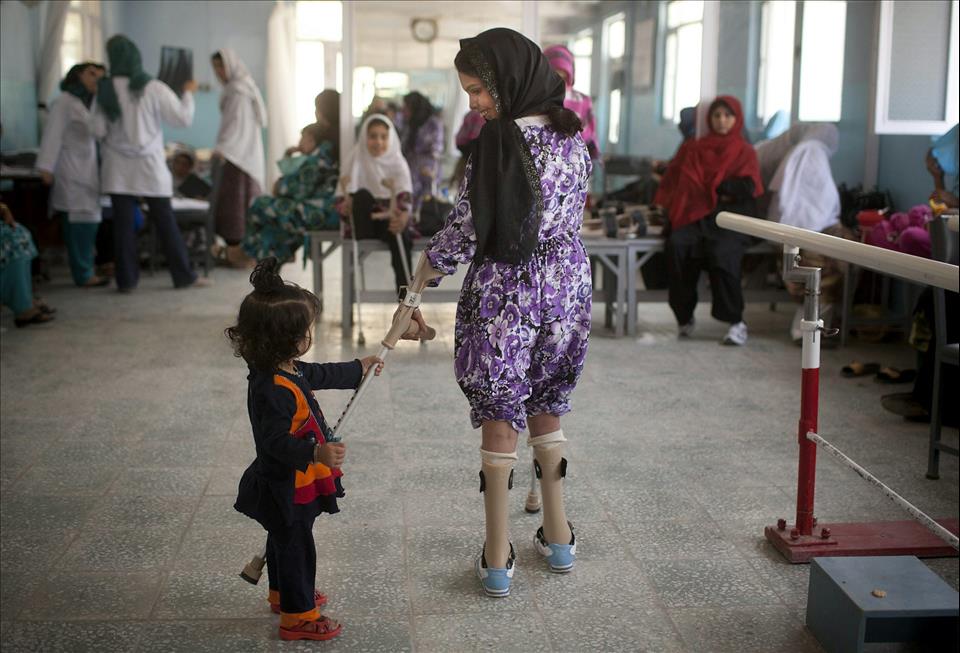
But survival is only the beginning. Children may need multiple surgeries, new prostheses as they grow up, long-term rehabilitation and lifelong disability support. These are needs that many health systems struggle to meet.
Age also shapes outcomes. The highest odds of death were observed in adults aged 45–64. Older people may have pre-existing health issues and face greater barriers to reaching medical care, yet their needs can often be overlooked.
The human cost of explosivesThe impact of landmines and explosive ordnance extends far beyond immediate injuries. These injuries disrupt people's daily lives in ways that can entrench communities in poverty.
For example, farmers cannot safety cultivate their land because of the threat of landmines. Women gathering water or food can trigger explosives, too.
When injuries occur, families lose breadwinners and care-giving roles change, pushing households deeper into poverty.
How can we strengthen care for survivors?There are ways to mitigate the impacts of landmines and explosive ordnance, though. This is a preventable public health crisis.
Our findings highlight the urgent need to strengthen emergency, critical and surgical care in conflict-affected areas to reduce preventable deaths.
Reliable pre-hospital care, transport and basic surgical care saves lives. So does long-term rehabilitation and disability support, especially for children who will live with the consequences of these explosive weapons and injuries for decades.
As old conflicts continue and new ones emerge, explosive ordnance keep contaminating the places where people live, play, work and travel.
Understanding who dies, and why, is essential to preventing future deaths and ensuring that peace, when it comes, offers real safety.
Institution:The University of Queensland

Legal Disclaimer:
MENAFN provides the
information “as is” without warranty of any kind. We do not accept
any responsibility or liability for the accuracy, content, images,
videos, licenses, completeness, legality, or reliability of the information
contained in this article. If you have any complaints or copyright
issues related to this article, kindly contact the provider above.
Most popular stories
Market Research

More Story





Comments
No comment