







403
Sorry!!
Error! We're sorry, but the page you were looking for doesn't exist.
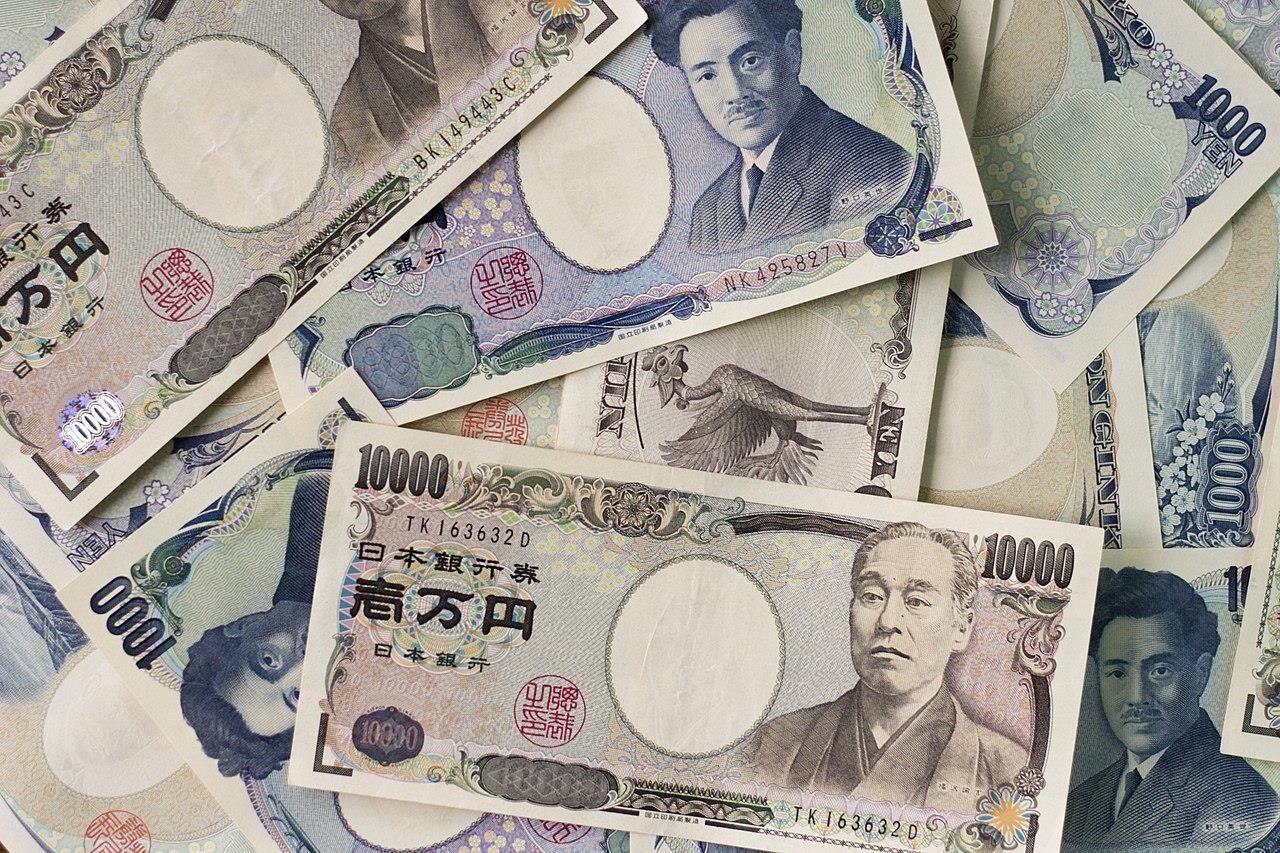
No Limit To How Low The Yen Will Go
(MENAFN- Asia Times) TOKYO – Who needs Las Vegas or Macau when betting on how low the yen can go is the best game anywhere? Latest stories

The smart money has AI in its portfolio

China's money can't pull PNG from Australia

AUKUS: is there an optimal pathway?

Sign up for one of our free newsletters Already have an account?Sign in Sign up here to comment on Asia Times stories OR
It's not where the
Bank of Japan
wanted to find itself this week as it mulled interest rate policy. That Governor Kazuo Ueda's team did nothing on Friday (April 26) was hardly surprising.
What was unexpected, though, is Tokyo's lack of urgency to halt yen declines that risk upending economic dynamics from Beijing to Washington.
In neighboring China, the yen's 10.6% drop so far this year has Xi Jinping's team mulling its own options.
Despite 5.3% growth in the first quarter year on year, retail sales remain soft,“pointing to weaker demand,” says Carlos Casanova, economist at Union Bancaire Privée.“This suggests that domestic consumption lost momentum in March, in line with broad-based consumer-price index declines.”
China's industrial output also continues to disappoint.“In our opinion,” Casanova notes,“this could suggest that manufacturing is not benefiting from the cyclical recovery in global trade as much as previously thought, due to overcapacity constraints in key sectors.”
These overcapacity trends could exacerbate deflation. No policy shift would stabilize consumer prices faster than a weaker yuan. Might Xi and People's Bank of China Governor
Pan Gongsheng
pivot toward a weaker yuan?
Xi's inner circle might view the yen's unabated drop as political cover to engineer a more advantageous exchange rate that would boost exports and tame downward price pressures.
There would be just as many cons as pros, though. A weaker yuan might increase the risk of defaults as property developers struggle to repay offshore debt. It might hurt efforts to increase trust in the yuan. And it could poke the US political establishment as the November 5 election approaches.
This last risk is a huge one for Japan, too. Despite Japanese Prime Minister Fumio Kishida's close ties with US President Joe Biden, an even weaker yen is sure to anger lawmakers across the spectrum. Biden's Democrats are likely to find common cause with Republicans loyal to Donald Trump over falling Asian exchange rates.
In recent days, Biden telegraphed steps to slap new tariffs on Chinese steel and aluminum imports. Trump, of course, is previewing 60% taxes on all mainland goods. He's also talking about a 100% tax on certain auto imports, a
gambit
that Japanese CEOs fear could easily come for their vehicles, too.
As these risks percolate, Japanese officials are trying to pull off a difficult balancing act. Though Finance Minister Shunichi Suzuki claims to be“watching market moves with a high sense of urgency,” his team is also watching the boost Japan is enjoying from a weak yen.
The smart money has AI in its portfolio
China's money can't pull PNG from Australia
AUKUS: is there an optimal pathway?
Japan's exports rose 7.3% year-on-year in March. And the nation is experiencing an unprecedented tourism boom driven by foreign travelers riding the weak yen.
Yet officials in Tokyo also know that the optics of a falling exchange rate risk backfiring on the economy. The disappearing yen is leading the evening news broadcasts. For households, it's smacking more of Japanese weakness in world circles than economic recovery.
Global investors are grappling with a tantalizing paradox. If“Japan is back,” as a Nikkei 225 Stock Index at 34-year highs suggests, why is the yen in freefall plumbing a 34-year low? And why does the BOJ lack the courage to normalize rates that have been near zero since 1999?
On Friday, the BOJ doubled down on its do-nothing strategy. Ueda & Co held its benchmark policy rate at 0%-0.1%.
Traders, in other words, have little reason to fear the BOJ, at least for now. And the yen falling to 160 to the dollar seems a safe bet.
Yet the yen is also at 34-year lows, global funds have every reason to worry the yen has gone too far.
For one thing, it's fueling inflation that's undermining consumer and business confidence. For another, it's an intensifying headwind for companies that depend on the domestic market for profits. Despite the tourism surge, retailers and transportation companies are struggling.
All this is upending investment strategies. As 2024 began, punters figured the biggest Japanese
wage gains
among union workers in more than 30 years would generate a virtuous cycle of spending and corporate profits.
They believed, too, that the Federal Reserve in Washington would be cutting rates at least five times this year, boosting the yen.
These expectations are fading with each new batch of monthly data. JPMorgan analyst Rie Nishihara speaks for many in warning that gains in inflation-adjusted wages effectively become a wash if the yen falls to 157 per dollar.
Small and mid-sized companies, which provide the vast majority of jobs, are already plagued with surging imported materials costs. The same goes for big companies.
“The situation [with the yen] has reached a level that needs to be corrected,” says Takeshi Niinami, head of the Japan Association of Corporate Executives.
Strategist Shusuke Yamada at BofA Securities Japan notes that the eerie silence from
Tokyo policymakers
isn't going unnoticed in trading pits around the globe.
“For the BOJ to support the yen, it should acknowledge that policy has been too accommodative, that the next hike is as imminent as in June, and that the terminal rate would be higher than priced by the market,” Yamada says.
Many, though, doubt the Ministry of Finance is on the verge of acting.
“The FX tail will not be allowed to wag the dog,” said Vishnu Varathan, strategist at Mizuho Bank. The BOJ also is likely to cling to its policy of“dovish restraint” when it comes to tweaking short-term rates, he said.
Yet the risk is that“if the BOJ refrains from intervening, the yen may face further downward pressure,” says Eman AlAyyaf, CEO of EA Trading.
At the same time, she adds, the BOJ also wants to avoid a sharp upward yen move because of“sustained pressure from high US interest rates.”
Arguably, Ueda's BOJ brought today's dilemma on itself by
slow-walking steps
to exit quantitative easing (QE). Since April 2023, when Ueda took charge, global markets have been primed for a pivot away from QE, or zero rates.
Month after month, Ueda's team demurred. Now, as China's economy slows, the BOJ's window to normalize policy is narrowing. Japan's inflation trends are showing signs of moderation, too.
Tokyo's core inflation rate, which excludes fresh food and energy, slowed to 1.8% year on year in April from 2.9% in March. It was the smallest increase since September 2022.
“The timing of the next BOJ interest rate hike may get a bit complicated as the latest
Tokyo inflation
data for April slowed down from the previous month and came in below expectations,” says Kelvin Wong, analyst at OANDA.
News on Thursday that the US might be slowing more sharply than feared hardly helps. US gross domestic product grew just 1.6% year on year in the first quarter, well below all economists' projections.
“This report was the worst of both worlds: economic growth is slowing and inflationary pressures are persisting,” says Chris Zaccarelli, chief investment officer at Independent Advisor Alliance.
For now, most economists are giving the US the benefit of the doubt. The downshift may have masked otherwise solid
economic momentum .
Sign up for one of our free newsletters
- The Daily ReportStart your day right with Asia Times' top stories AT Weekly ReportA weekly roundup of Asia Times' most-read stories
“The economy is at full employment, with unemployment steadfastly below 4%, and growth remains close to the economy's potential, with real GDP tracking close to 2%,” says Dante DeAntonio, economist at Moody's Analytics.
DeAntonio adds that“growth continues to surprise, and consumers are growing their spending. Businesses are doing their part as well. Inflation remains the sole blemish. Though growth will struggle to reach potential for a season, recession risks have declined as the economy remains resilient.”
The upshot is that Asian central banks are now more confused than ever about the Fed's policy outlook. The BOJ is Exhibit A, particularly as domestic economic conditions also argue against the need for tighter credit conditions.
“Consumer sentiment is generally weak as individuals cope with higher costs and do not expect wages to keep up with inflation,” says Takeshi Yamaguchi, chief Japan economist at Morgan Stanley MUFG.
Here,
Ueda may be worried
the BOJ will be blamed for pushing Japan into a recession. That's what happened in 2006, the last time the BOJ tried - and failed - to normalize rates.
Then-Governor Toshihiko Fukui ended QE and his team at the time managed to hike official rates twice. The recession that followed enraged the political establishment. By 2008, Fukui's successor was resurrecting QE and pushing rates back to zero.
In 2013, Ueda's predecessor Haruhiko Kuroda supersized the BOJ's balance sheet, growing it to a size bigger than Japan's US$4.7 trillion GDP.
Since then, as the BOJ hoarded bonds and stocks, it's become harder to discern where the BOJ's portfolio ends and the private sector begins. This makes withdrawing liquidity far more precarious than in 2006.
The yen's spectacular drop might force Ueda's hand, though. The positive effects of a weak yen are quickly being drowned out by the negative consequences of a currency in relative free fall. Not least of which is trolling policymakers in Beijing and Washington with enough on their plates already.
Follow William Pesek on X at @WilliamPesek
Thank you for registering!
An account was already registered with this email. Please check your inbox for an authentication link.

Legal Disclaimer:
MENAFN provides the
information “as is” without warranty of any kind. We do not accept
any responsibility or liability for the accuracy, content, images,
videos, licenses, completeness, legality, or reliability of the information
contained in this article. If you have any complaints or copyright
issues related to this article, kindly contact the provider above.
Most popular stories
Market Research

More Story








Comments
No comment