




403
Sorry!!
Error! We're sorry, but the page you were looking for doesn't exist.
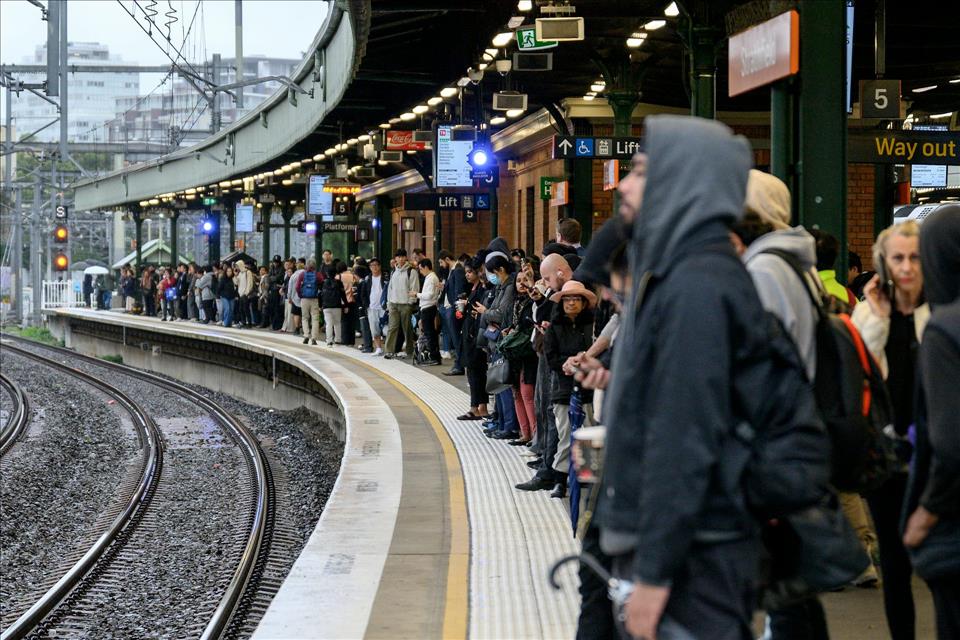
Victoria Has Made Public Transport Free NSW Hasn't. Has There Been Any Difference In Uptake?
Author: Milad Haghani
(MENAFN- The Conversation) The recent military conflict in the Middle East triggered a sharp increase in petrol prices throughout March, with the federal government's subsequent excise cut providing only partial relief.

To address the increased cost of travel, Victoria and Tasmania introduced free public transport.
Queensland already had a 50-cent flat fare in place.
Other states and territories have not implemented similar measures.
But the moves by Victoria and Tasmania created a natural comparison: there are similar fuel price pressures but different public transport pricing across Australian states.
We examined how car use and travel patterns have changed since early April across three Australian states. Here's what we found.
An unprecedented situationThe effectiveness of free public transport lies not only in increasing patronage, but in how much of that increase comes from reduced car use.
Evidence from Australia and other countries shows more people use public transport when it's free. But much of this increase does not come from drivers switching modes. It often reflects more frequent use by existing public transport users, or shifts from walking and cycling.
What had not been tested is how people respond under a sudden fuel price increase. This created a rare situation where past evidence offered limited guidance.
We therefore examined this empirically. We surveyed nearly 2,000 Australians across Victoria, New South Wales and Queensland about a week after free public transport was introduced in Victoria. This allowed us to observe how travellers responded to rising fuel prices under different public transport pricing regimes.
How rising fuel prices changed travelOur analysis shows car use has declined: across the three states, about 42% of respondents reported reducing their driving, with broadly similar patterns across states.
The shift to public transport, however, has not been uniform.
In Queensland, where fares were already heavily discounted, 21% reported shifting some commuting trips from car to public transport. This compares to about 24% in NSW and 26% in Victoria.
Free public transport in Victoria appears to have had some effect in shifting demand away from cars, but the difference compared to NSW – where fares remained unchanged – is modest rather than dramatic.
Non-work trips have been less responsive. On average, about 17% reported shifting some non-work trips to public transport, again with Victoria slightly higher at around 19%.
Other adjustments have also emerged. Around 16% reported working from home more often, while about 12% are now considering purchasing an electric vehicle.
The barriers beyond fare priceGiven the high price of fuel and free public transport in Victoria, what has stopped people from embracing public transport more?
Access could be the key.
Across the sample, only about 49% reported they had good access to public transport, while the rest reported limited or none.
More than 30% reported public transport is not accessible to them within a reasonable walking distance (10-15 minutes). About 25% said it requires at least a short drive.
About 62% reported either they do not have a park-and-ride option (car parks at train stations) at the nearest station or stop, or that the parking is always full.
Another issue is the increase in travel time when using public transport, with about 70% saying their trip will be slower with public transport.
Access and travel time are only part of the story though. For many car users, familiarity with the public transport network also matters.
Planned disruptions – such as service replacements or altered routes – can make journeys more complex and less predictable.
For regular users, these may be manageable. But for those considering a mode shift, even small complications can act as a deterrent and negate the free fare policy. In that sense, disruptions are not conducive to encouraging new users at a time when incentives are in place.
Effective or just popular policy?The patterns we observe suggest travellers are sensitive to cost.
Around four in ten people reported reducing their driving during the fuel price spike, indicating clear sensitivity to rising costs.
However, the relatively small difference between Victoria, where public transport was free, and NSW – where fares remained unchanged – suggests price is not the main constraint on mode shift. Access, travel time, service reliability and the ability to make specific trips appear to matter more.
This limits how effective fare-free policies can be in reducing car dependence. But effectiveness is only one dimension of policy. There is also public support.
Our results show free public transport is widely popular, with around 78% of respondents agreeing to varying degrees that it should be implemented during periods of high fuel prices – even if they are unlikely to use it themselves.
There is also recognition of shared responsibility: more than 70% agree reducing car use during such periods is a social responsibility, particularly to help ease demand for fuel.
But the broader reduction in car use appears to have been driven by fuel prices themselves, not fare policy. Victoria's free public transport may have helped at the margins, but it did not produce a markedly different outcome from states that did not intervene.
This suggests that while fare relief is popular and can expand options, it is not, on its own, a decisive lever for reducing car dependence.
Institution:The University of Melbourne

Legal Disclaimer:
MENAFN provides the
information “as is” without warranty of any kind. We do not accept
any responsibility or liability for the accuracy, content, images,
videos, licenses, completeness, legality, or reliability of the information
contained in this article. If you have any complaints or copyright
issues related to this article, kindly contact the provider above.
Most popular stories
Market Research

More Story




Comments
No comment