



403
Sorry!!
Error! We're sorry, but the page you were looking for doesn't exist.
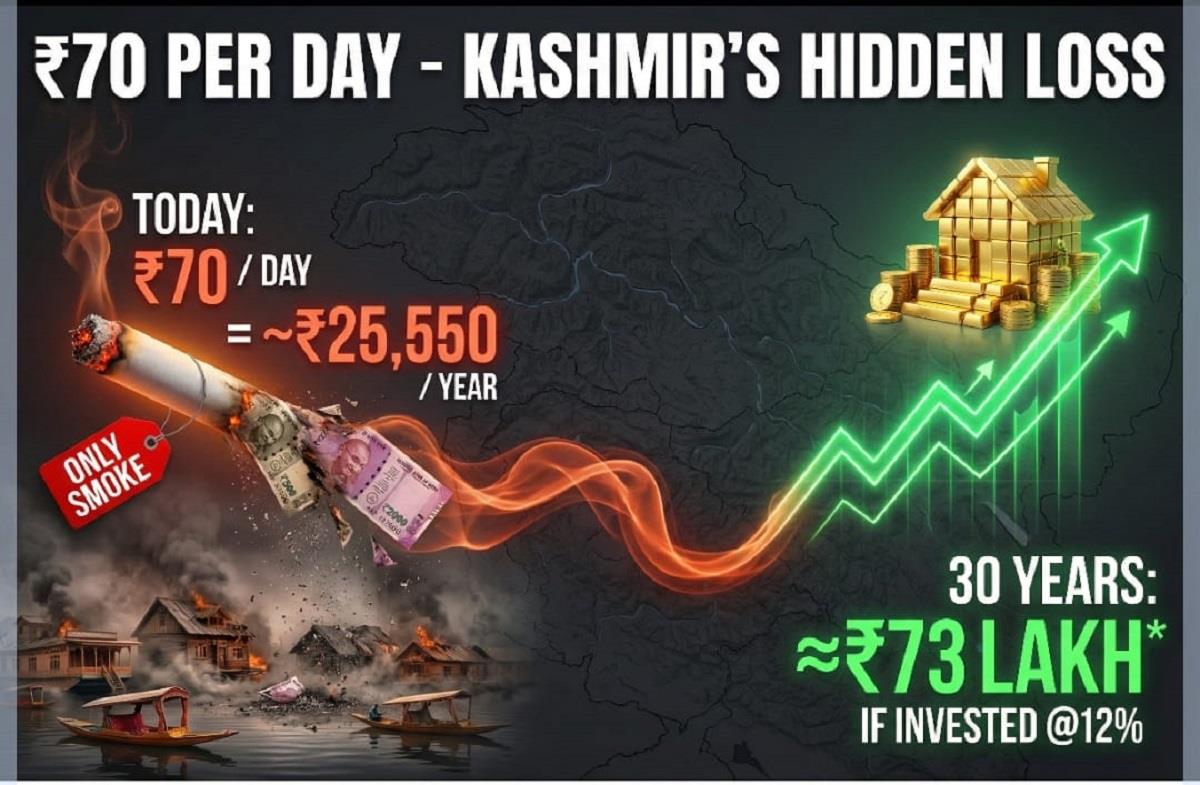
Savings Up In Smoke: How Cigarettes Burn Through Kashmiri Homes
(MENAFN- Kashmir Observer) Every morning in Kashmir, cigarettes are lit on homes, shopfronts, and street corners. The habit offers a brief sense of relief while reducing health and household income.
ADVERTISEMENT
More than one in five adults in Jammu and Kashmir uses tobacco. Small daily spending on cigarettes adds up to a significant financial loss, while the same amount directed toward saving or investing can strengthen a family's financial future.
ADVERTISEMENT
Tobacco use in the region ranks among the highest in India.
Between 20 and 24 percent of adults smoke regularly. Men account for most users. Districts such as Kupwara show consistently high smoking rates.
Research from conflict-affected areas shows children starting at younger ages. Social stress, unemployment, and political tensions influence young people toward early tobacco use.
Tobacco habits shape public health and influence the productivity and longevity of youth.
The financial toll of cigarettes compounds silently but dramatically.
A pack may feel like a small, routine purchase, but over weeks, months, and years, the sums grow fast.
National studies put India's economic loss from tobacco at more than one percent of GDP each year, factoring in medical costs and lost productivity.
For every ₹100 the government earns from tobacco taxes, society pays roughly ₹816 in economic and health costs.
ADVERTISEMENTAt the household level, spending ₹100 to ₹300 per day adds up to ₹3,000 to ₹9,000 a month, or ₹36,000 to ₹1 lakh a year.
This is money that could fund education, home ownership, or a solid emergency fund.
Hospital bills, medicines, and missed workdays push the real cost far higher, turning a habit into a slow bleed on family finances.
Health consequences reinforce the economic drain in a place already grappling with myriad illnesses.
Tobacco is a major cause of heart disease, stroke, chronic lung conditions, tuberculosis, and cancers.
Lung cancer rates are climbing in Kashmir, and smoking links strongly to these cases.
Combustible tobacco causes nearly 900,000 deaths in India each year and leads to countless serious illnesses, costing trillions of rupees.
These health and financial pressures touch individual households as well.
In a typical Kashmiri home, families use income, take on debt, or sell land and gold to cover medical care, and children's education often suffers as a result.
Over time, the financial and emotional effects ripple through families, leaving lasting scars that no insurance plan can erase.
Household savings have become the backbone of India's economic growth, funding much of the nation's investment and driving wealth accumulation.
Indian families are moving beyond informal savings and physical assets, turning to mutual funds and SIPs to fight inflation and grow wealth over decades.
With secure jobs in short supply in Kashmir, even small and regular savings can protect families from illness, job disruption, and political uncertainty.
SIPs offer a practical route for smokers to convert daily indulgences into long-term wealth.
A fixed monthly investment, even as small as ₹500, can benefit from compounding and rupee-cost averaging, growing steadily into meaningful portfolios over years.
Spending ₹170 to ₹300 a day on cigarettes, when redirected into a SIP, can build a secure asset base instead of leading to smoke, hospital bills, and lost earning potential.
Reducing tobacco use in Kashmir carries an economic upside.

Legal Disclaimer:
MENAFN provides the
information “as is” without warranty of any kind. We do not accept
any responsibility or liability for the accuracy, content, images,
videos, licenses, completeness, legality, or reliability of the information
contained in this article. If you have any complaints or copyright
issues related to this article, kindly contact the provider above.
Most popular stories
Market Research

More Story





Comments
No comment