




403
Sorry!!
Error! We're sorry, but the page you were looking for doesn't exist.
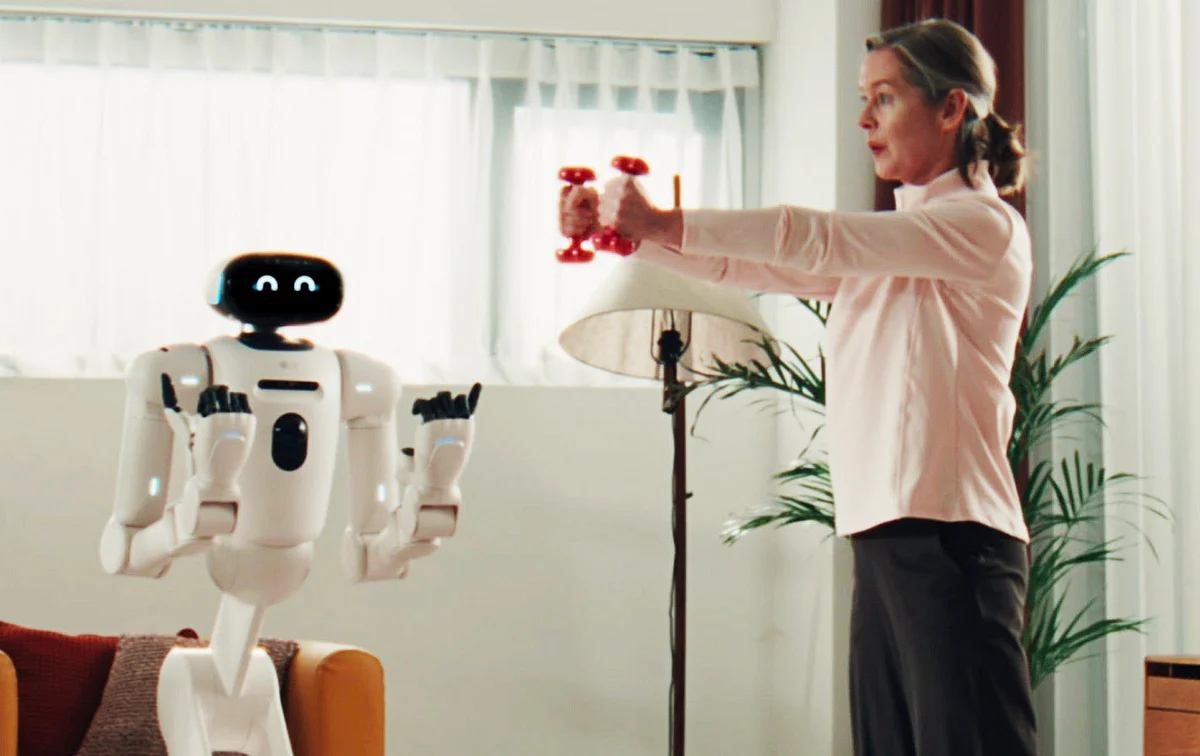
Towards The AI-Driven Zero-Labour Home: How Robotics Will Make Housework Effortless
(MENAFN- Khaleej Times)
For generations, the notion of a home where chores are simply absent has been a staple of science fiction. From animated android housekeepers to futuristic domestic droids, the cultural allure of robots managing our daily grind has always been strong.
Today, that fantasy is rapidly transitioning into an imminent reality, as we careen toward the wide-spread adoption of the“zero-labour home,” a revolutionary concept where everyday chores are not only optimized, but comprehensively automated.
Recommended For You Iran will treat any attack as 'all-out war against us,' says senior Iran official Fashion Friday to free prediction contest: How Dubai Racing Carnival draws new crowds Emirates International School Jumeirah celebrates Winter WonderlandDriven by a powerful convergence – advanced robotics, sophisticated smart appliances, and the burgeoning intelligence of Physical AI – together they are unlocking unprecedented time savings, and ushering in a new era of quality of life for households, particularly for forward-thinking markets like those in the Gulf, a region known for its embrace of innovation.
And the excitement is palpable, particularly on the back of recent announcements at CES 2026, where a new generation of humanoid robots capable of complex tasks, from washing dishes to handling laundry, were showcased, representing a technological jump that promises to fundamentally reshape our domestic lives.
Beyond the familiar convenience of a smart thermostat or automated lighting, domestic automation has been steadily evolving. Early smart home technologies streamlined our environments, allowing us to control climate, entertainment, and even basic security with an app-tap or a voice command. What followed was the advent of robot vacuums and mops, offering a deeper, tangible glimpse into the future, demonstrating how autonomous machines could significantly lessen the repetitive effort of household cleaning. Smart devices, yes, but ones that, while foundational, represented quite a narrow application of robotics.
CES 2026, however, marked a pivotal moment. The latest humanoid and multi-task robots unveiled don't simply react to commands passively; they are physically interacting with their environment, showcasing a qualitative leap in capability. It's no longer purely about smart electronics; it's about robots that can manipulate objects, navigate complex spaces, and learn from their surroundings.
These newest advancements in Physical AI, encompassing advanced perception, dexterous manipulation, and robust navigation, validate that this leap is far from hype, with engineers solving core adaptability challenges, making these robots reliable and capable partners in a home setting.
But what does it mean in terms of real-world time and labour savings?
Data strongly supports the transformative potential of robotic evolution, with studies examining the automation of housework revealing that a substantial portion – up to 50–60 per cent – of domestic work time could be automated. That then translates into significant reductions in unpaid labour hours, potentially freeing up around 3 to 3.5 hours per day, time that can be redirected towards family, personal development, leisure, or even professional pursuits. This is no distant dream; it's a quantifiable future.
The market trends reflect similar optimism, too, where the domestic robot market is projected for substantial growth, signaling robust commercial and consumer uptake, particularly within the Middle East, a region actively investing in advanced smart home solutions.
Early automation data from existing smart devices, like robotic vacuums and prototype robotic folding devices, already hint at significant gains for households here, suggesting that integrating advanced robot assistance could free 4 to 6 hours per week from routine tasks like cleaning and laundry. These projections and early adoption metrics collectively underscore that domestic robotics will indeed liberate meaningful chunks of our everyday time.
The true magic behind the zero-labour home, though, lies in the convergence of that trio of distinct yet complementary technologies. Not just better robots or smarter appliances; rather how they work together. And Physical AI is arguably the most crucial to that innovation and advancement.
Once little more than“smart sensors”, robots can now, with physical autonomy and fine motor manipulation capabilities, perform tasks that smart appliances alone cannot. Advances in AI learning, reinforcement learning, and continual interaction research additionally mean robots are constantly adapting and becoming more reliable in the varied, unpredictable environment of a home.
When these intelligent humanoid machines – such as the CES 2026-unveiled LG CLOiD – integrate seamlessly with existing smart home systems, be it thermostats, refrigerators, or dishwashers, the entire home ecosystem begins to behave autonomously. They anticipate needs, learn patterns, and act proactively, often without direct human initiation.
Deep integration, then, will deliver the real embodiment of the zero-labour home, where smart systems coordinate and execute (tasks), reducing the mental load of managing a household, as well as the physical effort. Consequently, when AI systems can predict chore patterns, manage resources dynamically, and even proactively order supplies, time spent merely thinking about chores, let alone doing them, is inevitably reduced.
The impact of such a shift extends well beyond mere convenience, of course. On a broader societal level, the zero-labour home promises to profoundly influence daily life. With the automation of mundane household chores, for example, Middle East residents can significantly improve their work-life balance, redirecting reclaimed time towards paid work, lifelong learning, or cherished leisure activities.
This reallocation of time has the power to foster greater economic participation, personal fulfilment, and stronger community bonds.
The zero-labour home isn't distant futurism; it is emerging now, driven by relentless innovation and a clear societal need, where the global smart home market is unsurprisingly tipped to grow from $89.9 billion in 2025 to $116.4 billion in 2029. The benefits are more than financially tangible, though: reclaimed time, improved quality of life, and enhanced personal autonomy. We are witnessing a palpable shift where homes aren't just becoming smarter – they're becoming active, intelligent participants in daily life.
The convergence of AI, robotics, smart appliances, and Physical AI is unequivocably redefining household automation, saving time and effort for families. And with real-world innovation examples like advanced and intelligent LG CLOiD lighting the way, the futuristic milestone of effortless living is within reach.
The zero-labour home – and the meaningful time it unlocks – has already evolved, from science fiction to a practical, human-centered future humanoid home; and it's coming to the region sooner than you think.
The writer is Head of Home Solutions, LG Gulf Electronics.

Legal Disclaimer:
MENAFN provides the
information “as is” without warranty of any kind. We do not accept
any responsibility or liability for the accuracy, content, images,
videos, licenses, completeness, legality, or reliability of the information
contained in this article. If you have any complaints or copyright
issues related to this article, kindly contact the provider above.
Most popular stories
Market Research

More Story







Comments
No comment