





403
Sorry!!
Error! We're sorry, but the page you were looking for doesn't exist.
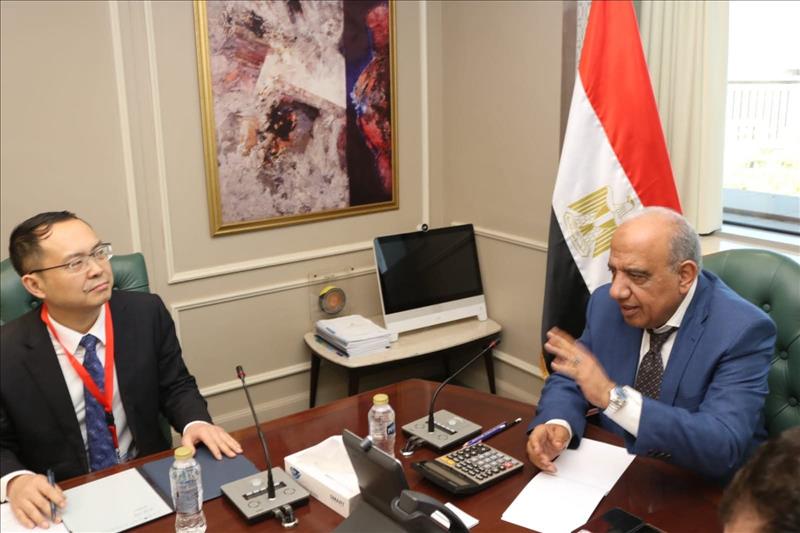
Egypt, China's XD Group Discuss Localising Electrical Equipment Manufacturing
(MENAFN- Daily News Egypt) Mahmoud Essmat, Minister of Electricity and Renewable Energy, met with Zhou Qi Qi, Chairperson of China's XD Group, and his delegation, in the presence of Mona Rizk, Chairperson of the Egyptian Electricity Transmission Company, and Osama Abdullah, Chairperson of EGEMAC. The meeting focused on strengthening and expanding the partnership between XD and Egypt's electricity sector, with an emphasis on increasing investments, establishing new production lines, localising the manufacturing of electrical equipment, transferring technology, and raising the share of locally sourced inputs and materials.
Essmat and his guests reviewed the company's work plan under its existing partnership with EGEMAC, along with its expansion projects and new equipment to be manufactured in Egypt. Discussions also covered increasing the local content of transformer production, sourcing industrial inputs from the domestic market, and establishing specialised measurement and testing centres. The minister highlighted the incentives and advantages the state offers to support industrial localisation and domestic products.
The meeting examined progress in ongoing projects implemented by XD–EGEMAC, particularly those related to powering the New Delta, where voltage activation has already been achieved. Updates were also provided on the status of other substations, adherence to agreed timelines and commissioning dates, and the company's expansion plans. These include new factories and production lines, adding new product categories, securing required land, optimising existing assets, and assessing expected economic returns. All discussions were framed within Egypt's sustainable development strategy, long-term plans to reinforce the national electricity grid, increase its capacity to absorb renewable energy, and expand into external markets through regional trade agreements.
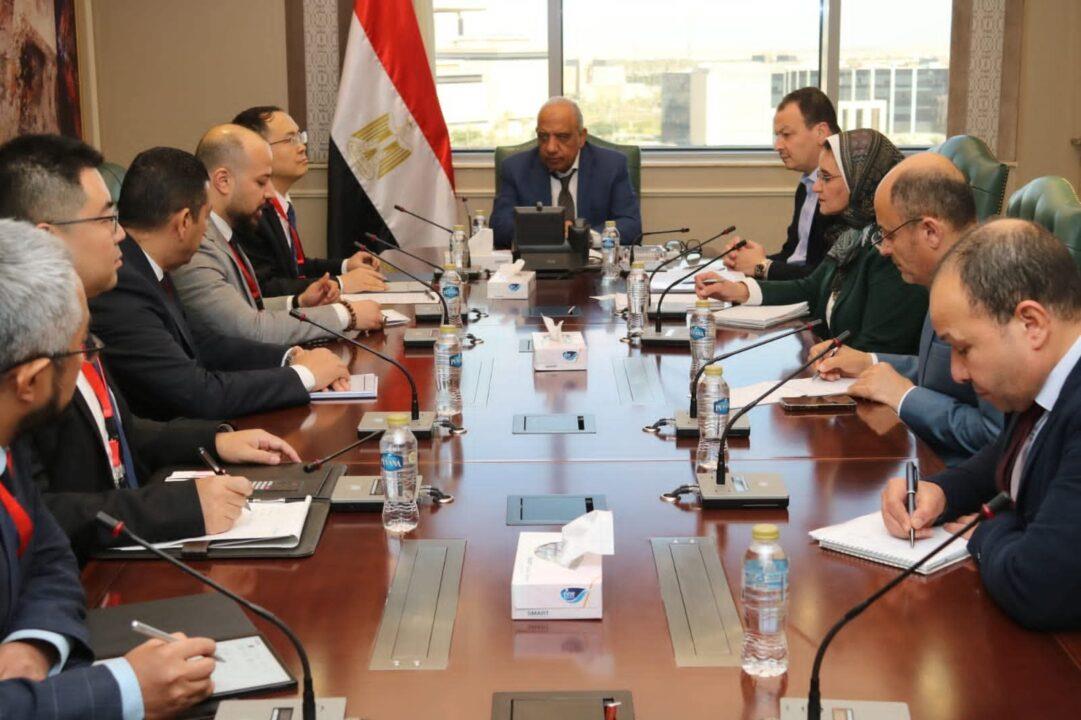
Both sides agreed on the importance of localising the manufacturing of high-voltage equipment, including surge arresters, as well as smart meters.
Essmat reaffirmed the ministry's commitment to supporting the local manufacturing of equipment, machinery, and all components required for the electricity system. He highlighted the state's broader industrial localisation strategy and the progress made over the past decade in improving the investment climate for domestic and foreign investors. He also noted Egypt's energy strategy, which aims to raise renewable energy's share of the energy mix to over 42% by 2030 and 65% by 2040, creating a sizeable market and strong demand for electrical equipment, particularly in renewable energy projects.
For his part, Zhou Qi Qi expressed his appreciation for the ministry's continuous support, noting that the practical solutions and local alternatives offered by the ministry have been key drivers behind the company's expansion and its decision to introduce new production lines. He added that the ministry's close follow-up and encouragement had accelerated implementation and helped overcome challenges during project execution.

Legal Disclaimer:
MENAFN provides the
information “as is” without warranty of any kind. We do not accept
any responsibility or liability for the accuracy, content, images,
videos, licenses, completeness, legality, or reliability of the information
contained in this article. If you have any complaints or copyright
issues related to this article, kindly contact the provider above.
Most popular stories
Market Research

More Story







Comments
No comment