






403
Sorry!!
Error! We're sorry, but the page you were looking for doesn't exist.
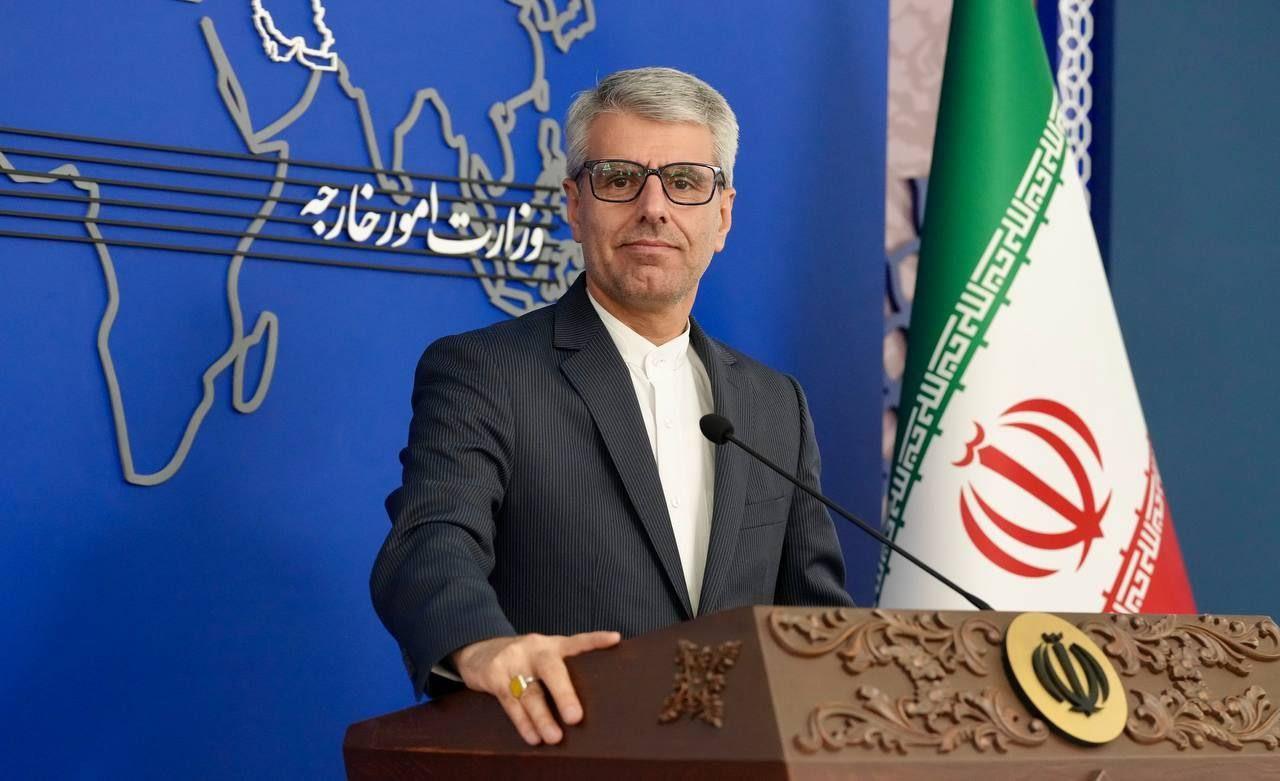
Iran Continues Engagement With European Partners Under JCPOA Framework - Spokesman
(MENAFN- Trend News Agency)
BAKU, Azerbaijan, April 21. Iran remains in
ongoing contact with three European countries-the UK, France, and
Germany-under the framework of the Joint Comprehensive Plan of
Action (JCPOA), said Iran's Ministry of Foreign Affairs spokesman
Esmail Baghaei, Trend reports.
Speaking at a press conference today in Tehran, Baghaei noted that these communications are part of consultations related to the ongoing negotiations in Muscat. He emphasized that discussions will continue with these countries as long as the United Nations Security Council's Resolution 2231 and the JCPOA remain in effect.
Baghaei also addressed concerns raised by European countries regarding the expedited organization of discussions between Iran and the United States, as well as threats related to the activation of the "snapback" mechanism. He stated that Iran is making full use of every day to expedite the removal of unlawful sanctions against the country. However, he highlighted that for Iran, the speed of negotiations is crucial and dependent on the commitment of the other party.
“Statements from European countries about activating the 'snapback' mechanism are not constructive. European countries need to make decisions on how they can play a constructive role in the Muscat negotiations and demonstrate their positions. Europe played a critical role in the formation of the JCPOA and has positive experience in assisting this process,” he added.
The second round of negotiations between Iran and the US was held on April 19 under the chairmanship of Iranian Foreign Minister Seyyed Abbas Araghchi and the US Special Envoy to Middle East Affairs, Steve Witkoff. The second round of talks between Iran and the US was conducted indirectly with the mediation of the Foreign Minister of the Sultanate of Oman, Sayyid Badr Al-Busaidi. The third round of these indirect talks is scheduled for April 26.
On April 12, the first indirect talks between Iran and the United States regarding Iran's nuclear program took place in Muscat, the capital of Oman. The discussions were led by Iranian Foreign Minister Seyyed Abbas Araqchi and US Special Representative for Middle East Affairs Steve Whitkoff. Sources indicate that the talks were conducted in a constructive and respectful atmosphere.
On January 16, 2016, the JCPOA came into force between Iran and the P5+1 group (US, Russia, China, the UK, France, and Germany) regarding Iran's nuclear program. However, on May 8, 2018, the US withdrew from the Joint Comprehensive Plan of Action (JCPOA) between Iran and the 5+1 group (Russia, China, the UK, France, the US, and Germany) and imposed new sanctions on Iran starting from November 2018.
By the end of 2020, the Iranian parliament decided to pursue a strategic plan in the nuclear sector to counter the sanctions, leading to a suspension of additional steps and the Additional Protocol as per the nuclear agreement.
Consequently, the International Atomic Energy Agency (IAEA) faced a reduction in monitoring capabilities by 20–30 percent.

Legal Disclaimer:
MENAFN provides the
information “as is” without warranty of any kind. We do not accept
any responsibility or liability for the accuracy, content, images,
videos, licenses, completeness, legality, or reliability of the information
contained in this article. If you have any complaints or copyright
issues related to this article, kindly contact the provider above.
Most popular stories
Market Research

More Story

Comments
No comment