







403
Sorry!!
Error! We're sorry, but the page you were looking for doesn't exist.
Hand Cream Market Size, Share, Growth And Forecast By 2034
| Component Type | Key Ingredients | Primary Function | Skin Benefit for Hands |
|---|---|---|---|
| UV Protection (SPF filters) | Zinc oxide, Titanium dioxide, Avobenzone, Octocrylene | Blocks/absorbs UV radiation | Reduces sunburn, pigmentation, collagen breakdown |
| Collagen-boosting actives | Retinol, Peptides | Stimulates collagen production | Improves firmness, reduces fine lines |
| Hydration agents | Hyaluronic acid, Glycerin | Moisture retention in skin layers | Improves plumpness and elasticity |
| Barrier repair agents | Ceramides, Fatty acids, Cholesterol | Restores lipid barrier | Strengthens skin defense, reduces irritation |
| Tone & brightening agents | Niacinamide, Vitamin C derivatives | Reduces pigmentation & uneven tone | Improves skin clarity and age spots |
Shift from Skincare to Luxury Lifestyle Accessory Marketing of Hand Creams
Hand creams are increasingly being positioned as luxury, fragrance-led lifestyle products rather than basic moisturizers, with premium packaging, designer collaborations, and signature scents. For example, brands like L'Occitane and Chanel market hand creams as part of their luxury beauty ritual, emphasizing fragrance layering and aesthetic appeal. These products are often purchased not just for skin benefits but also for status, gifting, and self-care experience. Limited-edition packaging and travel-friendly luxury sets further reinforce their role as fashion-like beauty accessories. This shift reflects broader consumer demand for experiential and emotionally driven skincare products.
Hand Cream Market Investment and Funding AnalysisThe hand cream and broader skincare market is witnessing steady funding inflows driven by expansion of science-backed formulations, premiumization, and increasing focus on dermatology-led product innovation. Investment activity is concentrated on strengthening R&D capabilities, scaling clinically validated skincare solutions, and expanding product portfolios that include moisturizers and hand care within larger skincare ecosystems. A growing share of capital is also directed toward AI-enabled personalization platforms and technology-driven beauty commerce models that enhance consumer targeting and product recommendation accuracy.
Key Funding and Investment Activities in Hand Cream Market, 2025
| Company | Activity | Focus | Value |
|---|---|---|---|
| Foxtale | Funding– Series C round (January 2025) | Expansion of science-backed skincare portfolio, R&D enhancement, and strategic partnership with KOSÉ Corporation for Indian skincare market growth including moisturizers and hand care categories | USD 30 million |
| Pilgrim | Funding round (March 2025) | Expansion of offline presence and strengthening of R&D capabilities across skincare and personal care products including premium hand care solutions | Approximately USD 24 million (INR 200 crore) |
| Kult | Funding– Series A round (April 2025) | AI-powered skincare recommendation platform expansion, premium beauty product scaling, and technology-led personalized skincare commerce | USD 20 million |
| Be Clinical | Funding– Seed round (May 2025) | Expansion of clinically validated skincare formulations, in-house manufacturing, and anti-aging skincare product development applicable to hand cream and skin barrier repair products | Approximately USD 0.24 million (INR 2 crore) |
| RAS Beauty | Investment by Dabur Ventures (2025) | Expansion of luxury skincare and premium beauty portfolio through strategic minority stake investment | Approximately USD 7.2 million (INR 60 crore) |
| Market Metric | Details & Data (2025-2034) |
|---|---|
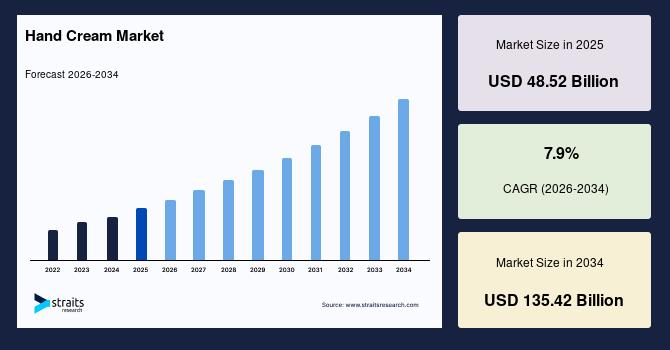
| 2025 Market Valuation | USD 48.52 Billion |
| Estimated 2026 Value | USD 56.42 Billion |
| Projected 2034 Value | USD 135.42 Billion |
| CAGR (2026-2034) | 7.9% |
| Study Period | 2022-2034 |
| Dominant Region | North America |
| Fastest Growing Region | Asia Pacific |
| Key Market Players | Beiersdorf Ag (Germany), Coty Inc. (US), Revlon Inc. (US), Johnson and Johnson Services, Inc. (J&J) (US), Marks and Spencer Plc.(UK) |
Download Free Sample Report to Get Detailed Insights.
Hand Cream Market Dynamics Market DriversHygiene Normalization Post Frequent Sanitization Culture and Growing Influence of Regional Beauty Philosophies Drives Market
Frequent handwashing and sanitizer use has become a permanent behavioral shift, leading to increased skin dryness, irritation, and moisture loss among consumers. This has created a consistent need for hand creams as part of daily hygiene routines rather than occasional skincare. Demand is especially strong among healthcare workers, office employees, and urban consumers exposed to repeated cleansing cycles. As a result, hand cream usage has expanded from a cosmetic product to a functional hygiene-support skincare essential.
The growing global influence of K-beauty and C-beauty skincare philosophies is reshaping consumer expectations in the hand cream market by elevating hand care from a basic moisturization product to a multi-step, ingredient-rich skincare ritual. K-beauty emphasis on“skin barrier health” and layered hydration routines is driving demand for hand creams formulated with ceramides, hyaluronic acid, and fermented ingredients, positioning them as essential daily skincare rather than occasional use products. C-beauty's strong focus on brightening, even skin tone, and cosmetic elegance is also encouraging development of hand creams with niacinamide and vitamin-based actives aimed at reducing pigmentation and improving aesthetic appearance of hands.
Regional Beauty Movements and Their Relevance to the Hand Cream Market
| Regional Beauty Influence | >Core Philosophy | How It Shapes Hand Cream Demand |
|---|---|---|
| K-Beauty (Korea) | Skin barrier health, multi-step skincare, hydration layering | Drives demand for ceramide-rich, hyaluronic acid, fast-absorbing hand creams as part of daily skincare routines |
| C-Beauty (China) | Brightening, aesthetic perfection, luxury packaging | Encourages whitening/brightening hand creams with niacinamide and vitamin C derivatives |
| J-Beauty (Japan) | Minimalism, prevention, high-quality formulations | Supports demand for fragrance-free, dermatologist-tested, gentle hand creams |
| Indian Ayurvedic Beauty | Herbal, natural, traditional ingredient systems | Promotes herbal hand creams with turmeric, neem, almond oil, and sandalwood |
| French Pharmacy Skincare | Dermatology-led, clinical efficacy | Boosts demand for barrier repair, eczema-focused, medical-grade hand creams |
Low Product Differentiation and Sensitivity to Ingredients Restrain Hand Cream Market Expansion
The global faces a major restraint from minimal product differentiation, as most offerings deliver similar core benefits of hydration and skin softness. This makes it difficult for brands to stand out beyond packaging, fragrance, or minor formulation tweaks. As a result, price competition intensifies, limiting long-term brand loyalty and premium pricing power.
Increasing consumer awareness around skincare safety has made ingredient composition a key concern in hand creams. Fragrances, parabens, and synthetic additives often lead to hesitation among sensitive-skin users, reducing repeat purchase confidence. Dermatology patch-test literature, including studies published in the British Journal of Dermatology, identifies fragrances and preservatives as leading causes of allergic contact dermatitis in cosmetic products, particularly with repeated exposure in leave-on skincare formulations. This has forced brands to reformulate frequently, increasing R&D costs and slowing product consistency across markets.
Market OpportunitiesExpansion of Subscription-based Skincare Models and Growing Preference for Sleep Skincare Offer Growth Opportunities for Market Players
The rise of subscription-based skincare is creating strong opportunities for recurring revenue models in hand care, where consumers receive auto-replenished moisturizers and personalized skincare bundles. Brands like Curology and Function of Beauty use subscription systems to deliver customized skincare routines based on user profiles and skin concerns. This model improves customer retention and ensures consistent product usage, especially for daily-use items like hand creams. It also enables brands to leverage consumer data for continuous product optimization and personalization.
The growing preference for sleep-focused skincare is increasing demand for overnight repair hand creams formulated with intensive hydration and barrier-repair ingredients such as ceramides, shea butter, and peptides. This creates opportunities for dermatology-led skincare brands, premium moisturizer manufacturers, and pharmacy-based skincare players to position hand creams as recovery-focused products used during the body's natural overnight repair cycle. It also benefits D2C personal care brands and wellness-focused skincare companies that are building routines around self-care and restorative skin health.
Market ChallengesInconsistent Usage Behavior and Fragmented Market Structure Challenges Hand Cream Market Expansion
Hand cream usage is often irregular and highly dependent on external conditions such as weather, skin dryness, or occupational exposure rather than being a fixed daily skincare habit. This leads to non-uniform consumption cycles and weak repeat purchase predictability across consumer groups. Many users apply hand creams only during winter or after irritation occurs, limiting consistent product engagement. As a result, brands face challenges in building stable demand patterns and long-term usage loyalty.
The hand cream market is highly fragmented, with competition coming from global cosmetic brands, pharmacy skincare lines, private labels, and emerging D2C players. This wide player base creates intense pricing pressure and limited brand differentiation, especially in mass-market segments. Smaller niche brands frequently disrupt with targeted formulations, while large players compete on scale and distribution. This fragmentation reduces pricing power and makes sustained market leadership difficult.
Hand Cream Market Regional Outlook North America: Market Dominance Led by High Workplace Hygiene Standards and Strong Demand for Dermatologically Approved FormulationsThe North America hand cream market accounted for the largest regional share of 58.44% in 2025, supported by strong consumer preference for advanced skincare solutions. The region benefits from an advanced product innovation ecosystem that continuously supports multifunctional skincare formulations combining hydration, repair, and protective benefits in a single product. Consumers in this region actively adopt premium hand care products integrated with dermatological testing and clinically validated ingredients. Strong retail infrastructure and high awareness of skin health further strengthen product penetration across urban populations.
US Hand Cream Market
The hand cream market in the US is supported by high workplace hygiene standards, increasing routine use of hand moisturization products across professional environments. Corporate office settings, healthcare facilities, and service-based industries maintain strict hygiene practices that encourage frequent hand cleansing, creating a consistent need for skin hydration solutions. For instance, hospitals and large corporate chains such as Mayo Clinic healthcare facilities have adopted regular sanitization protocols, indirectly increasing demand for hand moisturizing products among employees.
Canada Hand Cream Market
The hand cream market expansion in Canada is led by high preference for dermatologically approved and sensitive-skin-safe formulations among consumers. Harsh winter conditions across major provinces significantly increase skin dryness, encouraging demand for clinically tested and gentle skincare products. Consumers show strong inclination toward hand creams that are recommended by dermatologists and formulated to minimize irritation risks. For example, pharmacy chains such as Shoppers Drug Mart frequently stock dermatologist-recommended brands like CeraVe and La Roche-Posay, which are widely chosen for sensitive skin care needs during winter months.
Asia Pacific: Fastest Growth Driven by Rapid Digital Beauty Commerce Expansion and Adoption of Daily Personal Care RoutinesThe Asia Pacific hand cream market is expected to grow at a CAGR of 10.8% during the forecast period, showcasing the fastest regional growth. The growing adoption of e-commerce platforms is improving access to global skincare brands across emerging economies and is reshaping consumer buying behavior. Digital retail networks are enhancing product visibility and supporting faster adoption of premium formulations among urban consumers. Rising urbanization is further increasing skincare awareness among younger populations who actively follow grooming trends.
China Hand Cream Market
The hand cream market in China is expanding due to rapid digital beauty commerce expansion enabling wide skincare product penetration across urban and semi-urban populations. Leading e-commerce platforms such as Alibaba's Tmall and JD com have significantly increased accessibility of domestic and international hand care brands through targeted digital storefronts and influencer-driven product campaigns. For instance, during major shopping festivals like Singles' Day, premium skincare brands including L'Oréal China and Pechoin recorded high sales volumes driven by live-streaming promotions and influencer endorsements.
India Hand Cream Market
The hand cream market ecosystem in India is led by an expanding working population and increasing adoption of daily personal care routines across urban and semi-urban regions. The growing number of professionals in corporate offices, retail services, and healthcare sectors is encouraging regular use of skincare products to maintain hand hygiene and skin comfort during long working hours. For example, IT companies like Infosys and Tata Consultancy Services have integrated wellness and employee care programs across campuses, indirectly
Hand Cream Market Segmentation Analysis By Product TypeBy product type, moisturizing hand creams dominated the hand cream market with a share of 38.6% in 2025 driven by strong consumption due to its broad suitability across different skin types and age groups. These creams are widely used for daily hydration needs by consumers experiencing dryness from weather exposure, frequent washing, and routine skincare maintenance.
The overnight care hand creams segment is expected to grow at a CAGR of 7.9% during the forecast period, supported by increasing consumer focus on deep nourishment and skin repair during sleeping hours. Consumers are increasingly preferring intensive overnight formulations that remain active for longer durations without interruption from daytime activities.
By Ingredient TypeSynthetic formulations dominated the ingredient type segment with a share of 41.8% in 2025. The segment is advancing through higher compatibility with advanced texture-enhancing and fast-absorbing skincare ingredients used in modern formulations. They are widely used in synthetic bases to create lightweight, non-greasy creams with smoother application properties. These formulations also support stable blending of silicones, humectants, and rapid-penetration compounds that improve consumer comfort during frequent use.
The fragrance-free & sensitive skin formulations segment is expected to grow at a CAGR of 8.3% during the forecast period. The growth is strongly linked to the expansion of minimalist skincare routines centered on gentle and non-irritating formulations. Consumers are increasingly reducing the use of heavily fragranced products and preferring simplified ingredient compositions for daily skincare.
By Age GroupBy age group, millennials accounted for a share of 29.14% in 2025 due to higher engagement with lifestyle-focused skincare routines and wellness trends. Daily exposure to digital wellness content and beauty-focused product recommendations also supports frequent usage of moisturizing, repair-focused, and multifunctional hand cream formulations.
The Generation Z segment is expected to grow at a CAGR of 11.7% during the forecast period, strongly influenced by rising interest in expressive packaging, innovative textures, and sensory skincare experiences. Younger consumers are increasingly attracted toward visually appealing hand creams featuring gel-based textures, whipped formulations, and unique fragrance combinations.
By Distribution channelBy distribution channel, supermarkets/hypermarkets accounted for a share of 62.27% in 2025, driven by wide shelf space allocation supporting availability of both mass and premium hand cream variants. Retailers allocate structured display zones that improve product visibility and encourage comparison between brands. This arrangement enhances consumer convenience during routine shopping visits and supports higher impulse purchases across diverse skincare price ranges and product categories.
The online store distribution channels segment is expected to grow at a CAGR of 9.2% during the forecast period, fueled by the availability of detailed product reviews and ingredient transparency influencing purchase decisions. Digital platforms allow consumers to evaluate formulations, compare user experiences, and assess suitability before purchase. This improves confidence in online buying behavior and supports stronger adoption of e-commerce platforms for regular skincare replenishment and niche product discovery.
By End UserThe women segment is projected to grow at a CAGR of 14.5% during the forecast period, fueled by higher preference for multi-benefit formulations that combine hydration with visible skin appearance improvement. Female consumers regularly integrate hand care into broader skincare routines, where smoothness, softness, and aesthetic maintenance play an important role. Frequent usage patterns across daily personal care activities further strengthen product penetration and support consistent demand across mass and premium skincare categories.
The men's segment is expected to grow at a CAGR of 9.8% during the forecast period, driven by the expanding availability of gender-neutral and masculine-positioned hand cream products that encourage wider acceptance among male consumers. Modern formulations are increasingly designed with lightweight textures and neutral packaging, supporting ease of adoption.
Competitive LandscapeThe hand cream market landscape is highly fragmented, comprising a mix of global cosmetics conglomerates, dermatology-led skincare brands, pharmacy skincare companies, private-label manufacturers, and rapidly growing D2C and indie beauty startups. Established players typically compete on scale advantages, strong distribution networks, brand equity, dermatological credibility, and consistent product quality across mass and premium segments, enabling them to maintain leadership in both retail and pharmacy channels. Emerging and niche players compete through product innovation, clean-label formulations, functional actives such as ceramides and peptides, targeted positioning for sensitive skin or anti-aging needs, and agile digital-first marketing strategies, often leveraging e-commerce and influencer-driven visibility to penetrate urban consumer bases.
List of Key and Emerging Players in Hand Cream Market-
Beiersdorf Ag (Germany)
Coty Inc. (US)
Revlon Inc. (US)
Johnson and Johnson Services, Inc. (J&J) (US)
Marks and Spencer Plc.(UK)
Sanofi Consumer Health Inc. (France)
Shanghai Jahwa United Co., Ltd (China)
Shiseido Co., Ltd (Japan)
The Procter and Gamble Company (US)
Unilever Plc (UK)
Zion Health Inc. (US)
Sowvital (France)
Scentmate by dsm-firmenich (Switzerland)
LEO Pharma (Denmark)
March 2026: Zion Health Inc. launched the Intense Hand Repair Cream with MuruMuru Butter, an intensive moisturizing treatment designed to restore softness, hydration, and skin resilience.
November 2025: Sowvital and Scentmate by dsm-firmenich collaborated with consultant Isabelle van Ingen to introduce The Gardener's Hand Cream collection, a fragrance-led skincare line inspired by orchard fruits and botanical gardens.
July 2025: The FDA approved Anzupgo (delgocitinib) by LEO Pharma, marking a major regulatory milestone as the first and only approved prescription cream in the US specifically for adults with moderate-to-severe chronic hand eczema (CHE).
June 2025: Unilever acquired Dr. Squatch for approximately USD 1.5 billion, expanding its personal care and skincare portfolio.
Report Scope| Report Metric | Details |
|---|---|
| Market Size in 2025 | USD 48.52 Billion |
| Market Size in 2026 | USD 56.42 Billion |
| Market Size in 2034 | USD 135.42 Billion |
| CAGR | 7.9% (2026-2034) |
| Base Year for Estimation | 2025 |
| Historical Data | 2022-2024 |
| Forecast Period | 2026-2034 |
| Report Coverage | Revenue Forecast, Competitive Landscape, Growth Factors, Environment & Regulatory Landscape and Trends |
| Segments Covered | By Product Type, By Demographics, By Age group, By Distribution channel |
| Geographies Covered | North America, Europe, APAC, Middle East and Africa, LATAM |
| Countries Covered | US, Canada, UK, Germany, France, Spain, Italy, Russia, Nordic, Benelux, China, Korea, Japan, India, Australia, Taiwan, South East Asia, UAE, Turkey, Saudi Arabia, South Africa, Egypt, Nigeria, Brazil, Mexico, Argentina, Chile, Colombia |
Download Free Sample Report to Get Detailed Insights.
Hand Cream Market Segments By Product Type-
Repair hand cream
Anti-aging hand cream
Whitening hand cream
Overnight hand cream
Others
-
Male
Female
-
Millennials
Generation X
Baby Boomers
Generation Z
-
Supermarket/Hypermarket
Specialty store
Beauty Salon
Pharma and Drug store
Online store
-
North America
Europe
APAC
Middle East and Africa
LATAM

Legal Disclaimer:
MENAFN provides the
information “as is” without warranty of any kind. We do not accept
any responsibility or liability for the accuracy, content, images,
videos, licenses, completeness, legality, or reliability of the information
contained in this article. If you have any complaints or copyright
issues related to this article, kindly contact the provider above.
Most popular stories
Market Research

More Story








Comments
No comment