




403
Sorry!!
Error! We're sorry, but the page you were looking for doesn't exist.
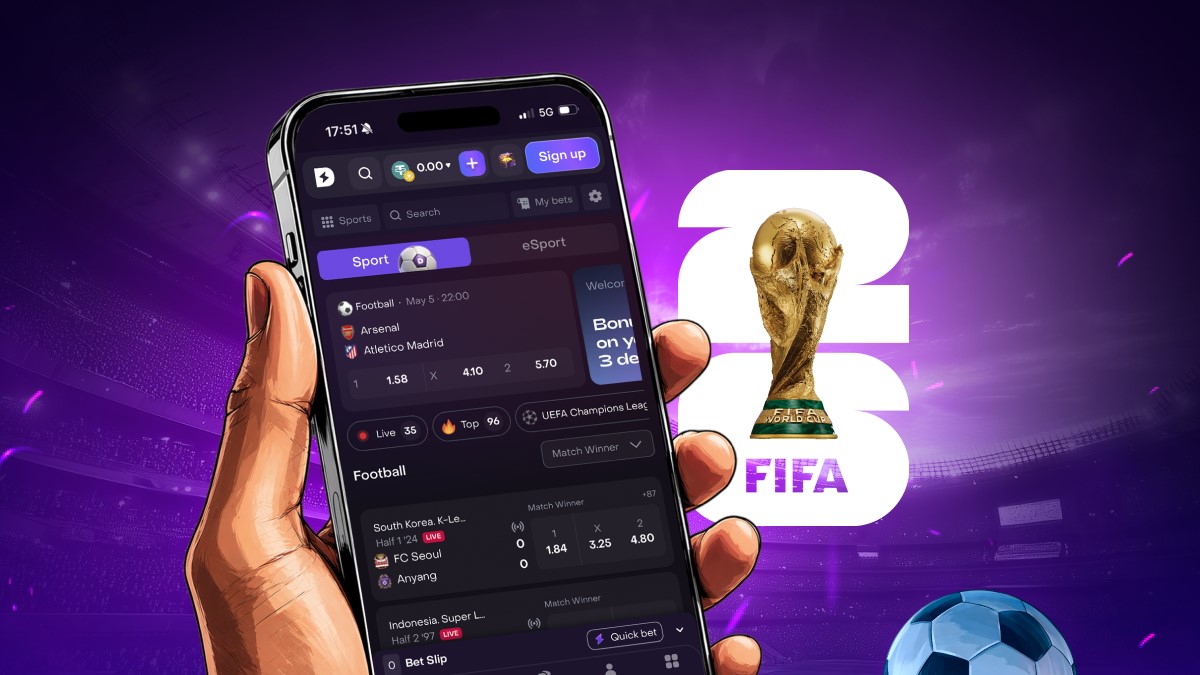
Why the World Cup Could Make Web3 Betting Go Mainstream — A Look Through Dexsport
(MENAFN)
The 2026 World Cup isn't just a sporting event. It's an economic spike. For the first time, the tournament runs in an expanded format — more nations, more fixtures, a longer knockout road. The global audience is expected to cross 5 billion — a milestone achieved four years ago. Betting turnover could pass $150 billion. And for the first time, a noticeable slice of that money may not move through traditional bank accounts.
Something is shifting. Not because Web3 is magical — but because the old system has visible cracks. Slow payouts, intrusive identity checks, and centralized databases that remain attractive targets for breaches. A growing segment of users is exploring alternatives, and the World Cup is shaping up as a real-world test of what works.
What "Balance Sheet Bettor" Actually Means
Let’s try to explain that slightly awkward phrase.
A balance sheet bettor thinks in terms of capital allocation, not just "who wins tonight". They split their bankroll across different risk profiles: higher-risk, high-payout bets, medium-risk live wagers, and insurance-like tools such as cashback. They track expected value. They don't YOLO their rent money on a 10-leg parlay.
In traditional sportsbooks, this type of bettor can sometimes run into friction — flagged activity, delayed withdrawals, additional checks. On Web3 platforms like Dexsport, the structure is different. Users operate directly from their wallets, which changes how control over funds is handled.
The Numbers Behind the Shift
The underlying infrastructure has changed more than most people realize. In 2025, the crypto gambling market reached roughly $81 billion in value, with on-chain volume alone approaching $60 billion by mid-year. The Web3 sports betting segment is estimated to be growing at around 12–15% annually, outpacing traditional betting in relative terms.
A major driver behind this growth is the rise of stablecoins. USDT and USDC, in particular, have become the default settlement layer. Bettors increasingly prefer predictable value rather than exposure to volatility. In 2024, stablecoin transfers reached approximately $27.6 trillion, accounting for a significant share of total crypto activity.
Platforms like Dexsport operate within this framework, allowing users to place bets using more stable digital assets rather than highly volatile tokens.
Why the World Cup Changes Things
A January 2026 report by Paysafe suggests that around 60% of global fans plan to place online bets during the World Cup, with roughly 19% doing so for the first time. That represents a large influx of new participants into systems that have historically struggled under peak demand.
During previous tournaments, centralized sportsbooks often faced surges in support requests, withdrawal delays, and additional verification checks. These are not anomalies — they are structural characteristics of custodial systems operating under pressure.
Web3 doesn't remove all friction. But it changes the model. Funds remain in the user's wallet until the moment of settlement, reducing reliance on operator-controlled balances and manual approval processes.
Dexsport as a Working Example
Dexsport has been operating since 2022 — a meaningful track record in the crypto space.
Unlike traditional bookmakers, it follows a non-custodial model. Users retain control over their private keys and funds, while smart contracts handle settlement.
In practical terms, this affects several things during a high-traffic event like the World Cup:
Speed. On fast, low-cost chains, transactions settle in roughly the time it takes to grab a coffee — not the 24–72 hours often seen with traditional sportsbooks.
No KYC by default. Access is based on wallet connection (MetaMask, Trust Wallet) or Telegram login, reducing reliance on personal data storage.
Market depth. On major matches, the platform offers a wide range of markets — corners, cards, player props, time-based outcomes — bringing it closer to traditional sportsbooks in terms of coverage.
Prediction Markets and Changing Behavior
Another trend worth noting is the broader shift toward event-based trading. Platforms like Polymarket and Kalshi have demonstrated growing interest in markets tied to real-world outcomes, from politics to macroeconomic events.
This shift matters because it reflects a change in user behavior. People are becoming more comfortable treating events as tradable probabilities rather than one-off bets. The World Cup, with its 104 matches and countless micro-events, naturally fits this mindset.
Dexsport is not a prediction market, but it exists within this broader evolution — where betting increasingly overlaps with structured, information-driven decision-making.
Honest Trade-Offs (What Often Gets Overlooked)
Web3 betting is not without its downsides.
Self-custody comes with responsibility. Losing access to a wallet or sending funds incorrectly cannot be reversed by support teams.
Not every platform is built the same. Before committing funds, it makes sense to check a few basics: whether the platform holds a license, who issued it, and whether independent audits are publicly available. These aren't guarantees, but they're useful signals. The presence of a license and clean audits from firms like CertiK or Pessimistic suggests that the platform has gone through some level of external review.
That said, even licensed Web3 platforms come with real-world limitations. Geographic restrictions exist: some countries are excluded, and using a VPN to bypass those rules is typically forbidden. If detected, platforms may terminate access — though funds remain in the user's wallet thanks to the non-custodial model. It's not a flaw, just a constraint of operating within any legal framework. Knowing these limits beforehand saves frustration later.
Final Take
The 2026 World Cup is likely to become the first truly hybrid betting event. Traditional sportsbooks will continue to dominate overall volume. But a growing subset of users — particularly those focused on speed, control, and capital efficiency — is beginning to explore Web3-based alternatives.
Dexsport is one example of how this infrastructure is evolving. Not without trade-offs, but functional, and increasingly relevant in high-demand environments.
The question for many users is no longer just which team will win — but which system they trust to handle their money when it matters most.
MENAFN19052026008640018215ID1111137143

Legal Disclaimer:
MENAFN provides the
information “as is” without warranty of any kind. We do not accept
any responsibility or liability for the accuracy, content, images,
videos, licenses, completeness, legality, or reliability of the information
contained in this article. If you have any complaints or copyright
issues related to this article, kindly contact the provider above.
Most popular stories
Market Research

More Story






Comments
No comment