






403
Sorry!!
Error! We're sorry, but the page you were looking for doesn't exist.
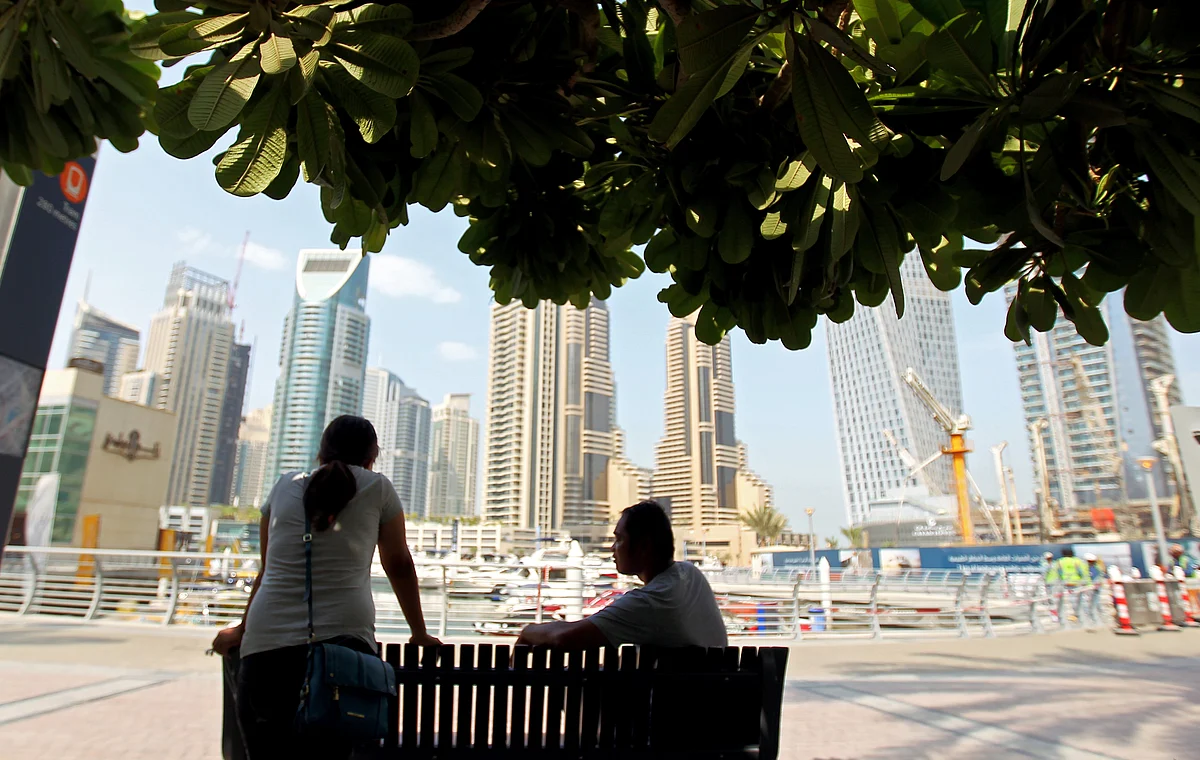
UAE, GCC In 'Normalisation' Phase Post-War, IMF Director
(MENAFN- Khaleej Times) [Editor's Note: Follow the Khaleej Times live blog for the latest regional developments with the
US-Israel-Iran ceasefire
now in effect.]
The UAE and the overall Gulf region are in phase two of the post-war outbreak, which includes normalisation, says International Monetary Fund (IMF) director.
Recommended For YouPhase one after the start of the war was the rapid response to the shock, which several governments in the region were better prepared for due to previous shocks, like the 2020 pandemic.
“If I want to summarise where we stand today in the post-outbreak of the war, we are in phase two. Phase one was the rapid response to the shock. Now we are in the phase of normalisation, Jihad Azour, the IMF director of the Middle East and Central Asia department, said.
Stay up to date with the latest news. Follow KT on WhatsApp Channels.
Almost three months following the outbreak of war, which began on February 28, which is still affecting energy prices today due to disruptions in the Strait of Hormuz, there are a few signs that show that the geopolitical shock is affecting the region's economy, though in varying degrees, Azour said.
Business sentiment has dropped, but the UAE remains higher than the global average and the highest in the GCC region. The energy sector was the most affected due to the Strait's closure, which has caused energy prices to more than double compared to the beginning of the year, the director said.
“Markets are still considering that the capacity of GCC countries to restore and recover their capacity to supply the market will allow a certain convergence over the medium term,” he added.
Although the director stated the IMF's predictions for the GCC, the situation is still extremely volatile, which he said makes it more difficult to ascertain how the region will look like.
“We are in a situation where uncertainty is extremely high,” he explained.“You need to have a multiple scenario. And having multiple scenarios complicates the projections.”
The first scenario that the IMF predicts is an reference scenario, followed by adverse scenario.
“We were expecting, like many, that the war will gradually fade out. And by the middle of 2026, we move into the recovery. And then the production will normalise in Q3 2026. Things are dragging, and therefore, we are currently moving from our reference scenario to the adverse scenario, where oil prices will remain higher,” Azour said.
ALSO READ- GCC stays steady as IMF, World Bank flag slowdown risks despite strong buffers GCC economies stay resilient as IMF trims regional outlook Built for the rebound: UAE poised for a rapid pivot back to growth

Legal Disclaimer:
MENAFN provides the
information “as is” without warranty of any kind. We do not accept
any responsibility or liability for the accuracy, content, images,
videos, licenses, completeness, legality, or reliability of the information
contained in this article. If you have any complaints or copyright
issues related to this article, kindly contact the provider above.
Most popular stories
Market Research

More Story



Comments
No comment