







403
Sorry!!
Error! We're sorry, but the page you were looking for doesn't exist.
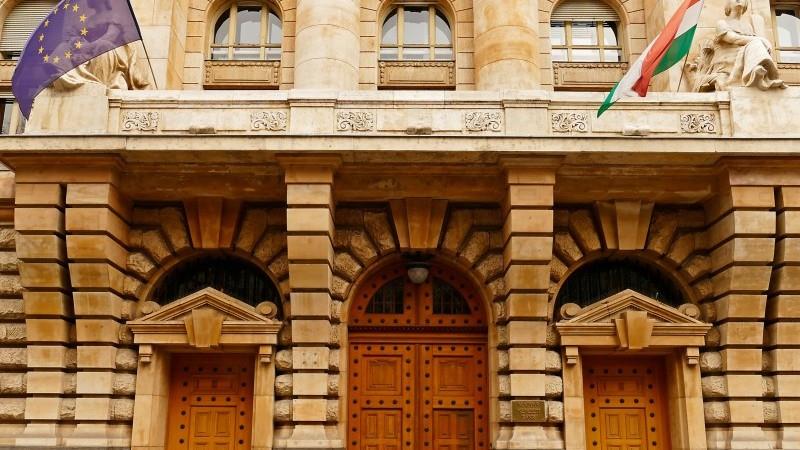
National Bank Of Hungary Preview: As Summer Arrives, The Situation Heats Up
(MENAFN- ING)
Offsetting developments keep base rate at bay in May
Although various factors have affected the monetary environment over the past month, these effects have almost fully cancelled each other out. We do not expect any change in the base rate at next Tuesday's (26 May) interest rate decision meeting and therefore anticipate that it will remain at 6.25%.
As central bank officials have repeatedly emphasised in recent weeks, the June Inflation Report will serve as the benchmark, so it is worth waiting for the next set of forecasts. Another reason to wait is the continued high level of geopolitical uncertainty. While there are arguments in favour of quickly starting to cut interest rates, we must not forget the dark clouds hovering over the Middle East.
As the peace process drags on, the likelihood of physical shortages of both oil and gas is increasing. Hungary is particularly vulnerable to this, given the structure of its small, open economy and its significant dependence on energy imports. Soon, countries will need to start filling their gas storage facilities in preparation for winter. In Hungary, oil reserves have also fallen to record lows due to the protected fuel pricing system. All of this means that inflation, which is already rising, will increase further.
These inflationary risks were exacerbated further by the increased fiscal stimulus for households before the elections, coupled with surging consumer confidence following the change in government. This dual factor is expected to accelerate consumption, leading to faster price hikes. Thus, alongside geopolitical factors, domestic developments are also pointing in a more hawkish direction.
However, central bank policymakers will find themselves in a difficult position, as the effects of the war have yet to be reflected in inflation figures. They are expected to revise the June inflation report downwards, which would indicate a dovish stance by the Monetary Council. It should be noted that price caps remain in place in several key sectors. Furthermore, the new government's transparent communication regarding the introduction of the euro has led to a decline in bond yields and market interest rates, which could enable the central bank to cut official rates. While the National Bank of Hungary (NBH) is not expected to react to short-term market movements, if the favourable situation persists over the longer term, this will have a dovish effect.
The central bank could reinstall the 'live' approachA month ago, we were certain that the Hungarian base rate would remain unchanged until the end of the year. However, given the current situation, we now envisage two possible scenarios for the development of the base rate in the coming period. Our base case is that, due to uncertainty arising from geopolitical risks and heightened inflationary threats, the NBH will not cut rates in June or at any point during the rest of the year. The NBH would only begin a rate-cutting cycle once inflation moderates back towards the target following the expected growth in the remainder of this year.
In our more speculative scenario, a faster-than-expected easing of risks and stabilisation of the market at a favourable level could lead to a 25bp interest rate cut in June, followed by one or two further cuts. For that scenario to become more likely, we would need a clear signal, such as updated forward guidance where the NBH reinstates the 'every meeting is a live meeting' approach.
However, some groundwork may already have been done. In its most recent FX swap auction providing liquidity in EUR, the NBH cut the forint rate to 5.25% from 5.75%. While this only applies to a small part of the market, it could indicate the direction in which the NBH is moving and suggest that eventual rate cuts in the base rate are likely due to the strength of the forint.
Our market viewsThe central issue for the rest of the year is determining how strong the forint can get before it becomes excessive for the central bank and government. An analysis of the REER indicates that certain metrics are at their highest levels since 2008, with the forint approaching a record high. At some point, this will become a problem for the economy and a headache for policymakers. The new government prefers lower bond yields over a stronger currency. Simultaneously, the NBH's reduction of the FX swap rate signals to foreign investors to shift from FX to bonds.
CEE FX performance vs EUR (end-2024 = 100%) Source: NBH, ING">
Yet, positive headlines related to EU funds, the restoration of checks and balances, and more news on budget consolidation and euro adoption mean that we wouldn't rule out EUR/HUF testing and breaking through 350 in the next twelve months, while forwards should move further down with the market anticipating more NBH rate cuts, supported by a stronger currency. Forwards are likely to decline further as the market anticipates more NBH rate cuts, encouraged by a strengthening currency.
Hungarian yield curve Source: GDMA, ING">The recent election result is seen by the market as a structural change for fixed income. We see the government's move towards euro adoption and the unlocking of EU funds as supportive for the long end of the curve. At the same time, stronger FX and low inflation are helping at the short end, resulting in a dovish NBH. Our view remains unchanged and despite the significant rally, we see potential for further country premium compression over core markets and CEE peers.

Legal Disclaimer:
MENAFN provides the
information “as is” without warranty of any kind. We do not accept
any responsibility or liability for the accuracy, content, images,
videos, licenses, completeness, legality, or reliability of the information
contained in this article. If you have any complaints or copyright
issues related to this article, kindly contact the provider above.
Most popular stories
Market Research

More Story







Comments
No comment