






403
Sorry!!
Error! We're sorry, but the page you were looking for doesn't exist.
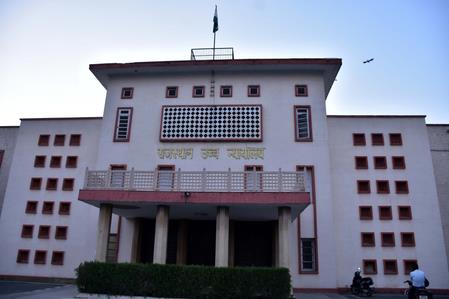
Rajasthan HC To Hold Virtual Hearings For 3 Days To Promote Fuel Conservation
(MENAFN- IANS) Jaipur, May 21 (IANS) In an effort aimed at reducing fuel consumption and lowering operational costs, the Rajasthan High Court administration has decided to conduct court proceedings through video conferencing for three days across both the Jodhpur Principal Bench and the Jaipur Bench.
A notice issued by Registrar General Chanchal Mishra on Wednesday stated that, as a pilot initiative, cases will be heard virtually on May 22, May 26 and May 27, 2026.
The decision follows a memorandum issued by the Department of Personnel and Training (DoPT), Government of India, on May 12, as well as a circular released by the Supreme Court on May 15, both of which focused on promoting fuel conservation while ensuring uninterrupted judicial functioning across institutions.
According to the order, proceedings in all courts functioning under the Jodhpur Principal Bench and the Jaipur Bench will be conducted through video conferencing from courtrooms on the designated dates.
However, the Rajasthan High Court administration clarified that physical hearings would not be completely discontinued and could still take place whenever considered necessary by the concerned courts.
The initiative was finalised after consultations with the High Court Bar Associations of both the Jodhpur Principal Bench and Jaipur Bench.
The High Court administration has also appealed to advocates, litigants and other stakeholders associated with the judicial process to cooperate with the fuel conservation initiative by opting for virtual hearings wherever feasible.
Apart from encouraging virtual participation in hearings, lawyers and court visitors have also been advised to minimise unnecessary travel and adopt vehicle-pooling practices in an attempt to conserve petrol and diesel consumption.
The move assumes significance as concerns relating to fuel conservation, environmental sustainability and cost-efficient administrative functioning continue to receive greater attention across institutions.
The initiative also comes days after Justice Sameer Jain was seen cycling to the Jaipur Bench of the Rajasthan High Court, a gesture that drew considerable public attention towards fuel conservation and environmental awareness.
Legal circles believe that if the pilot initiative proves successful, similar measures promoting hybrid or virtual functioning could also be considered more frequently in future administrative planning, especially in situations where physical presence is not mandatory.
At the same time, the High Court administration has maintained that judicial work and access to justice will not be affected, with arrangements being made to ensure that proceedings continue smoothly during the designated virtual hearing days.

Legal Disclaimer:
MENAFN provides the
information “as is” without warranty of any kind. We do not accept
any responsibility or liability for the accuracy, content, images,
videos, licenses, completeness, legality, or reliability of the information
contained in this article. If you have any complaints or copyright
issues related to this article, kindly contact the provider above.
Most popular stories
Market Research

More Story




Comments
No comment