







403
Sorry!!
Error! We're sorry, but the page you were looking for doesn't exist.
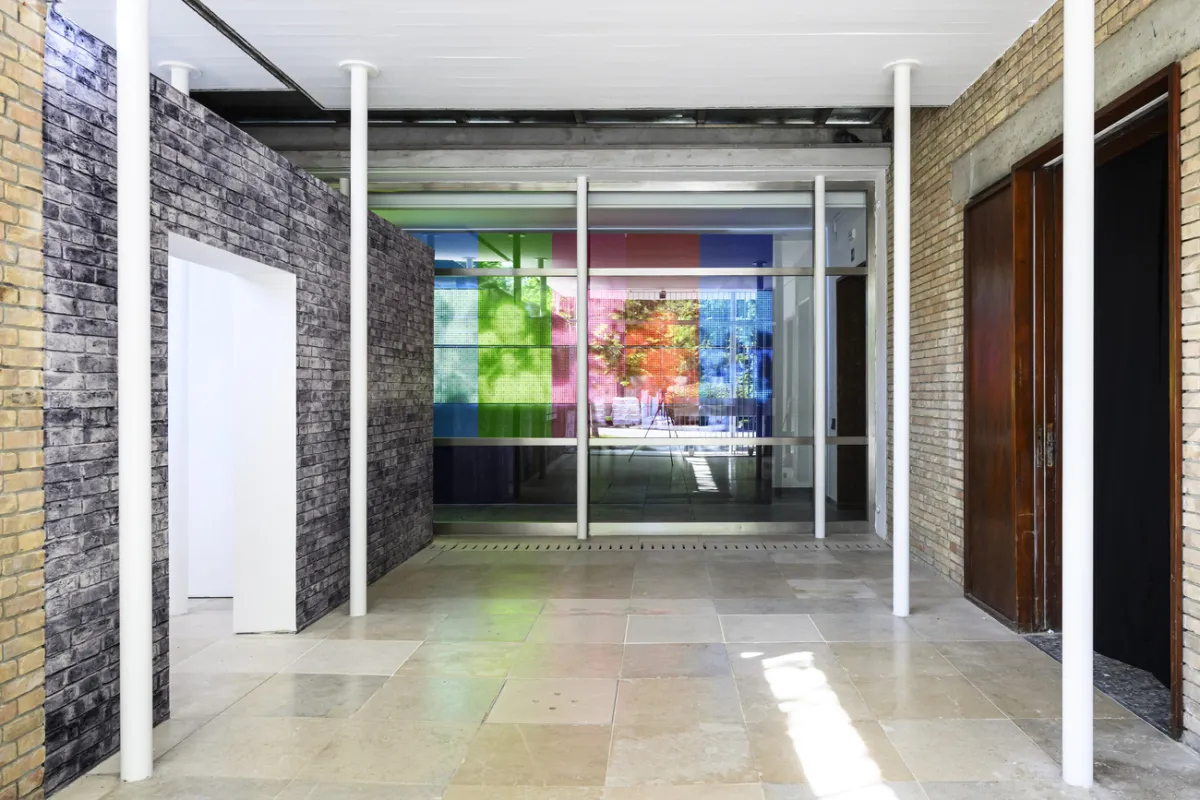
Switzerland Reflects On Challenges Of Coexistence At Venice Art Biennale
(MENAFN- Swissinfo)
At the 61st International Art Exhibition of theVenice Biennale, Switzerland has chosen to grapple with one of its founding myths: coexistence.
This content was published on
May 21, 2026 - 09:00
5 minutes
I mainly deal with Italian-Swiss relations, whether political, economic or cultural, with a focus on cross-border issues. Born in South Korea and raised in Graubünden, after studying philosophy in Pavia, Geneva and Paris, theology in Lugano and finally communication in Milan, I turned to journalism alongside a long stint in the world of cinema.
-
More from this aut
Redazione
-
Deutsch
de
An der Biennale setzt sich die Schweiz mit dem Zusammenleben auseinander
Read more: An der Biennale setzt sich die Schweiz mit dem Zusammenleben ausein
Français
fr
À la Biennale d'art de Venise, la Suisse s'interroge sur le vivre ensemble
Read more: À la Biennale d'art de Venise, la Suisse s'interroge sur le vivre ens
Italiano
it
Alla Biennale d'arte la Svizzera si interroga sulla convivenza
Original
Read more: Alla Biennale d'arte la Svizzera si interroga sulla convi
Português
pt
Pavilhão suíço debate diferenças e convivência em Veneza
Read more: Pavilhão suíço debate diferenças e convivência em V
The Swiss Pavilion presents the project The Unfinished Business of Living Together, a critical exploration of the dynamics of coexistence and the tensions that underlie a society marked by differences. In a country that often describes itself as a“Willensnation” – a nation that exists thanks to the will to live together – the theme takes on a special significance.
As the title suggests, the exhibition does not offer definitive solutions.“Living together is a work in progress, and perhaps it must remain so in order to be taken seriously,” Gianmaria Andreetta, one of the curators of the Swiss contribution, told journalists at the Swiss Pavilion in the festival parkland.
It is a statement that sets the tone for the entire project. Here, coexistence is not a reassuring value, but a terrain fraught with friction, tension and constant negotiation.
Take a look at the Swiss Pavilion in this video by tvsvizzera (in Italian):
For the first time in the history of Switzerland's participation, the national contribution was selected through an open competition, which attracted no fewer than 140 entries. The jury, chaired by Pro Helvetia Director Philippe Bischof, chose an intergenerational and multilingual collective comprising curators Gianmaria Andreetta and Luca Beeler, British artist Nina Wakeford and artists Miriam Laura Leonardi, Lithic Alliance and Yul Tomatala.
Using past images to understand the presentAt the heart of the project is television footage from the past. Episodes from two Swiss public television programmes – Telearena (SRF, 1978) and Agora (RTS, 1984) – serve as the starting point for a reflection process that spans decades.
At the time, these programmes used pioneering ways to tackle, live on air, a range of issues, including what was referred to as the“problem of homosexuality”. They were not just talk shows: they used short theatrical sketches depicting everyday situations to stimulate debate among the studio audience.
Today, this footage is being replayed, deconstructed and reactivated; not out of nostalgia, but to understand how a“public problem” arises.“What does it mean to live together when differences become something that a society must organise, acknowledge, contain and expose?” Andreetta asked.
The question is directed not so much at the past as at the viewer. Visitors to the Biennaleare invited to ask themselves: what kind of audience are we capable of being today?
Archives that still resonateThe Swiss Pavilion's approach to the archival material is innovative, and the project is collective in the fullest sense of the word. The works by Nina Wakeford, Miriam Laura Leonardi, Lithic Alliance and Yul Tomatala do not merely accompany the archive; they introduce different rhythms, different objects and different forms of language and memory. In parallel to the two Swiss television programmes, Andreetta said,“the artists' works operate on the basis of similar shifts: theatrical performances, drag, temporal shifts, re-enactments, images within other images”.
Through these techniques, the television footage is reactivated, revealing its ideological mechanisms and contemporary resonances. The exhibition works through insistence, not representation. In this sense, the archive is not the past. It is something that continues to act, and resonate, in the present.
This approach aligned perfectly with the thinking of the Pro Helvetia jury, which awarded the project for its ability to“use media archive material as a starting point for artistic research into the present”, striking“a raw nerve of our times”.
Building together, but not without difficultyThe project's structure is also reflective of its content. The Swiss contribution brought together artists from different linguistic regions of the country and from international backgrounds.
“An exhibition that explores the theme of living together must also navigate the challenges of working together,” Andreetta observed during the press conference. Differences are not smoothed over but become an integral part of the process.
The result is a sort of“common language” that does not erase differences but rather holds them in tension.
Coexistence as a political issueIn the context of Switzerland today, The Unfinished Business of Living Together takes on a strongly critical meaning. It challenges the image of a country that likes to be seen as a haven of consensus, neutrality and stability.
Here, meanwhile, coexistence is not neutral: it is a system that organises differences, establishing what is accepted and what is left on the margins.
In this scenario, language also becomes a forum for confrontation.“In an exhibition that deals with visibility and public space, language is political,” according to Andreetta. It determines who can speak and who cannot.
Ultimately, the Swiss Pavilion does not provide answers but forces the public to take a stand – on how today we are willing, or not, to live together; and on the conditions that make this coexistence truly possible.
The 61st International Art Exhibition of the Venice Biennale runs until November 22.
Edited by Daniele Mariani / Adapted from Italian by Julia Bassam/ts
Popular Stories Most DiscussedIn compliance with the JTI standards
More: SWI swissinfo certified by the Journalism Trust Initiati
You can find an overview of ongoing debates with our journalists here. Please join us!
If you want to start a conversation about a topic raised in this article or want to report factual errors, email us at ....

Legal Disclaimer:
MENAFN provides the
information “as is” without warranty of any kind. We do not accept
any responsibility or liability for the accuracy, content, images,
videos, licenses, completeness, legality, or reliability of the information
contained in this article. If you have any complaints or copyright
issues related to this article, kindly contact the provider above.
Most popular stories
Market Research

More Story






Comments
No comment