






403
Sorry!!
Error! We're sorry, but the page you were looking for doesn't exist.
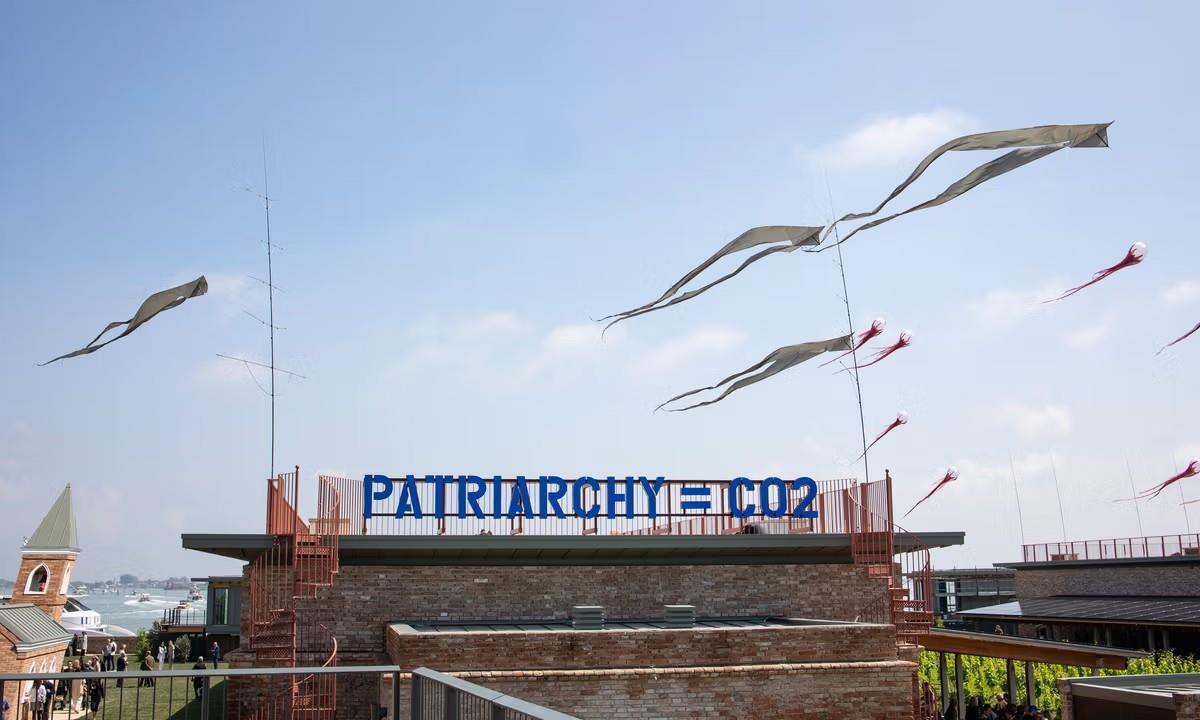
Boats And Trains, Not Planes: Reflections On A Greener-But Sometimes Greenwashed-Venice Biennale The Art Newspaper International Art News And Events
(MENAFN- USA Art News)
Venice Biennale 2026 Puts Ecology at the Center of the Conversation
The most persuasive climate statement at this year's Venice Biennale may have begun on a train. Louisa Buck traveled from England to Italy by rail, taking 24 hours door to door through Paris and Stuttgart before arriving in Venice without the usual airport bottlenecks, water-bus crowds, or private-taxi expense. The trip was slower, but it also sharpened the larger point: in a season when the art world keeps talking about sustainability, the Biennale offered a rare moment when the subject was visible in both the logistics and the art.
That emphasis was clearest in the late Koyo Kouoh's central exhibition, In Minor Keys. In her statement, Kouoh called for a“listening to the persistent signals of earth and life” and framed the show around rest, growth, replenishment, and the intimate ecologies of back gardens, courtyards, and small islands. The result was not a single-minded environmental theme show, but a broad meditation on how human life is entangled with land, water, and extraction.
The exhibition's opening gesture came from Otobong Nkanga, who rewilded the façade of the Central Pavilion in the Giardini with local-made bricks, dangling planters, and insect boxes. Inside, the natural world appeared in varied and often unsettling forms: Célia Vasquez Yui's forest creatures made from Peruvian Amazon soil, Theo Eshetu's slowly rotating olive tree, and Uriel Orlow's photographs of near-extinct plants collected and classified under colonial rule.
Other artists extended the ecological argument into lived systems. Linda Goode Bryant planted a mini farm in the Giardini, growing Venetian vegetables alongside okra, while Annalee Davis, working from the former plantation where her family has lived for generations in Barbados, examined Caribbean plantation economies through a multimedia installation that included a herbarium and a replica of the extinct Eskimo Curlew.
For Buck, the most chilling work was Alfredo Jaar's The End of the World, which uses crushed critical minerals to connect the green transition with warfare and the material costs hidden inside technological optimism. That tension - between ecological aspiration and extraction, between repair and damage - gave the Biennale its sharpest edge.
The conversation is widening beyond the Giardini and the Arsenale. San Giacomo, in the Northern Lagoon of Venice, is being transformed into an art venue that combines art with ecology. Its history as a religious site, quarantine island, military outpost, and gunpowder store makes it a fitting place to test how far the art world can move from symbolic gestures toward structural change.

Legal Disclaimer:
MENAFN provides the
information “as is” without warranty of any kind. We do not accept
any responsibility or liability for the accuracy, content, images,
videos, licenses, completeness, legality, or reliability of the information
contained in this article. If you have any complaints or copyright
issues related to this article, kindly contact the provider above.
Most popular stories
Market Research

More Story





Comments
No comment