







403
Sorry!!
Error! We're sorry, but the page you were looking for doesn't exist.
Global Waste Generation To Surge By 50% By 2050 - World Bank
(MENAFN- Trend News Agency)
BAKU, Azerbaijan, May 20. Global waste
generation will expand by 50% by the year 2050 under a
business-as-usual baseline scenario, said Augustin Pierre Maria,
Deputy Lead Urban Development Specialist at the World Bank Group,
Trend reports.
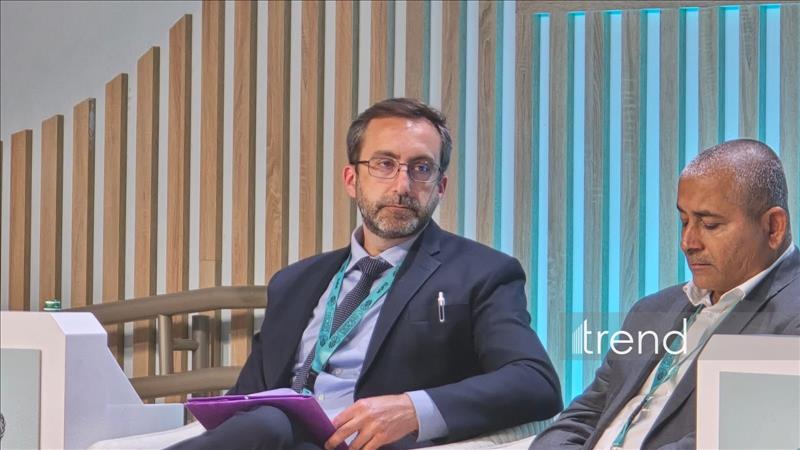
He made the remarks during a session titled "Closing the Loop: Advancing Waste Management on the Path to a Circular Economy" held within the framework of the 13th session of the World Urban Forum (WUF13) in Baku.
During the event, Maria presented the core findings of the World Bank's new What a Waste 3.0 report, marking the third installment in a diagnostic series initiated in 2012 and updated in 2018. The document serves as a primary global data repository tracking the solid waste management sector.
According to Maria, middle-income economies will absorb the largest volumetric surge, generating an additional 1 billion tons of municipal waste annually.
"Concurrently, the steepest growth rates remain projected for low-income countries, particularly across Sub-Saharan Africa and South Asia, which happen to possess the lowest institutional readiness for such structural shifts. Roughly one-third of global waste currently evades collection or undergoes unmonitored disposal, another third routes to landfills, and only the remaining third undergoes environmentally safe disposal. Low-income nations register an average waste collection rate of approximately 28%, while Sub-Saharan Africa safely disposes of only about 7% of its total volume," Maria pointed out.
The World Bank representative also highlighted that solid waste remains one of the largest source vectors for methane, accounting for roughly 20% of anthropogenic emissions. Absent targeted policy interventions, methane emissions from waste facilities could spike by 40%.
Furthermore, he noted that approximately 80% of marine plastic pollution originates directly from unmanaged municipal waste streams. Economic liabilities arising from substandard waste infrastructure can drain up to 1.5% of an affected nation's GDP.
Maria added that while the sector officially employs around 18 million urban workers, the actual labor pool climbs significantly higher due to pervasive informal employment loops.
--
Legal Disclaimer:
MENAFN provides the
information “as is” without warranty of any kind. We do not accept
any responsibility or liability for the accuracy, content, images,
videos, licenses, completeness, legality, or reliability of the information
contained in this article. If you have any complaints or copyright
issues related to this article, kindly contact the provider above.
Most popular stories
Market Research

More Story







Comments
No comment