









403
Sorry!!
Error! We're sorry, but the page you were looking for doesn't exist.
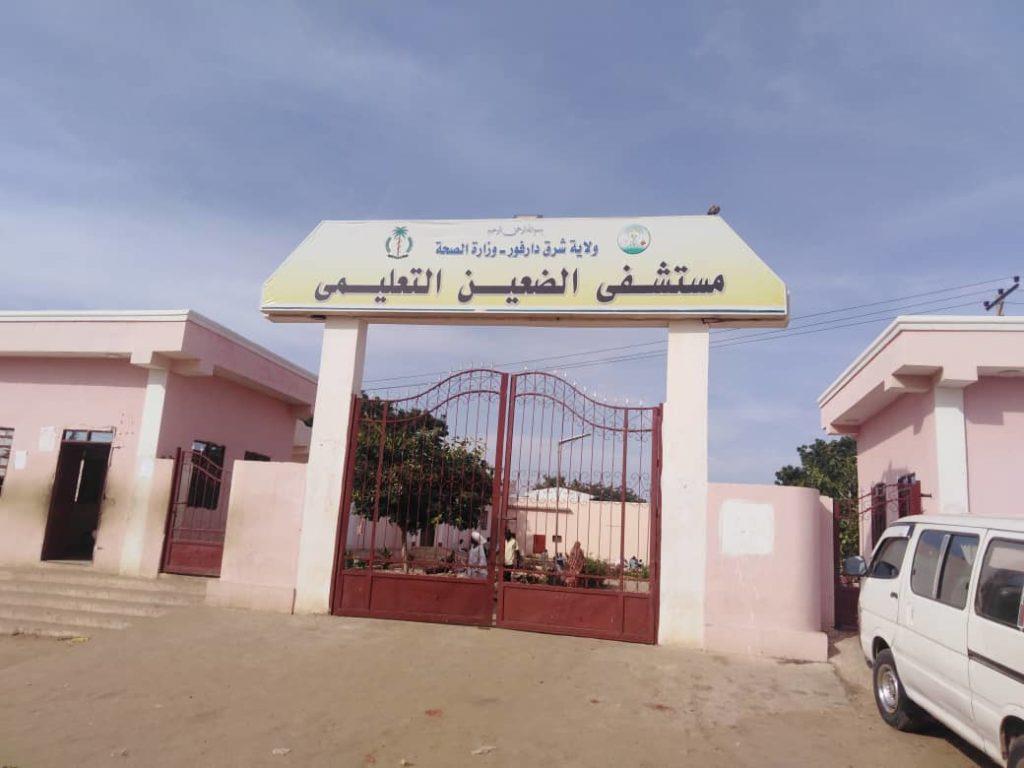
Militia Claims Army Targeted The Facility... Al-Daein Hospital: A Compound Crime
(MENAFN- Sudanow Magazine)
By: Ismail Jibril Tisso
A desperate attempt to conceal a grim humanitarian tragedy...
Army: Attacks on civilian infrastructure are a recurring rebel practice
Shocking testimonies reveal the execution of wounded fighters by the Dagalo faction...
Observers: Disinformation is a key weapon of the rebellion...
During the Eid al-Fitr holiday, the city of Al-Daein, the capital of East Darfur State, witnessed a devastating humanitarian tragedy. Its teaching hospital was struck by a drone attack that killed a number of civilians and militia members. The incident sparked widespread outrage and condemnation, amid conflicting accusations over responsibility. While the Rapid Support Forces (RSF) swiftly blamed the Sudanese Armed Forces (SAF), credible field evidence and local testimonies point to an alternative narrative-one that places the RSF directly under suspicion.
Army Denial
The Sudanese Armed Forces rejected the allegations circulated by the RSF and its supporters, describing them as baseless. In an official statement, the army emphasized its commitment as a regular force to international laws and norms, stressing that targeting healthcare and public service facilities is not part of its doctrine.
Instead, the statement described such actions as a recurring pattern by the RSF, citing previous attacks on hospitals in El-Obeid, Al-Dalang, Kadugli, Umm Rawaba, Al-Rahad, and Al-Dabba, which resulted in casualties among patients and medical personnel.
The army further pointed to attacks on water and electricity infrastructure across several cities, characterizing assaults on civilian facilities as a continuous practice by the RSF. It also referenced serious violations in El-Fasher and the broader Darfur region, including acts that may constitute war crimes and crimes against humanity.
The statement called on human rights organizations and the international community to fulfill their ethical and legal responsibilities by condemning these violations, holding those responsible accountable, and taking steps to halt the flow of weapons used in such attacks.
Testimonies and Sources
Informed sources and eyewitnesses in Al-Daein revealed disturbing details, describing the incident as a deliberate internal operation carried out by RSF leadership to eliminate the burden of wounded fighters.
According to these accounts, the drone that struck the hospital was launched from within East Darfur State, targeting wards housing injured individuals who had recently been evacuated from fighting in Al-Fula. Reports indicate that the militia is facing a near-total collapse in medical services, along with severe shortages of staff and supplies, turning hundreds of wounded into a heavy logistical burden.
Testimonies suggest that this situation prompted leadership to make a calculated decision to eliminate them.
Eyewitnesses also reported that the drone followed a short, low-altitude trajectory, reinforcing the likelihood that it originated from within militia-controlled territory rather than from army positions.
Sources further noted that similar incidents have occurred in the past, targeting both fighters and commanders, as part of a pattern aimed at removing those no longer capable of combat while shifting blame onto the army to gain international sympathy.
International Condemnation
The World Health Organization condemned the attack on Al-Daein Teaching Hospital. Director-General Tedros Adhanom Ghebreyesus stated that the facility was directly struck, causing severe damage to pediatric, maternity, and emergency departments.
He noted that more than 2,000 deaths have been linked to attacks on healthcare facilities in Sudan since the outbreak of the war, emphasizing that medical services must never be targeted and that peace remains the most effective remedy.
He called for de-escalation and for the protection of civilians, as well as healthcare and humanitarian workers.
A Recurrent Pattern
Observers widely agree that the Al-Daein hospital incident reflects a broader pattern of complex warfare-one that combines military operations with disinformation and narrative manipulation.
Since the conflict began on April 15, 2023, the RSF has reportedly pursued a dual strategy: carrying out violations against civilians and infrastructure, including attacks on hospitals such as Al-Nau Hospital in Omdurman, and occupying facilities like maternity hospitals.
These actions are often accompanied by media campaigns aimed at attributing responsibility to the armed forces. Reported violations also include attacks on residential neighborhoods, the militarization of schools and places of worship, and documented atrocities in cities such as El-Geneina and El-Fasher.
The Al-Daein incident appears to fit within this pattern, where military objectives intersect with efforts to influence international public opinion through controlled narratives.
Disinformation Tactics
Social activist, content creator, and researcher in Misseriya heritage, Ahmed Suleiman Gour, stated that disinformation is deeply embedded in the RSF's operational approach.
He argued that blaming the armed forces for the hospital attack aligns with this pattern, asserting that available evidence suggests the militia leadership itself ordered the strike to eliminate wounded fighters.
He added that similar practices have been reported in multiple locations.
Gour also noted that some militia members have publicly complained on social media about neglect, citing lack of medical care and unequal treatment, where some injured individuals are evacuated abroad while others are abandoned in conflict zones.
He emphasized that launching drones from within militia-controlled areas to strike their own forces, then attributing the attack to the army, represents a recurring tactic-one further supported by previous incidents involving attacks on schools and early childhood centers.
Conclusion
Regardless of competing narratives, the tragedy at Al-Daein Teaching Hospital reveals a deeply troubling level of humanitarian deterioration in Sudan's ongoing conflict.
Healthcare facilities-intended as safe havens-are increasingly becoming sites of violence and targeted killings, with civilians and patients bearing the brunt of the suffering.
Such actions constitute clear violations of international humanitarian law, which strictly prohibits attacks on medical facilities.
At the same time, disinformation has become an integral component of the conflict, used as a strategic tool amid shifting dynamics on the ground and mounting pressures across multiple fronts.

Legal Disclaimer:
MENAFN provides the
information “as is” without warranty of any kind. We do not accept
any responsibility or liability for the accuracy, content, images,
videos, licenses, completeness, legality, or reliability of the information
contained in this article. If you have any complaints or copyright
issues related to this article, kindly contact the provider above.
Most popular stories
Market Research

More Story






Comments
No comment