





403
Sorry!!
Error! We're sorry, but the page you were looking for doesn't exist.
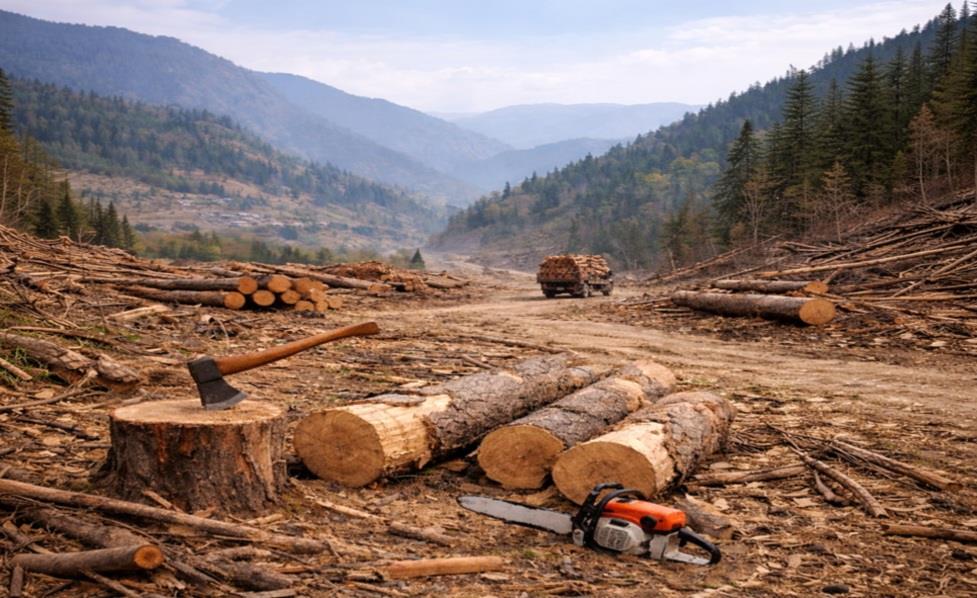
A Valley Stripped Bare: Unchecked Tree Cutting Threatens Tirah's Future
(MENAFN- Tribal News Network) Among developing nations, Pakistan faces some of the harshest effects of climate change, from devastating floods to prolonged droughts. In this context, cutting down forests is not just an environmental mistake. It is a threat to national survival.
Tirah Valley, located in the Khyber region of Khyber Pakhtunkhwa, is losing its forests at an alarming rate. Trees are being cut down across the valley, along roadsides and on hillsides, the local people are deeply worried.
What was once a green and thriving mountain valley, filled with old trees and fruit orchards, is slowly being stripped bare. The situation raises serious concerns about who is allowing this to happen and why no one is stopping it.
The trees being cut are not ordinary ones. Among them are walnut, mulberry, apricot, peach, and apple trees, species that local families have depended on for food and income for generations. Many of these trees are fifty to a hundred years old, and some are even older.
Also Read: War Smoke, Toxic Skies: How Middle East Conflict Is Polluting the Planet
Cutting them down is not just an environmental loss, it is the destruction of something that took a very long time to grow and can never be quickly replaced.
The people of the area have not stayed silent. Residents have come out in protest, demanding that the authorities take notice and put a stop to the tree cutting. For these communities, the forests and orchards are not just trees, they are a source of food, income, and a way of life that has been passed down through generations. Losing them means losing something that cannot easily be replaced with money or promises.
A group of 24 people, members of a local committee, recently visited the valley to see the situation for themselves. What they found troubled them deeply. They strongly condemned the ongoing cutting of trees and called on the government to act immediately.
Their visit confirmed what local people had been saying all along: that the cutting was happening on a large scale and that nobody in authority seemed to be doing anything about it.
Trees that took centuries to grow are being cut down in days, and the people of Tirah Valley are paying the price.
Adding to the concern are reports that the cut timber is being loaded and taken out of the valley. This is a serious issue. If wood is being transported away in large quantities, it suggests that this is not just routine clearing for roads; it looks more like organised commercial logging. People want to know who gave permission for this, who is profiting from it, and where the wood is going.
Some officials may argue that trees are being cut to make way for new roads and other development projects. It is true that building roads in mountain areas sometimes requires clearing some trees.
However, the scale of cutting happening in Tirah Valley goes far beyond what any road project would need. People who have seen the damage with their own eyes say it looks nothing like regular road clearing; it looks like the forests are being deliberately stripped.
When trees are cut legally for development, there are rules that must be followed, environmental checks, replanting requirements, and proper government oversight. None of these appear to be in place in Tirah Valley right now.
Either the rules are being ignored, or the system meant to enforce them is not working. Both possibilities are deeply concerning and need to be investigated urgently.
Forests do much more than provide wood or fruit. In mountain areas like Tirah, trees play a vital role in keeping the land healthy and safe. Their roots hold the soil in place and stop it from washing away during heavy rain.
Without trees, hillsides become unstable and the risk of landslides increases sharply. This is not a distant possibility, it is something that happens quickly once forest cover is removed.
Trees also help manage water. Forests absorb rainfall and release it slowly, which keeps streams flowing during dry seasons and reduces flooding during heavy rains. When trees are removed, this natural system breaks down.
Water runs off the bare land too quickly, streams dry up in summer, and floods become more common. For farming communities that depend on steady water supplies, this can be devastating.
The weather itself can change when forests are lost. Trees provide shade, keep temperatures cool, and hold moisture in the air. Without them, the land becomes hotter and drier. Crops that once grew well may begin to fail.
Over time, an area that was once green and productive can become dry and difficult to farm. These changes do not happen overnight, but they are very hard to reverse once they begin.
The forests of the Valley are home to many animals and birds that depend on trees for shelter, food, and safe places to raise their young. When large areas of forest are cut down, these animals lose their homes. Some may move to other areas, but many cannot adapt quickly enough.
The loss of old trees is especially harmful because mature trees provide things, like hollow trunks, thick bark, and fruit, that young trees simply cannot offer for many decades.
There is also the matter of climate change. Old trees store large amounts of carbon, a gas that, when released into the air, contributes to global warming. When these trees are cut down, that stored carbon is released.
Pakistan is already one of the countries most affected by climate change, with floods, droughts, and extreme weather becoming more frequent. Cutting down forests makes this situation worse, not better.
The forests of Tirah Valley can still be saved, but only if action is taken quickly. The government must send forest officials to the valley to monitor what is happening and stop any cutting that does not follow the law.
A proper investigation must be launched into the transport of timber out of the valley, and those responsible, whether they are contractors, officials, or businesspeople, must be held accountable.
In the longer term, the government needs to make sure that forest protection laws are properly enforced in the Khyber region. Local communities must be included in decisions about the forests they live beside and depend on. They know the land better than anyone, and they have the most to lose if the forests disappear.
The trees of Tirah Valley have stood for generations. They have fed families, sheltered wildlife, protected hillsides, and kept the valley green through changing seasons.
If they are lost, the damage will be felt for decades, in empty hillsides, dried-up streams, failed harvests, and communities left without the natural resources they once relied upon. The forests are disappearing. It is time to act before it is too late.

Legal Disclaimer:
MENAFN provides the
information “as is” without warranty of any kind. We do not accept
any responsibility or liability for the accuracy, content, images,
videos, licenses, completeness, legality, or reliability of the information
contained in this article. If you have any complaints or copyright
issues related to this article, kindly contact the provider above.
Most popular stories
Market Research

More Story





Comments
No comment