

Vanishing Winters Of Swat: Climate Change Threatens Farms, Water, And Livelihoods


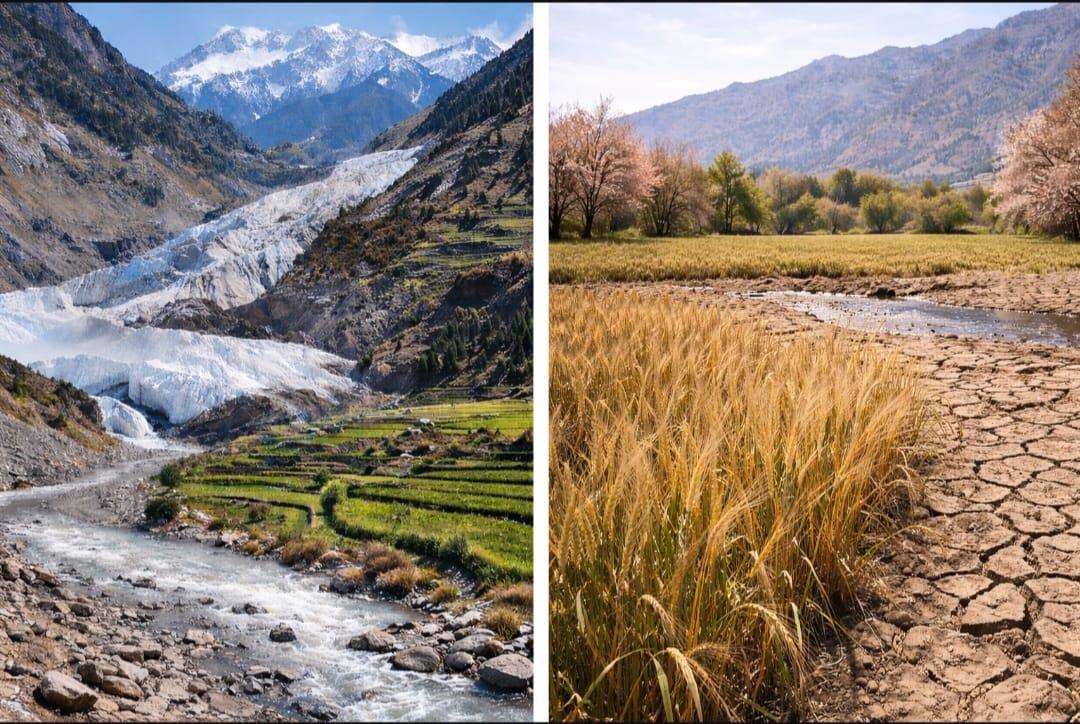
Swat, once famous for its long and harsh winters, continuous snowfall, and cold springs, is now experiencing a rapid shift in its climate patterns.
The duration of winter is decreasing, snowfall has significantly declined, and the effects are becoming visible on agriculture, water resources, and the local economy.
Farmers say that these climatic changes are turning into a major threat to their crops and orchards, while experts describe the situation as a consequence of global climate change.
In this regard, environmental expert Dr. Sanaullah, Assistant Professor at the Department of Environmental Sciences, University of Swat, states that multiple scientific studies have confirmed that winter duration is decreasing in northern Pakistan, including Swat.
According to him, the main reasons include rising regional temperatures, changes in the western wind systems, reduced snowfall, and increasing air pollution.
He explains that all these factors are linked to global climate change, which is causing winters in mountainous regions to become shorter and relatively less severe.
Also Read: Sindh Moves to Upgrade Mohenjo Daro Museum to Global Standards
Dr. Sanaullah says that the reduction in winter has widespread effects on water, agriculture, and natural ecosystems. Due to decreased snowfall, glaciers are melting more rapidly, affecting river flow systems. Initially, water availability may seem higher, but in the long term, there is a risk of water shortages.
He further explains that crops like wheat and fruit trees such as apples, peaches, and apricots require a certain amount of cold weather for proper growth. When this cold period shortens, production is affected, and the agricultural system becomes imbalanced.
Local residents of Swat are also clearly feeling these changes in their daily lives. Forty-six-year-old Hadiya says that the current weather is completely different from what she experienced in her childhood. According to her, winters in Swat used to be much longer.
From December to March, snowfall was common, and rains would continue for several days at a time. Sometimes it rained continuously for seven to ten days. But now, neither the snowfall nor the prolonged rains remain as they once were.
Hadiya adds that previously, summer was limited to July and August, and even then, fans were rarely needed because the environment remained cool. Now, if there is no rain in February, heat is already noticeable.
She also mentions that many natural springs that once flowed with very cold water have either dried up or weakened, affecting the local water system.
The shortening of winter in Swat is not limited to temperature changes alone; it has also disrupted the natural rainfall pattern on which agriculture depends. In the past, prolonged winter rains maintained soil moisture, allowing crops to grow naturally. Now, rainfall duration has shortened and become unpredictable. Farmers say this shift has made farming more difficult and uncertain than before.
Shamsher Ali, a farmer from Alam Ganj in Swat, says that earlier, winter rains were heavier and lasted longer, maintaining soil moisture and reducing the need for additional irrigation.
Now winters are shorter and rainfall has decreased, causing the soil to dry quickly and crops to weaken.
He further explains that unseasonal rain is one of the biggest problems. If rain does not fall, crops dry out; but if rain or hail occurs near harvest time, the entire crop can be destroyed.
He says that peach and apricot orchards have also suffered because trees no longer receive sufficient cold, resulting in reduced fruit production and declining income.
Regarding water scarcity, he notes that springs once flowed near the fields and water was abundant. Now many springs have dried up, preventing timely irrigation and causing further losses.
Experts say that the effects of these changes are not limited to crops alone; wildlife and plant species are also being affected. According to Dr. Sanaullah, climate change is altering the natural ecological systems of mountainous regions.
Many plant species that thrive in cold environments no longer find suitable conditions, leading to a decline in certain rare plants and flowers. Similarly, wildlife habitats are being disrupted, forcing some species to move to higher altitudes, which may disturb ecological balance.
Dr. Sanaullah emphasizes that immediate and long-term policy measures are essential to address this situation.
He says the government and relevant institutions must develop effective climate policies, including forest protection, large-scale afforestation, better water resource management, and strengthening climate monitoring systems.
In addition, promoting climate-resilient agriculture and comprehensive planning for sustainable development in mountainous areas are crucial to minimizing future risks.
The changing weather in Swat is no longer just a seasonal shift; it is becoming a serious environmental and economic issue.
The shortening of winters has not only affected farmers' crops and orchards but has also endangered water resources, vegetation, and the natural ecological balance.
Experts warn that without timely and effective policies, the impacts could become even more severe in the coming years.

Legal Disclaimer:
MENAFN provides the
information “as is” without warranty of any kind. We do not accept any
responsibility or liability for the accuracy, content, images, videos,
licenses, completeness, legality, or reliability of the information
contained in this article. If you have any complaints or copyright issues
related to this article, kindly contact the provider above.
Comments
No comment