




403
Sorry!!
Error! We're sorry, but the page you were looking for doesn't exist.
Advancing Healthcare Resilience Through Innovation In The Middle East
(MENAFN- Khaleej Times)
For decades, resilience in healthcare was defined by the ability to withstand disruption. Nations focused on securing supply chains, maintaining access to essential medicines, and protecting critical services. These priorities remain important, especially in a world where global shocks continue to test even the most robust systems. But the future demands a broader and more ambitious vision.
Across the Middle East, a new understanding of resilience is taking shape. It is no longer measured only by what we can procure in a crisis, but by what we can develop, manufacture, and deliver to patients. As chronic and complex diseases such as diabetes, cancer, and neurodegenerative conditions rise across the region, resilience now depends on scientific depth, clinical capability, and the ability to bring new treatments to life.
Recommended For YouA strategic shift in the region's health journey
Throughout the GCC region, governments share a long-term commitment to strengthening resilience, each advancing this agenda across distinct priority areas. In the UAE for example, a genome programme was launched to map every Emirati's DNA, paving the way for personalised medical care. This initiative supports the country's early-stage biotechnology aspirations, alongside its focus on medicine security and advanced, high-quality pharmaceutical manufacturing. Saudi Arabia's Vision 2030 shares similar ambition through its National Biotechnology Strategy, which aims to advance the Kingdom's self-sufficiency in vaccines, biomanufacturing and genomics. Qatar is developing university–industry pathways for future research and innovation partnerships, while Kuwait is modernising its healthcare infrastructure, advancing digital tools, and progressing its health technology assessment capabilities in line with Kuwait Vision 2035. GCC governments are also creating incentives for global life sciences firms through research partnerships, innovation funding, and streamlined regulations for digital health, data privacy, and responsible adoption of AI in healthcare.
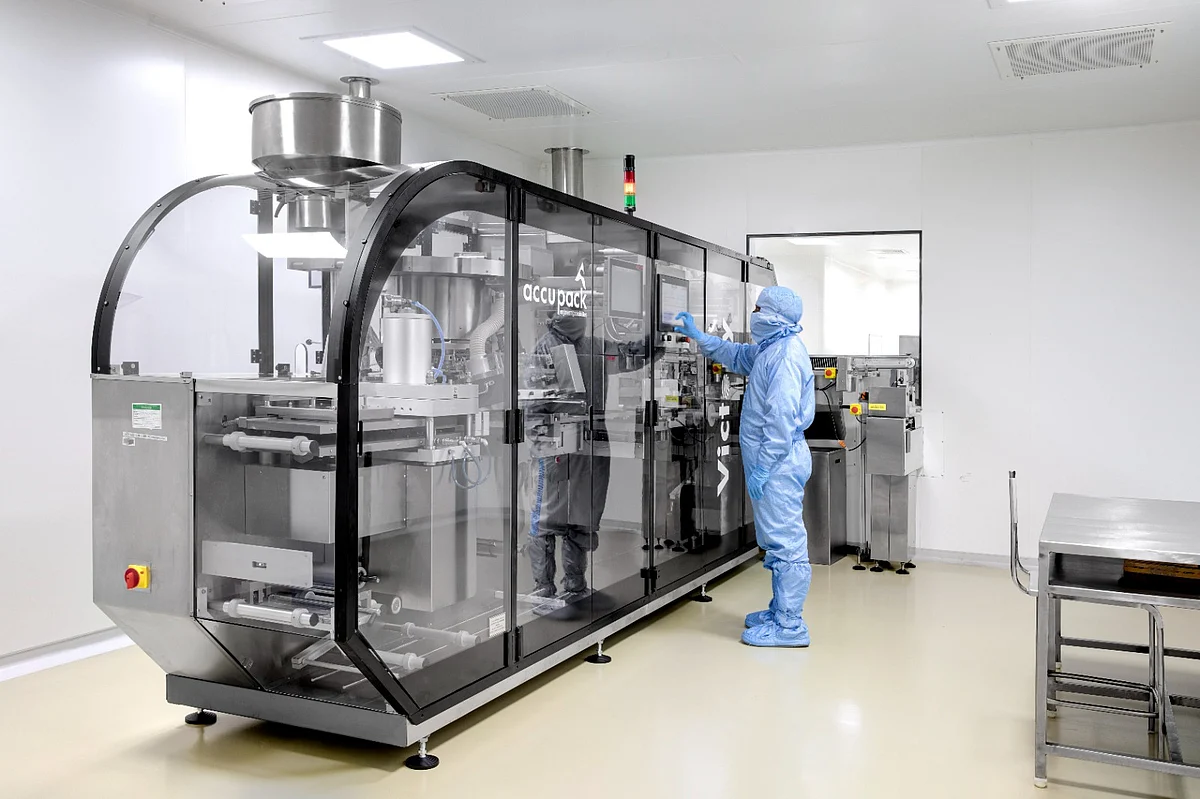
This momentum is increasingly reflected in how countries are strengthening their industrial foundations. Sovereign investment in life sciences is supporting the development of platforms with the scale, manufacturing depth, and regulatory capability required to meet national health priorities over the long term. ADQ, for example, consolidated its shareholdings in three life sciences entities headquartered in Switzerland, Turkey and Egypt, to form a global holding company called Arcera Life Sciences - aimed at addressing and mitigating healthcare challenges by offering products that improve the quality and longevity of human life. The organisation, headquartered in Abu Dhabi, develops and commercialises more than 2,000 medicines across over 60 markets, with over 40% of its UAE portfolio produced locally. This model helps reinforce predictable access to medicines while remaining integrated with global supply chains.
The expansion of these platforms is also enabling progress beyond essential medicines toward more complex therapeutic areas. In fact, just last year, we saw the introduction of an advanced therapy that addresses antibiotic resistance in the GCC and beyond. An early-stage Alzheimer's therapy is also set to be commercialised across various markets, including the Middle East. These developments illustrate how regional life sciences capabilities are beginning to translate scientific innovation into patient access, particularly in areas where unmet medical need remains significant.
A long-term commitment to healthier futures
Progress, however, is a long-term endeavour. Building resilient systems requires ongoing collaboration between governments, industry, academia, regulators, and the wider community. It demands investment in talent, advanced manufacturing, digital infrastructure, and AI-powered insights across markets that are advancing at different pace but with the same long-term ambition.
These investments ensure that health systems are not only prepared for today's pressures but ready for the future.
The Middle East is charting a path toward this reality by enabling complementary strengths across countries. With a focus on developing robust domestic capabilities, advancing global partnerships, and expanding regional scientific expertise, the region is not only preparing to meet future health challenges. It is also shaping the innovative solutions for them. This reflects a growing belief that resilient systems do more than withstand disruption. They create opportunity, enable progress, and improve health outcomes for generations to come.
The writer is Chief Executive Officer of Arcera.

Legal Disclaimer:
MENAFN provides the
information “as is” without warranty of any kind. We do not accept
any responsibility or liability for the accuracy, content, images,
videos, licenses, completeness, legality, or reliability of the information
contained in this article. If you have any complaints or copyright
issues related to this article, kindly contact the provider above.
Most popular stories
Market Research

More Story







Comments
No comment