




403
Sorry!!
Error! We're sorry, but the page you were looking for doesn't exist.
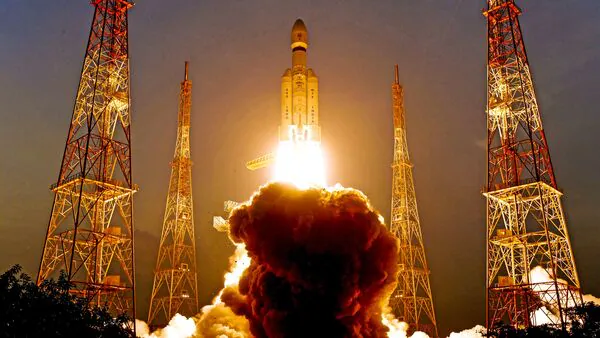
How Much Does India Spend On Space Missions? Budget Of ₹1,200 Crore For Gaganyaan, ₹150 Crore For...
| S No. | Mission | 2024-25 | 2025-26 | ||
|---|---|---|---|---|---|
| Revised Budget Estimate (in lakh) | Actual (in lakh) | Budget Estimate (in lakh) | Actual (in lakh) | ||
| 1 | ADITYA-L1 | 1300 | 1395 | - | - |
| 2 | INSAT-3 Satellite | 100 | 91.29 | - | - |
| 3 | Chandrayaan-III | 1850 | 1226.55 | - | - |
| 4 | Manned Mission Initiatives/(Gaganyaan) | - | - | 120000 (1200 crore) | 67790.64 |
| 5 | Chandrayaan-4 | - | - | 15000 (or 150 crore) | 2447 |
| 6 | Chandrayaan-5 (LUPEX) | - | - | 200 | 22.55 |
| 7 | Mars Lander Mission | - | - | 200 | 0 |
| 8 | Venus Orbiter Mission | - | - | 5000 (50 crore) | 499.86 |
| 9 | Joint ISRO NASA Mission to ISS | - | - | 13500 (135 crore) | 11123.79 (111 crore) |
| 10 | Indian Data Relay Satellite Series | - | - | 8000 (80 crore) | 3194.87 |
| 11 | Dev. of Next Generation Launch Vehicle (NGLV) | - | - | 15800 (158 crore) | 328.88 |
In his reply to the Lok Sabha, Jitendra Singh said no project was stopped or delayed due to a lack of funds.
What are these ISRO missions?ADITYA-L1: Aditya-L1 is a satellite dedicated to the comprehensive study of the Sun.
INSAT-3 Satellite: A multipurpose satellite for providing telecommunications, television broadcasting, meteorological and search and rescue services.
Chandrayaan-III: Chandrayaan-3 is India's third lunar mission. It created history in August 2023 by successfully making a soft landing on the Moon's south pole, making India the first nation to do so.
Also Read | 3-day ISRO space exhibition at Rajasthan Technical University draws high student turnoutManned Mission Initiatives/(Gaganyaan): The Gaganyaan project is India's human spaceflight mission. It aims to send Indian astronauts (Gaganyatris) into Low Earth Orbit (LEO) for three days and bring them back safely to Earth.
Chandrayaan-4: It aims to bring lunar rock and soil samples back to Earth. It is expected to launch in 2028.
Chandrayaan-5 (LUPEX): It will be the fifth mission in the Chandrayaan series of lunar missions, in collaboration with Japan's JAXA, to study the lunar volatile materials, including lunar water, in the vicinity of a Permanently Shadowed Region (PSR) in the lunar South pole.
Also Read | ISRO's 'Bahubali' rocket powers heaviest communication satellite into orbitMars Lander Mission: ISRO's Mars Lander Missio probably refers to Mangalyaan-2. ISRO officials told India Today that in this mission, India will try to achieve a soft landing on the Martian surface. The Mangalyaan-2 mission is scheduled for launch in 2030.
Venus Orbiter Mission: Also known as Shukrayaan-1, it is India's first planned mission to Venus. Expected to be launched in March 2028, the Venus Orbiter Mission will explore the planet's atmosphere, surface, and its interaction with the Sun.
Joint ISRO NASA Mission to ISS: The joint ISRO-NASA mission to the ISS primarily refers to recently-concluded Axiom Mission 4 (Ax-4), which Gaganyatri Shubhanshu Shukla was part of. It was a private crewed spaceflight to the International Space Station (ISS).
Also Read | Axiom-4: Astronaut Shubhanshu Shukla turns farmer in ISSIndian Data Relay Satellite Series: The IDRSS is said to be a planned Indian constellation of inter-satellite communication satellites.
Next Generation Launch Vehicle (NGLV): It's a new reusable, low-cost launch space vehicle being developed. "NGLV will have 3 times the present payload capability with 1.5 times the cost compared to LVM3, and will also have reusability, resulting in low-cost access to space and modular green propulsion systems," the government says.

Legal Disclaimer:
MENAFN provides the
information “as is” without warranty of any kind. We do not accept
any responsibility or liability for the accuracy, content, images,
videos, licenses, completeness, legality, or reliability of the information
contained in this article. If you have any complaints or copyright
issues related to this article, kindly contact the provider above.
Most popular stories
Market Research

More Story






Comments
No comment