




403
Sorry!!
Error! We're sorry, but the page you were looking for doesn't exist.
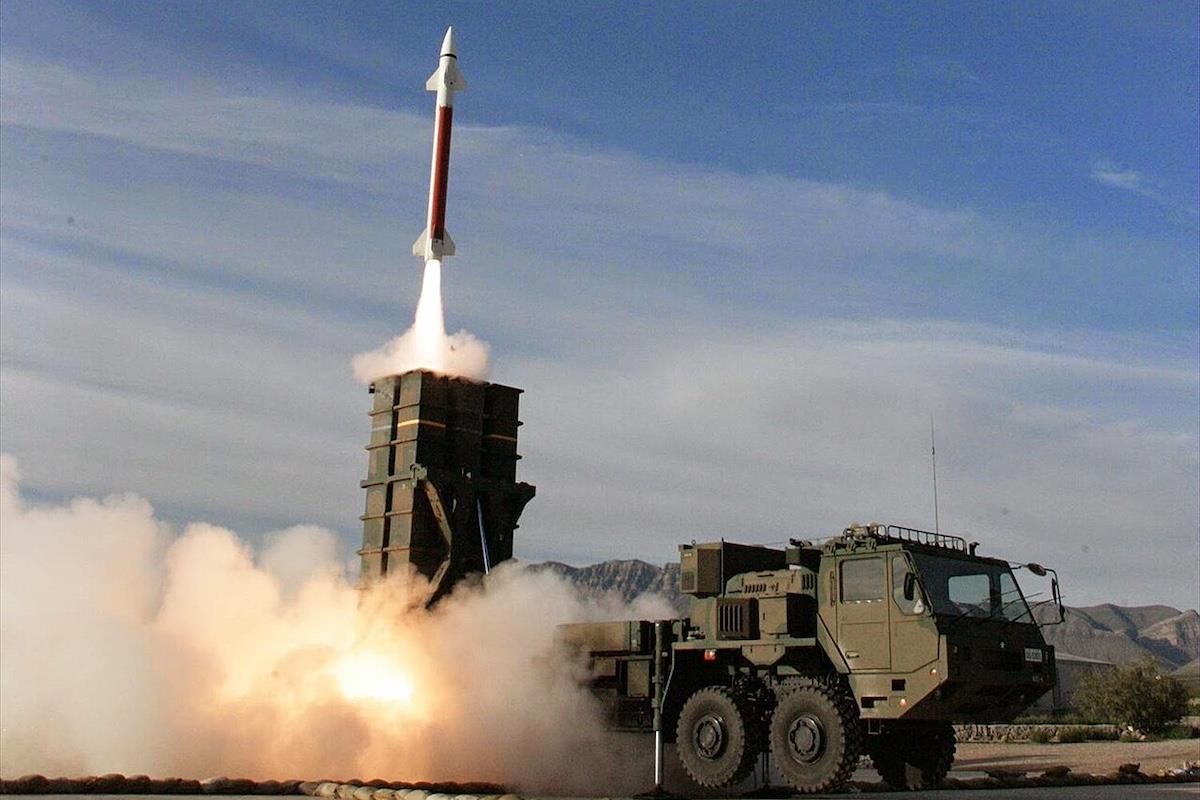
Japan Missile Deal Would Put Philippines On Guam's Front Line
(MENAFN- Asia Times)
A potential Japanese missile sale may have opened the door to the Philippines' deepest military integration with the US since the Cold War - and China is watching closely.
AMD's MI308 chips may face H20‐like headwinds in China
Free and Open Indo-Pacific 4.0 under Prime Minister Takaichi?

India's warm welcome for Putin sends a cold message to Washington

Sign up for one of our free newsletters
This month, multiple media outlets reported that Japan and the Philippines have advanced informal talks on a potential sale of the Type 03 Medium-Range Surface-to-Air Missile (Chu-SAM), a medium-range system capable of intercepting aircraft and cruise missiles.
The Philippines has conveyed interest in acquiring the Type 03 amid escalating confrontations with China in the South China Sea. A substantive feasibility study is expected once Prime Minister Sanae Takaichi's government scraps rules limiting defense transfers to five non-combat categoriesa politically sensitive move requiring only a National Security Council (NSC) decision rather than parliamentary revision.
The Philippines' decision to give the US access to nine military sites through the Enhanced Defense Cooperation Agreement (EDCA) and host the US's Typhon missile system that could hit targets in mainland China makes it a potential target for Chinese strikes during a US-China conflict over Taiwan, making missile defense imperative.
Currently, the Philippines' limited missile defense capabilitiesabout three Israeli-made medium-range SPYDER batteriesand most likely a very limited interceptor stockpile, could mean that it would have to choose between defending key military installations or critical infrastructure and population centers.
Additional missile defense systems from Japan could help the Philippines boost its ability to align with US strategy within its territory, allowing it to defend US military facilities and Typhon launch sites that offer deep strike capabilities against China.
Latest storiesAMD's MI308 chips may face H20‐like headwinds in China
Free and Open Indo-Pacific 4.0 under Prime Minister Takaichi?
India's warm welcome for Putin sends a cold message to Washington
Beyond that, the US could use the Philippines as an early warning hub for Guam's defense, with US and Philippine missile defense systems protecting the former's missile defense radars stationed in the latter's territory.
China appears to be shaping the South China Sea into a bastion for its nuclear ballistic missile submarines (SSBNs), with its militarized claimed islands now spanning the Paracels and Spratlys, with de facto control of Scarborough Shoal triangulating the semi-enclosed body of water into a submarine-launched ballistic missile (SLBM) launchpad.
While China's older JL-2 SLBM could not reach the continental US from the South China Sea, Guam is easily within its 8,000-9,000-kilometer range.
Although the US has been fortifying Guam against such an attack with layered Aegis Ashore and Terminal High Altitude Area Defense (THAAD) systems, forward-deployed US missile defense radars in the Philippinesakin to US AN/TPY-2 radar deployments in Japan to detect North Korean and Chinese ballistic missile launchescould provide additional early warning against a missile attack from the South China Sea.
However, it is doubtful that the US would rely on the Philippines for missile defense, given the latter's limited capabilities. The US might instead deploy Aegis-equipped destroyers and cruisers in the South China Sea, along with THAAD in Philippine territory, for midcourse missile interception.
Terminal interception capabilities would be provided by US Patriot batteries in the Philippines. This approach would allow the Philippines to concentrate its limited missile defenses on safeguarding critical infrastructure and population centers.
Still, it is doubtful if such systems actually work as advertised. The US Department of Defense's (DoD) 2024 China Military Power Report (CMPR) states that the People's Liberation Army Rocket Force (PLARF) has 1,300 medium-range ballistic missiles (MRBMs) capable of targeting the Philippines.
The sheer number of Chinese missiles vis-a-vis limited US and Philippine interceptor stocks would make defending US EDCA sites and Typhon batteries challenging, to say the least, in a saturation attack.
Furthermore, a March 2025 report by the American Physical Society (APS) stresses that the physics of stopping an intercontinental ballistic missile (ICBM) overwhelmingly favor the offense. Boost-phase interception requires implausible speed, proximity and decision time; midcourse defense collapses under the unsolved problem of discriminating warheads from decoys in space; and terminal intercept offers less than a minute to act.
The report states that no US system has demonstrated reliable performance against ICBMs under realistic conditions and that emerging countermeasureshypersonic glide vehicles (HGVs), maneuvering reentry vehicles (RVs) and multiple warheadsfurther erode effectiveness.
The JL-2 could fall into the category of weapons capable of defeating US missile defenses, as described in the APS report. Each of China's six Type 094 SSBNs could carry 12 older JL-2 or newer JL-3 missiles that could reach the US mainland, with each JL-2 capable of carrying eight multiple independently targetable reentry vehicles (MIRVs) and decoys.
Additionally, Guam's proximity to the South China Sea compared to the US mainland may significantly reduce JL-2 missile flight time, leaving an even smaller window for interception.
Sign up for one of our free newsletters
-
The Daily Report
Start your day right with Asia Times' top stories
AT Weekly Report
A weekly roundup of Asia Times' most-read stories
With the Marcos Jr administration's credibility in growing question due to historical baggage from his father's abusive Martial Law era, poor economic performance and corruption scandals in flood-control projects, it may lean more on its US-backed security credentials to counter criticism.
In practice, this could mean stoking Philippine public outrage against China-always close to the surface, opinion polls show-over territorial disputes in the South China Sea. It could also mean showcasing US-led multilateral naval exercises and deployments on Philippine territory – which in the future may include US missile defense infrastructureas a strong signal of continued US and its strategic allies' support.
If the Philippines procures Japanese missile defenses, it could solidify its integration with US forces in its territory and pave the way for bolstering Guam's defenses. Yet that added deterrence also narrows Philippine autonomy, binding it more tightly into a security framework that leaves little space to balance between superpowers.
Sign up here to comment on Asia Times stories Or Sign in to an existing accounThank you for registering!
An account was already registered with this email. Please check your inbox for an authentication link.
-
Click to share on X (Opens in new window)
Click to share on LinkedIn (Opens in new window)
LinkedI
Click to share on Facebook (Opens in new window)
Faceboo
Click to share on WhatsApp (Opens in new window)
WhatsAp
Click to share on Reddit (Opens in new window)
Reddi
Click to email a link to a friend (Opens in new window)
Emai
Click to print (Opens in new window)
Prin

Legal Disclaimer:
MENAFN provides the
information “as is” without warranty of any kind. We do not accept
any responsibility or liability for the accuracy, content, images,
videos, licenses, completeness, legality, or reliability of the information
contained in this article. If you have any complaints or copyright
issues related to this article, kindly contact the provider above.
Most popular stories
Market Research









Comments
No comment