




403
Sorry!!
Error! We're sorry, but the page you were looking for doesn't exist.
Space Debris: Will It Take A Catastrophe For Nations To Take The Issue Seriously?
Author: Ian Whittaker
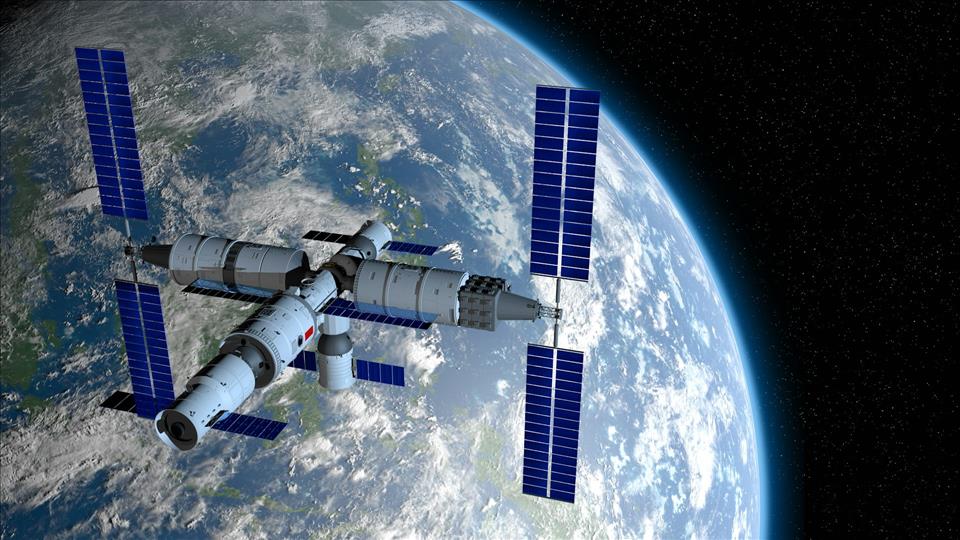
(MENAFN- The Conversation) China routinely sends astronauts to and from its space station Tiangong. A crew capsule is about to undock from the station and return to Earth, but there's nothing routine about its journey home.

The Shenzhou-20 capsule will carry no crew, because one of its windows has been struck by space debris. Astronauts noticed an apparent crack on November 5, during pre-return checks.
Space journalist Andrew Jones explained how experts on the ground had studied images of the damage and concluded that a piece of debris smaller than 1mm (roughly 1/25th of an inch) had penetrated from the outer to inner layers of the glass.
Simulations and tests confirmed a low probability that the window could fail during the high-temperature re-entry through Earth's atmosphere. Although a worst-case scenario, it was one that officials deemed unacceptable. A rescue mission – Shenzhou-22 – was launched to bring the astronauts back from the station.
Experts have been warning about the threat posed by space debris for years. The ever-growing number of space programmes by states and private entities is now contributing to an increasingly congested environment in orbit.
The European Space Agency estimates that there are more than 15,100 tonnes of material in space that has been launched from Earth. There are 1.2 million debris objects between 1cm and 10cm, and 140 million debris objects between 1mm and 1cm.
In low orbit they will be travelling around 7.6 km/s (roughly 17,000 miles per hour), damaging anything they hit. This is how a piece less than 1mm in size was able to penetrate the thick glass of Shenzhou-20's capsule.
Given the mounting number of objects in orbit, this is likely to be a more regular occurrence. It's costly in terms of damage to equipment, and increasingly a threat to life. When a piece of debris hits another object in space, it can also create more space debris, adding to the problem.
A number of countries are able to track what's in space, but given that these may include classified satellites, there is a reluctance by states to share details. China's space programme is overseen by its military, in line with a view that space is inherently linked to national security. This only adds to the geopolitical tensions between states around the use of space.
Treaties and responsibilitiesThe outer space treaty from 1967 sought to outline how space should be governed. But it is outdated and does not account for the increased presence of debris or the proliferation of private space launches. Nor does it address responsibilities when it comes to the sustainable use of space.
A total of 117 states are parties to the treaty, yet while efforts are ongoing to develop new norms around space governance, including the creation of the Inter-Agency Space Debris Coordination Committee, the organisation may offer a platform for cooperation and research but does not result in binding decisions for state action. The lack of any global agreement on space debris, and more importantly repercussions, makes tackling the problem of space debris even harder.
Technology is being developed to address space debris – but this generally appears as concept mission plans with only a few trial tests being launched anywhere globally. Examples include the idea of a harpoon to collect large pieces – although the recoil of such an instrument means the spacecraft that deploys it could become a new piece of debris.
An alternative is the highly technological approach of a big net. This will work in the sense that if you can slow the debris down, it will fall into the atmosphere and burn up.
The problem with these methods is the lack of sustainability, sending one satellite up to bring only a few pieces down uses up fuel, which is adding to climate variation. An appropriate and efficient solution would be a constellation of satellites that stay in orbit and bring debris down. The process, of course, is still something to be researched.
A ground-based solution is the laser broom, which uses laser pulses to slow down objects orbiting Earth, potentially allowing them to re-enter the atmosphere and burn up. However, it is yet to be tested and comes with its own potential problems such as atmospheric warming and missing its target.
Yet without addressing the geopolitics of space governance, the removal of space debris is moot as a focus on national interests, security concerns, and the increasing presence of the private sector means that pollution in Earth orbit is happening faster than we can clean it up.
Any collisions cause many more pieces to be produced than can be collected, some notable examples include the destruction in 2007, by China, of its own Fengyun-1C satellite as part of an anti-satellite weapon test. This added an estimated 3,500 pieces in orbit.
In 2009, a Russian satellite called Kosmos 2251 collided with an Iridium communications satellite, generating roughly 2,400 pieces of debris. In 2021, Russia carried out its own anti-satellite missile test, destroying the Kosmos 1408 satellite and generating a further 1,787 pieces. These mostly came back through the atmosphere, but 400 pieces were left in orbit.
Whether such an anti-satellite weapon could be repurposed for space debris removal is unlikely but has potential.
It will require concerted global cooperation and effort to not only indicate what spacecraft states and private companies have in space, but to commit to de-orbiting every future spacecraft at the end of its life, reducing future debris.
The current space debris mitigation standards by the European Space Agency highlight that any satellites must be de-orbited within 25 years of the end of operations. While this also is intended to apply to miniature “cubesats” – the process of bringing them back down has yet to demonstrated.
Ultimately this debris will cause problems for all space launch agencies and private companies, as there is a limit to our ground-based tracking and warning abilities. This makes addressing the global governance of space critical. However, it may take several high-cost satellites being taken out of commission, or potentially loss of life, for this issue to be taken seriously.
Institution:Nottingham Trent University

Legal Disclaimer:
MENAFN provides the
information “as is” without warranty of any kind. We do not accept
any responsibility or liability for the accuracy, content, images,
videos, licenses, completeness, legality, or reliability of the information
contained in this article. If you have any complaints or copyright
issues related to this article, kindly contact the provider above.
Most popular stories
Market Research

More Story






Comments
No comment