







403
Sorry!!
Error! We're sorry, but the page you were looking for doesn't exist.
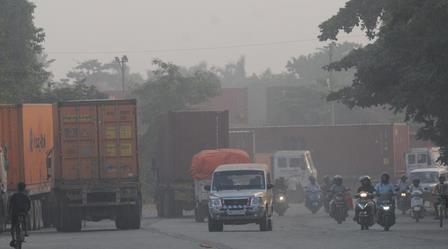
Six-Month Air Quality Report Card Reveals Alarming Pollution Levels Across West Bengal: Study
(MENAFN- IANS) Kolkata, Aug 7 (IANS) The Centre for Research on Energy and Clean Air (CREA) said on Thursday that an air quality report card has revealed alarming pollution levels in West Bengal in the last six months.
The half-yearly report card of air quality, a copy of which is available with IANS, which is based on data from the Central Pollution Control Board (CPCB), has revealed sustained and hazardous levels of air pollution in all cities in West Bengal, with Asansol being the most polluted city.
The data, which has been analysed by CREA, covering January 2025 to June 2025, shows that all cities in the state, except Haldia, for their PM 2.5 values, breached the PM2.5 and PM10 limits.
It may be noted that PM10 are coarse particles up to 10 micrometres in diameter -- about one-seventh the width of a human hair.
Once inhaled, it could cause respiratory irritation and cardiovascular issues.
PM2.5, even finer at just 2.5 micrometres or less, is more toxic as it can enter the bloodstream and damage internal organs.
Primarily produced by combustion sources, PM2.5 is linked to heart attacks, strokes, asthma, and lung diseases, posing severe risks to children, the elderly, and those with existing health conditions.
Manoj Kumar, an analyst from CREA, said: "The long-term exposure was especially concerning because the cumulative inhalation of PM2.5, even at low concentrations, could lead to chronic inflammation and oxidative stress, which drove the progression of cardiovascular and respiratory diseases."
According to Kumar, long-term exposure to PM2.5 levels was associated with significantly increased risks of heart and lung disease, particularly among vulnerable populations such as children, the elderly, and individuals with pre-existing health conditions.
According to the report card, Asansol was the most polluted city in West Bengal with an average concentration of 60 μg/m3, which is 1.5 times higher than National Ambient Air Quality Standards (NAAQS).
Except Haldia (38 μg/m3), all other cities, viz., Barrackpore (52 μg/m3), Howrah (52 μg/m3), Durgapur (50 μg/m3), Siliguri (49 μg/m3), and Kolkata (44 μg/m3) exceeded the NAAQS.
Kolkata recorded 88 μg/m3 average PM10 -- 46 per cent higher than the safe limit -- and 44 μg/m3 of PM2.5, slightly over the national standard of 40 μg/m3.

Legal Disclaimer:
MENAFN provides the
information “as is” without warranty of any kind. We do not accept
any responsibility or liability for the accuracy, content, images,
videos, licenses, completeness, legality, or reliability of the information
contained in this article. If you have any complaints or copyright
issues related to this article, kindly contact the provider above.
Most popular stories
Market Research

More Story








Comments
No comment