








403
Sorry!!
Error! We're sorry, but the page you were looking for doesn't exist.
Hegseth Dangles Second Typhon Missile System For Philippines
(MENAFN- Asia Times)
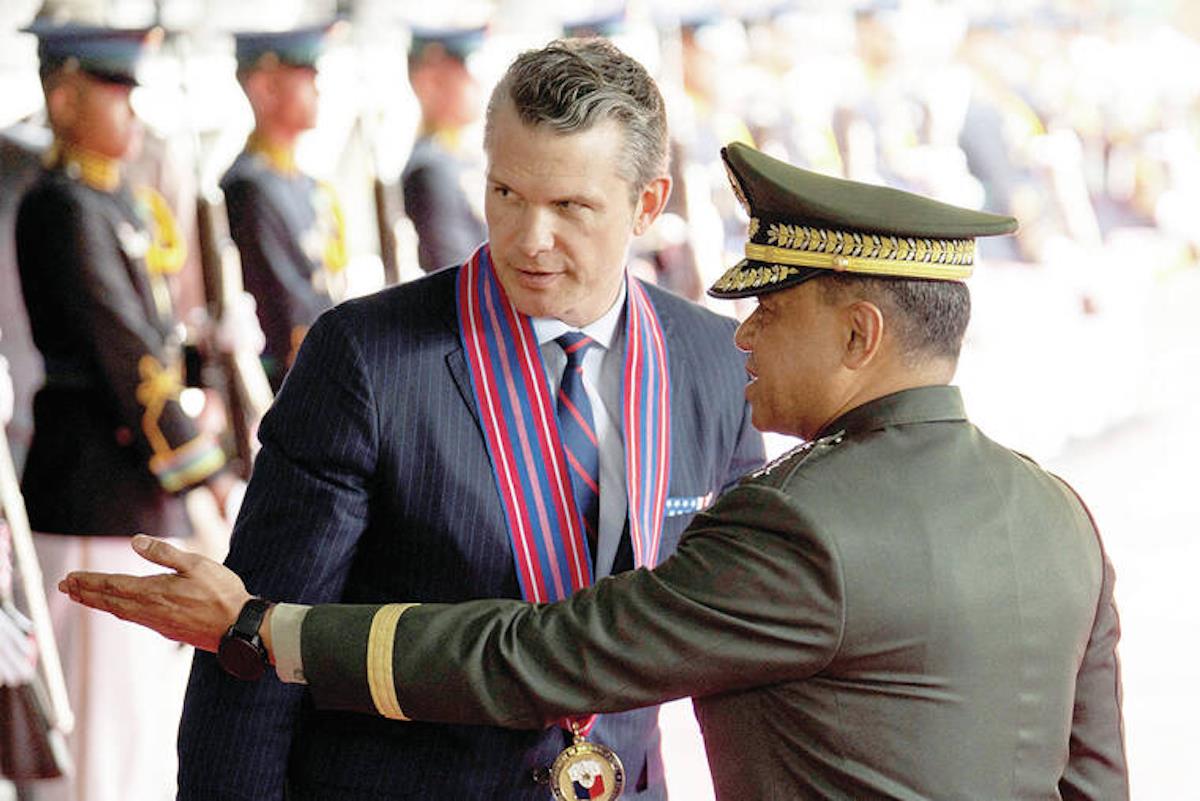
MANILA – US Defense Secretary Pete Hegseth's visit to Manila brought a sigh of relief to his Filipino hosts and new cause for military concern in China.
Top Philippine officials and strategists have fretted for months about potential disruptions and possible downgrades in strategic relations amid signs of an isolationist turn in Washington's foreign policy under Donald Trump.
Last month, Philippine Ambassador to Washington Jose Manuel Romualdez publicly warned that his country should actively prepare for the day when it can no longer rely on its century-old American ally.
The high-profile visit by the US defense chief, who will soon be followed by US Secretary of State Marco Rubio , has likely put those strategic doubts somewhat to rest.
During his courtesy call at the Malacañang Palace, Hagseth told Philippine President Ferdinand Marcos Jr that President Trump sends his well wishes and“thinks very fondly of this great country.”
Crucially, Hegseth underscored how both the US president and he“want to express the ironclad commitment we have to the Mutual Defense Treaty (MDT) and to the partnership, economically, militarily, which our staffs have worked on diligently for weeks and weeks and months.”
In response, the Filipino leader praised how the visit was“a very strong indication and sends a very strong message of the commitment of both our countries to continue to work together, to maintain the peace in the Indo-Pacific Region within the South China Sea.”
Beyond diplomatic niceties, Hegseth also announced crucial upgrades to bilateral military cooperation to“re-establish deterrence” in light of rising tensions between Manila and Beijing over contested territories in the South China Sea.
In particular, Hagseth announced the deployment of the Navy-Marine Expeditionary Ship Interdiction System (NMESIS), a naval strike missile-equipped unmanned ground vehicle capable of striking targets up to 100 nautical miles away, for this year's edition of Philippine-US Balikatan exercise.
The US defense chief also announced the deployment of unspecified“highly-capable unmanned surface vehicles” for planned joint drills in the South China Sea. He was likely referring to US-made Maritime Tactical Systems T-12 MANTAS and Devil Ray T-38 drones, which were used by American troops deployed to the Philippines earlier.

Legal Disclaimer:
MENAFN provides the
information “as is” without warranty of any kind. We do not accept
any responsibility or liability for the accuracy, content, images,
videos, licenses, completeness, legality, or reliability of the information
contained in this article. If you have any complaints or copyright
issues related to this article, kindly contact the provider above.
Most popular stories
Market Research

More Story








Comments
No comment