








403
Sorry!!
Error! We're sorry, but the page you were looking for doesn't exist.
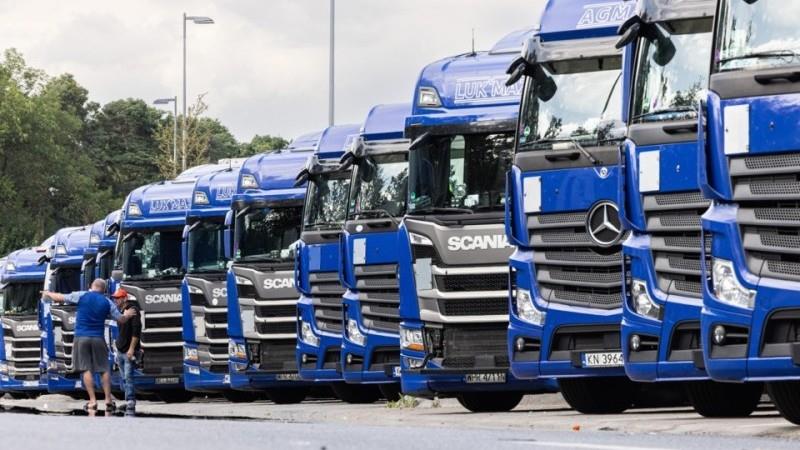
Tentative Signs Of Recovery For The European Truck Market
(MENAFN- ING)
Our view
After years of supply shocks, volatile demand, regulatory shifts and disrupted investment cycles, Europe's truck market is finally starting to normalise. In 2026, we expect this modest recovery to continue, with new truck deliveries rising in the mid‐single digits to around 385,000 units – slightly above the 10‐year average.
Crucially, the recovery will be driven not by fleet growth but by long‐deferred replacement demand. Ageing trucks are becoming increasingly costly to operate due to fuel inefficiency, rising maintenance needs, and new toll systems that penalise higher‐emission vehicles.
Still, the rebound is likely to be uneven. Southern and Central Eastern European markets are leading, while Germany – the region's largest truck market – remains a drag, although improving fundamentals suggest Germany could become a major driver of growth by 2027.
Order intake is positive again, OEM margins remain healthy, and delivery times have normalised – yet the subdued freight market is still encouraging operators to replace selectively rather than expand fleets aggressively.
European truck fleet has expanded but also agedEurope started the year with probably one of the oldest heavy‐duty fleets in over a decade. The medium and heavy-duty EU truck fleet (>3.5 tonnes) now totals around six million vehicles, including some 2.2 million tractors. With an average age exceeding 14 years, the rolling stock includes many older units that are less intensively used. Only 3.1 million trucks were registered in the past 10 years – an average of around 310,000 trucks per year.
An ageing fleet translates into higher fuel costs, rising maintenance outlays, and increasing exposure to mileage‐based toll surcharges. What was once a cost‐saving decision to delay upgrades is starting to strain operations and competitiveness.
After 2015, transport demand grew faster than fleet size, but this reversed after the 2021–22 pandemic peak. A 3% drop in freight demand during 2023 prompted some operators to stockpile equipment, adding to the age imbalance and contributing to the capacity overhang that has been weighing on freight rates.
Replacements haven't yet caught up after years of low inflows% rolling stock replaced by new trucks per year in various European truck markets
The replacement gap: years of subdued inflow still need to be closedReplacement activity has not kept pace with the needs of an ageing fleet. Large order backlogs, long delivery times, and high asset prices have disrupted investment cycles over the past five years. In key markets, – Germany, France, and the UK – annual replacement rates dropped to
6-8% from 2020 onwards, about two percentage points below previous levels. Although the required capacity may be somewhat lower, this shortfall has yet to be offset.
Despite the disposal of older trucks, the share of vehicles aged five years or more has risen from 55.5% in 2019 to 62% in 2024, and likely increased further in 2025. This shift reflects an average fleet age increase of more than 1.5 years.
Consequently, fewer miles are covered by newer trucks, while older vehicles tend to consume more fuel, incur higher mileage charges, and experience lower uptime. Although extended equipment use is not an immediate problem, it indicates significant pent-up demand and continued market potential.
Multiple factors now make fleet replacement more appealing, driving the recoveryOver the past few years, a sluggish freight market and surplus capacity have led to deferred investments in new transport equipment. This has been the case for several larger companies active in industrial transportation segments, like automotive and chemicals. Idling older equipment has provided flexibility in managing investment cycles.
At the sector level, there is currently no need for expansion. However, the continued postponement of replacements is reaching its limits. Further delays in investment and extended equipment lifespans introduce business risks. Three key factors are set to drive replacement investments in 2026.
Fuel efficiency gains: New diesel trucks are significantly more efficient due to EU regulations. For example, the 2025 generation DAF XF/XG – truck of the year – is some 13% more efficient than the 2021 model. Similar improvements are seen in the latest MAN TGX and Mercedes Actros L. One international haulage fleet reports that its average fuel consumption fell from 26 to 24 litres per 100 km over five years (roughly 1.5% per year). Further optimisation of the combustion engine is still in progress, with Euro VII** expected to deliver a new step forward. Normalised truck prices and delivery times; the return of a buyers' market. Lower prices and improved bargaining positions also bring deferred investments back to the table. After unprecedented supply constraints in recent years, a buyers' market has returned. Elevated prices of some €125,000–130,000 per tractor unit are now a thing of the past, but average prices remain well above €100,000. Underlying costs have risen in line with general inflation, and new truck generation includes more technology and software (e.g., ADAS systems, including a range of mandatory safety systems ). Investments in further emission reductions (Euro VII *) also contribute to higher prices. Lead times are back to two to three months, except for e-trucks. Lead times for new trucks have dropped significantly – from 12 months in 2022-23 to typically two to three months now. Electric trucks can still have longer lead times due to the ramp-up of series production and CO2 targets. Truck toll impact: The new truck toll system, which has been implemented in several EU member states, will substantially raise mileage costs. Older diesel trucks (especially Euro V and older, but also first-generation Euro VI: 2014-16) will be penalised under the toll system, while lower emission diesel trucks and zero-emission trucks, in particular, will receive a discount or full exemption. Companies delaying investments will face higher kilometre costs.*The Euro VII standard mandates an additional sharp reduction of 56% in NOx as well as 36% in particles compared to Euro VI. This transition will introduce a new generation of diesel trucks with further improvements in fuel efficiency. However, it also demands substantial research funding alongside the capital expenditure required to advance e-truck development. Euro VII will apply to newly approved trucks from May 2028 and to all other new trucks starting in 2029.
Operators reassess active fleets amid mixed market conditionsThese structural pressures on fleet renewal come at a time when Europe's haulage sector is experiencing greater variation across countries, subsectors, and fleets, reflecting a clear divergence between consumer and industrial products.
Several major international carriers – particularly in chemicals and automotive – have scaled back capacity to maintain operational efficiency. While many vehicles are temporarily idled, the total active fleet has also seen a correction.
Meanwhile, consolidation within Europe's fragmented road haulage sector is accelerating, driven by regulatory complexity and significant investment requirements for zero-emission vehicles and digitalisation. Smaller players are under pressure, pushing the sector towards greater concentration and professionalisation. This is already helping lift fleet utilisation, with empty runs declining after a period of stagnation.
Capacity pressures have eased with the decline in transport demandDevelopment of truckpark vs. transport performance in tonne/km (EU 27), index (2019 = 100)
Rising order intake and fleet deals signal an improving truck marketRenewed sales pressure on truck manufacturers and dealers is creating opportunities for large fleet deals. Notable examples include Girteka's order of 2,000 Volvos in May and Duvenbeck's purchase of 1,000 MAN trucks. After three years of decline, order intake for Mercedes, Scania, MAN, and Volvo grew by an average of 19% year-on-year in the first nine months of 2025. This uptick is beginning to translate into higher deliveries, marking the early stages of market normalisation.
European order intake for new trucks turned positive againNew order intake of medium and heavy-duty trucks, per manufacturer, year-on-year
Manufacturers scaled back production as order backlogs disappearedWe don't expect a strong surge in investment in 2026, as the previous cycle has been stretched by delayed deliveries. Still, the return to a positive book-to-bill ratio for European truck manufacturers is a positive sign.
Manufacturers adjusted production in 2024 as order backlogs disappeared. This led to a temporary 'Kurzarbeit' (reduced working hours supported by the German state) at Daimler's Würth plant in mid-2024 and a downscaling of production at DAF Eindhoven from a record level of over 250 in mid-2023 to 160 trucks per day by the end of 2024. Production began to ramp up again gradually in 2025.
Order intake surpassed truck deliveries again in 2025(European) book-to-bill ratio for truck manufacturers, per period
In 2025, order intake once again exceeded production for the first time in three years. The overall market is projected to reach roughly 95% of 2019 levels in 2026. While investment appetite is returning, many fleet owners remain cautious given the sluggish freight market.
Southern European truck markets beat the averageNew truck registrations >3,5 tonnes in European countries* Q1-Q3 2025 year-on-year. and index FY 2024
Weak demand in Germany and France hits European truck salesWeak demand for new trucks in Germany is weighing on overall European performance, especially for the largest brands, Mercedes and MAN. Germany accounts for 22.5% of total European sales, so its slowdown has a significant impact.
The country's manufacturing sector continues to struggle, and road mileage figures show transport activity has yet to fully recover, keeping haulage companies cautious. However, German order intake at Daimler Trucks improved slightly in 3Q, and deliveries returned to positive territory after the summer – likely the start of a recovery. Nevertheless, the market will still see a double-digit annual contraction.
Alongside Belgium, the UK and France, Germany remains furthest from pre-pandemic levels.
Unit profitability for truck manufacturers is lower but remains resilientEBIT-margin truck manufacturers in %
Southern and CEE countries continue to perform relatively wellTruck sales in Southern and Central Eastern European countries, such as Spain, Romania, and Poland, have held up better than in Western Europe. This resilience is linked to relatively strong economic performance and strengthened roles in international transport.
Poland, still Europe's leader in transport, grew slightly in 2025 but may have peaked in 2022-23 at over 35,000 units annually for now. Signs of fleet shifts to other CEE countries with lower wages and fewer driver shortages (and less stringent preferences for returning home) are emerging.
The Netherlands shows distorted figures due to heavy frontloading in 2024, driven by registration-related restrictions for diesel trucks entering city centres. This will have normalised in 2025.
Truck market to show mid-single-digit recovery in 2026After a disappointing first half of 2025, truck deliveries began to recover after the summer, particularly in large markets like Germany and France. We expect the recovery to continue gradually in 2026. In the current mixed environment, we expect new truck deliveries (>3.5 tonnes) to climb to around 385,000 units in 2026. This is slightly above the 10-year average, reflecting a catch-up after a moderate setback.
European new truck deliveries pick up moderately in 2026Registrations of new trucks > 3,5 tonnes EU + EFTA + UK
Germany's economic recovery could generate momentum in Europe's largest market by 2027The sluggish transport market remains a hurdle for material investment acceleration in 2026, and upward potential is limited. However, economic growth is expected to gain traction, especially in Germany, where additional infrastructure and defence investments will be unlocked.
After years of economic stagnation, this could trigger catch-up investments heading into 2027 and set the tone for further market improvement.
Manufacturer profit margins down in 2025Truck manufacturers' operational margins (EBIT) peaked during the surge in order books and delivery rebound in 2023 but have since declined.
Price premiums have eroded, yet margins remain solid at 5-10% compared to 2019 levels in the first three quarters of 2025. Lower volumes have weighed on results, intensifying competition and triggering cost-reduction programmes. Daimler emphasised prioritising profitability over market share, supporting resilient margin performance (see chart). Unlike the car industry, e-trucks have not yet significantly impacted margins, partly due to limited competition from new entrants – though this could change.
Volvo leads the European truck market in 1H 2025, with rivals close behindMarket share in unit registrations >6 tonnes in EU27+3 per year
Volvo gains market share, others may catch up on series delivery of e-trucksEuropean truck market share has remained relatively stable, with shifts mainly linked to new model introductions. Daimler (Mercedes) has focused more on margins, while Volvo gained from its early introduction and scaling of e-trucks, reaching an 18% share in the first half of 2025.
Mercedes, MAN, and DAF will only start benefiting from series production later in 2025, while Volvo has already launched its new-generation long-haul e-truck. Diesel trucks still represent 95% of the market, with models like the 2025 DAF XF and MAN TGX driving strong order intake. Scania continued to benefit in 2025 from its previously robust order pipeline.
Chinese brands may enter Europe quicker with e-trucksEntering the truck market is harder than the passenger car market due to service network requirements and uptime demands. The diesel truck market has long been dominated by five major brands, but electric trucks may lower the barrier to entry.
BYD, in partnership, is expected to enter Europe, with Yutong and FAW also seeking international expansion, and it seems European operators are willing to consider them as well. Chinese manufacturers benefit from experience with electric motors and scaled supply chains. Europe remains heavily reliant on China for battery packs, chips and rare earth supplies. Initial entries will likely focus on light trucks. The long-awaited Tesla Semi still hasn't hit the roads in Europe.
Greater emphasis on emissions profiles in ordering decisions due to mileage-based chargesWith growing attention on CO2 footprints, interest in VECTO reports – which are issued with new truck registrations – is increasing. These reports detail emissions and form the basis of mandatory CO2 reductions across manufacturers' output. With CO2-linked mileage charging (such as in Germany, but eventually in all EU member states), transport companies and dealers can check emission classes and associated tariffs in advance and adjust specifications if needed.
Mixed picture in the used market: older trucks devalued, young used trucks more popularThe used truck market is traditionally more cyclical than the new truck market. Demand is historically weak, and inventories are larger due to overcapacity. Notably, price differences between trucks under and over seven years old are significant. This is driven by:
-
Age affecting toll classification, emissions, and access to low-emission zones.
Fewer trucks from the Covid generation (2020-22), which were sold at higher prices.
As a result, the younger generation retains relatively high values.
Thanks to:
Thomas Fabian (ACEA), Ruud van Outersterp (Bas Trucks), Diederik Boon van Ostade (Bas World), Ralf Merkelbach (BPW), Matthijs Reinders, Anatol Holland (Daimler Trucks), Dennis Steeghs (Ewals Cargo), Mark Mulder (Girteka), Eric Muller (GoodYear), Niels van Kooten (Kleyn Trucks), André Menzing (Krone), Jacobjan Vermeiden, Chris Buijtenhuis (MAN Trucks), Gert-Jan Meijerink, Wijnand Derkman (Nijhof-Wassink Groep), Pauli Johannesen (PNO Rental), Jan de Vries (Scania), Eric Visser, Diederick van Haselen, Peter Jan Troost (TIP Group), Frits Engelaer (Schmitz Cargobull), Ben Vos, Pieter Derksen (Vos Logistics), Ewout van Wijk (E. van Wijk logistics) and many others

Legal Disclaimer:
MENAFN provides the
information “as is” without warranty of any kind. We do not accept
any responsibility or liability for the accuracy, content, images,
videos, licenses, completeness, legality, or reliability of the information
contained in this article. If you have any complaints or copyright
issues related to this article, kindly contact the provider above.
Most popular stories
Market Research

More Story








Comments
No comment