




403
Sorry!!
Error! We're sorry, but the page you were looking for doesn't exist.
Nigeria Raised Electricity Prices To Improve Supply. Why It Hasn't Worked
Author: Taiwo Hassan Odugbemi
(MENAFN- The Conversation) Nigeria's electricity regulator triggered a big tariff shock in April 2024. It increased rates for some consumers by over 240%, citing the cost of producing and delivering power.

The regulator classifies consumers into five bands, A through E, based on how many hours of power their local distribution feeder receives each day. Band A gets 20 hours or more and Band E just 4-7 hours. The tariff changes primarily affect Band A customers. Their tariff rose from ₦67 to ₦225 (US$0.049 to US$0.16) per kilowatt-hour.
The public backlash was immediate and fierce. Labour unions protested nationwide and picketed the offices of the regulator and distribution companies. They demanded reversal of the hike, and shut down electricity sector offices in several cities.
But they didn't ask the main question: why is the cost so high in the first place? The answer is not simply gas prices, exchange rates or inflation, though all play a role.
Another driver is inefficiency of the system's operations. The electricity generated and used, and the revenue received, don't match up.
As an economist specialising in energy policy, with a doctoral thesis examining the impact of power sector reform on Nigeria's electricity supply chain, I submit that Nigerians are paying for inefficiency.
Until this is confronted directly, tariff increases will fail to deliver the sector transformation they promise.
Read more: Nigeria's chronic power shortages: mini grids were going to crack the problem for rural people, but they haven't. Here's why
The maths of the problemUnder Nigeria's Multi-Year Tariff Order Framework, the Nigerian Electricity Regulatory Commission sets electricity tariffs. It does this by dividing its total revenue requirement (such as operating costs, capital recovery, and a regulated return on assets) by the volume of electricity that is actually billed and paid for.
This formula has a weakness. The more revenue is lost through inefficiency, the more consumers have to pay.
And actual losses have exceeded the targets that are allowed.
The scale of this failure in Nigeria is extraordinary when set against both international benchmarks and the performance of comparable developing economies.
The measure used is called“aggregate technical, commercial and collection loss”. It's a composite figure capturing electricity lost to infrastructure failures, theft, unmetered consumption and uncollected bills. Nigeria's distribution companies reported average losses far above the global average of around 6-9% and the 15% that is considered good practice for developing economies.
Nigeria's aggregate losses across all distribution companies in the first quarter of 2024 stood at 36.36%. This comprised technical and commercial losses of 19.55% and collection losses of 20.83%.
By the third quarter of 2024, they had worsened to 39.10%. Also, none of the distribution companies achieved the target set by the regulatory pricing framework of the Nigerian Electricity Regulatory Commission. The Kaduna distribution company recorded an actual loss of 70.84% against a target of 25%.
The most recent data – first quarter 2025 – shows no resolution. Aggregate technical and commercial losses stood at 39.6%, almost double the 20.5% target set under the framework. This translates to an estimated ₦200.5 billion (about US$146 million) in forgone revenue in that quarter alone.
That Nigeria's average electricity revenue loss consistently exceeds 36% is extraordinary even by regional standards. Ghana, itself in a distribution crisis, recorded 32% losses in 2024; Kenya has been working to bring its losses down to 21.7%. In India, after a decade of costly federal reform programmes, losses reached 16.16%, against a global average of around 6%-9%.
A metering crisis at the heart of the problemA key driver of commercial losses is one of the most persistent failures in Nigeria's electricity sector: the metering gap. Without a meter, a consumer cannot be accurately billed. Without accurate billing, collection is contested and payment culture erodes.
As of December 2024, only 6.29 million out of 13.5 million registered electricity customers across the 12 distribution companies were metered. The metering rate was just 46.57%. More than half of Nigeria's electricity consumers are still billed through estimated billing because of the metering gap.
Multiple government programmes designed to provide meters, such as the National Mass Metering Programme, the Meter Asset Provider scheme and others, have fallen short of their targets. Meter installations reached a four-year low in 2024, declining 34% since 2021.
The World Bank's Nigeria Distribution Sector Recovery Programme identified the metering deficit as central to the sector's financial distress. It estimated that nearly half of the seven million metering gap could be closed through smart meters under its current financing programme. This, however, is only if the distribution companies follow through on procurement and installation commitments.
Read more: Nigeria scores well on electricity reform rankings, but power supply isn't affordable and reliable. Here's why
The fiscal cost of inefficiencyThese losses do not simply inconvenience consumers. They have placed the federal government in an unsustainable fiscal position. The 2024 annual report of the electricity commission revealed that the government would have to cover ₦1.94 trillion – 62.59% of what's owed, which averages over ₦161 billion per month (about US$117 million).
This is a subsidy for operational failure rather than a deliberate social transfer. The World Bank has estimated annual economic losses from Nigeria's unreliable electricity at 5%-7% of GDP, approximately US$25 billion. This figure exceeds the Nigerian government's spending on health annually. Total spending on health was 4.08% of GDP in 2021, and 4.19% in 2023.
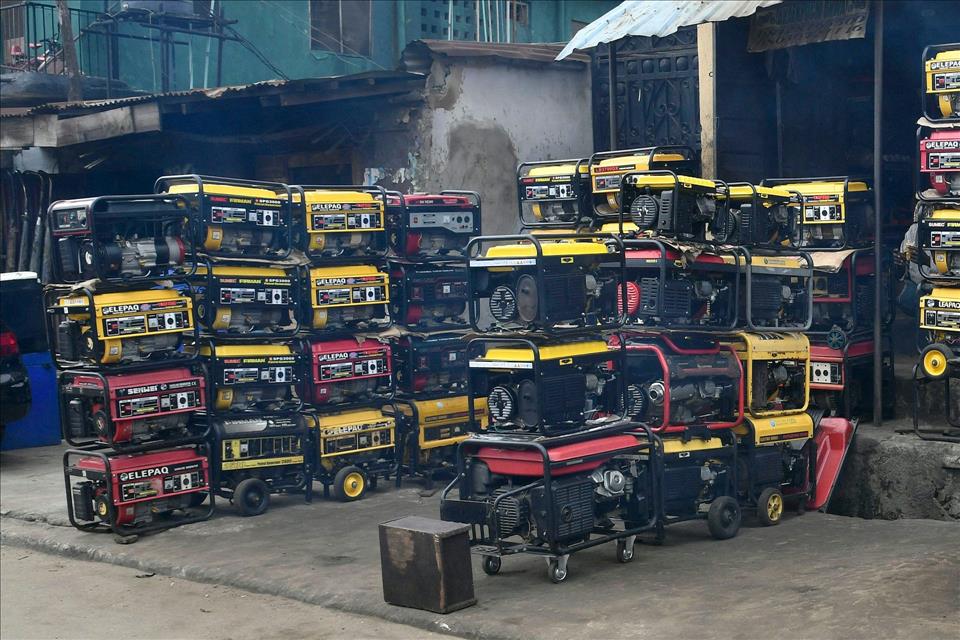
The burden extends beyond what appears on electricity bills. Faced with an unreliable grid, businesses and households fall back on self-generation. Over 22 million diesel and gasoline generators power approximately 26% of Nigerian households and 30% of micro, small and medium enterprises. These generators represent a parallel electricity system which is expensive, polluting, and absent from any tariff discussion. The discussion that also excludes every Nigerian who cannot afford one.
The policy implicationNone of this means cost-reflective tariff reform is wrong. A sector that cannot recover its costs cannot invest, and a sector that cannot invest cannot improve. But the sequence matters enormously. Tariff increases that are not paired with credible, enforceable efficiency commitments from distribution companies simply transfer the cost of failure upward. That is, from the distribution companies to consumers and government.
What is needed is a regulatory framework that places efficiency at the centre of tariff determination. The regulator should ensure that any tariff increase is tied to measurable improvements in metering, reduction in electricity losses, and better service delivery. Consumers should not continue to bear the cost of inefficiencies within the electricity distribution system. Until distribution companies demonstrate real operational improvement, higher tariffs will continue to appear punitive rather than justified.
At the same time, infrastructure investment must happen. Without a physically reliable network, financial reform will not restore credibility.
Nigeria's electricity consumers are not simply paying for power. They are paying for a system's failure to deliver it – and being asked to do so again and again, with no end in sight. That is not reform. It is a transfer of liability dressed as policy.
Institution:University of Abuja

Legal Disclaimer:
MENAFN provides the
information “as is” without warranty of any kind. We do not accept
any responsibility or liability for the accuracy, content, images,
videos, licenses, completeness, legality, or reliability of the information
contained in this article. If you have any complaints or copyright
issues related to this article, kindly contact the provider above.
Most popular stories
Market Research

More Story






Comments
No comment