




403
Sorry!!
Error! We're sorry, but the page you were looking for doesn't exist.
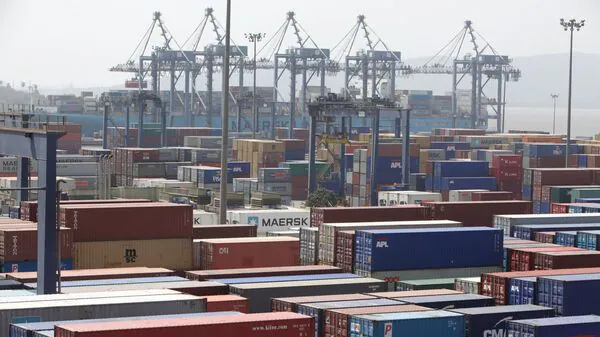
India, US Reaffirm Commitment To Trade Deal As Talks Advance
(MENAFN- Live Mint) New Delhi: India and the US reaffirmed their commitment to concluding an agreement aimed at strengthening bilateral trade and economic ties, following four days of negotiations in New Delhi between officials of the two countries.
"The engagements were marked by a spirit of cooperation and pragmatism, with both sides reaffirming their commitment to concluding a mutually beneficial agreement that strengthens bilateral trade and economic ties," the commerce and industry ministry said in a statement on Thursday.
A delegation from the Office of the United States Trade Representative (USTR), led by chief negotiator Brendan Lynch, visited India from 1-4 June to advance discussions on the proposed bilateral trade agreement (BTA).
Also Read | India, US near first phase of trade pact as talks enter final stretchAccording to the commerce ministry, the engagements were marked by a spirit of cooperation and pragmatism, with both sides holding constructive and positive discussions across a wide range of issues, including trade in goods, non-tariff measures, customs and trade facilitation, economic security alignment, and other areas of mutual interest.
The latest round of talks follows the India-US joint statement issued on 7 February 2026, under which the two countries agreed on a framework for an interim agreement on reciprocal and mutually beneficial trade. The framework also reaffirmed their commitment to negotiations on a broader bilateral trade agreement.
"The discussions helped advance negotiations under the trade pact framework, with both sides continuing efforts to deepen economic engagement and expand bilateral trade," the ministry said.
The talks come at a time when Washington has proposed fresh tariffs on India and 59 other trading partners, including the UK, European Union, China and Japan, over what it described as their failure to prohibit imports of goods produced using forced labour.
Under the proposal, India and most other affected economies could face an additional tariff of 12.5%, while a smaller group of countries that have taken what the USTR described as stronger measures against forced-labour imports would face a 10% tariff.
The USTR said the acts, policies and practices of these economies related to the "failure to impose and effectively enforce a prohibition on the importation of goods produced with forced labour" could be actionable under Section 301(b) of the US Trade Act of 1974 when they burden or restrict US commerce.
Section 301 empowers the US government to investigate and respond to foreign trade practices deemed unfair or inconsistent with trade agreements. The proposed action covers a broad range of trading partners, including some that already have free trade agreements with the United States, such as Canada, Mexico and Australia.
Also Read | Oman FTA may come into force from June as India eyes $1 tn exports this fiscalThe USTR has also proposed a special mechanism under which a specified volume of apparel and textile imports from certain economies could enter the US at a lower tariff rate.
India is engaging with the US administration on the latest proposal, the commerce ministry said, adding that products covered under Section 232 tariffs and certain other categories have been excluded from the proposed Section 301 measures.
The ministry also highlighted the proposed low-tariff mechanism for textile and apparel products and stressed that the tariff proposal is still under consultation and has not been finalized.
According to the USTR, stakeholders can request participation in public hearings until June 22 and submit written comments by July 6. Public hearings are scheduled for 7 July, after which the agency will review the submissions before taking a final decision.
The commerce ministry said India remains engaged with the United States for finalisation of the framework agreement announced on February 2 and in accordance with the joint statement issued on February 7.
USTR Jamieson Greer described the alleged failure to address imports of goods produced with forced labour as "unacceptable", arguing that it forces American workers to compete on an uneven global playing field.
"We will no longer tolerate this disparity. Some trading partners have taken initial steps to prevent the importation of forced labor goods, including through USMCA and commitments in Agreements on Reciprocal Trade. However, each of our trading partners must do more to ensure that trade does not perversely encourage and entrench forced labour globally," Greer said.
Separately, US Ambassador to India Sergio Gor said on Wednesday that India and the US have resolved 99% of the issues holding up an interim trade agreement and could conclude the deal within weeks.
"We're very hopeful that the deal will get accomplished over the next weeks, several weeks. But it's not going to be years. We're very close to getting that done," Gor said at Citi's India Conference 2026 in Mumbai.
Also Read | Mint Explainer | Why has the US proposed fresh tariffs on India?Responding to questions on the proposed tariff action, Gor said the measures were not specifically targeted at India and had been applied globally. He added that the emerging trade arrangement could place India in a more favourable position than many regional competitors.
For India, the proposed tariffs could have significant implications for labour-intensive export sectors. Industries such as textiles and garments, carpets, leather products, brassware and other handicrafts could face an additional tariff burden of 10% to 12.5% if the measures are finalized, increasing the cost of accessing the US market and potentially affecting competitiveness. However, the final contours of the tariff regime will depend on the outcome of the ongoing consultation process and parallel trade negotiations between New Delhi and Washington.

Legal Disclaimer:
MENAFN provides the
information “as is” without warranty of any kind. We do not accept
any responsibility or liability for the accuracy, content, images,
videos, licenses, completeness, legality, or reliability of the information
contained in this article. If you have any complaints or copyright
issues related to this article, kindly contact the provider above.
Most popular stories
Market Research

More Story







Comments
No comment