

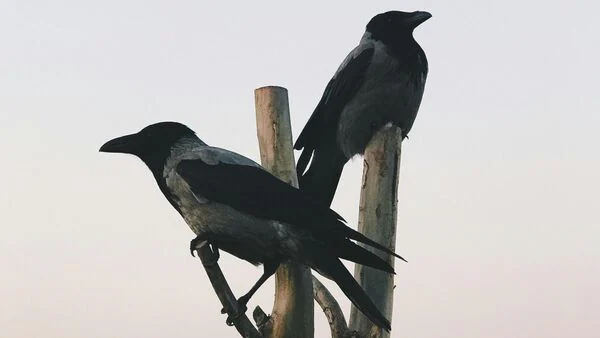
Greek Proverb Of The Day: 'The Crow Does Not Take The Eye Out Of Another Crow' Meaning And Why It Still Matters Today


Today's proverb is a gritty, ancient Greek maxim:“Κόρακος κοράκου μάτι δεν βγάζει”-or,“The crow does not take the eye out of another crow.”
It is a blunt, realistic commentary on professional solidarity, tribal loyalty, and the fierce codes of honour that bind certain groups together.
Also Read | Spanish Proverb of the Day: 'Shrimp that falls asleep gets swept away...' What it meansAt its surface, the proverb draws on the practice of wildlife observation. Crows are highly intelligent, deeply social, and notoriously opportunistic scavengers. They will aggressively steal food from other species, harry larger birds, and pick at carcasses. Yet, despite their aggressive nature, crows rarely engage in fatal internal warfare; they do not pluck out the eyes of their fellow flock members.
Metaphorically, this phrase describes mutual protection among peers, particularly within insular groups, powerful establishments, or professional fraternities.
It reveals that people in the same class, profession, or clique will naturally protect one another from outside scrutiny. Even when they disagree internally, they maintain a unified front to the world, refusing to expose or ruin one of their own.
Where it comes fromThis saying tracks back deep into Greek antiquity and was widely popularised across the Mediterranean through Aesop's fables and classical literature. Ancient Greek society was heavily organised around distinct civic duties, philosophical schools, and elite political factions. In these environments, solidarity was a tool for political and social survival.
Later, during centuries of foreign rule and regional instability in modern Greek history, this proverb evolved into a survival mantra for local communities. When dealing with outside authorities or harsh judicial systems, local factions stuck together. Betraying a peer to an outsider was viewed as the ultimate sin. The phrase became a way to describe the unspoken pact: we protect our own, because if we start tearing each other apart, the whole flock falls.
Also Read | Russian Proverb of the Day: 'Measure seven times, cut once'; meaning & more Why it still matters todayIn the modern world, this proverb perfectly articulates the concept of institutional self-preservation. We see it manifest constantly in modern professional ecosystems: the "blue wall of silence" in law enforcement, doctors refusing to testify against colleagues in malpractice suits, politicians crossing party lines to protect shared privileges, or corporate executives covering up executive misconduct to preserve the company's public image.
On a smaller scale, it explains modern workplace dynamics, where colleagues might quietly look the other way regarding a coworker's minor infractions, knowing that maintaining group harmony is better than inviting managerial intervention. It reminds us that tribal loyalty is one of the most powerful, stubborn forces in human psychology.
Another Perspective: The Counter-ProverbWhile internal loyalty can keep a group safe, blind tribalism can quickly morph into a toxic refusal to change, ultimately destroying the group from within. To challenge this absolute rule of unconditional solidarity, Greek culture offers a fierce, beautifully blunt alternative proverb:
“It is better to lose your eye than your good name.”
- The Crow's Eye: Focuses on group loyalty, warning that attacking your own kind ruins the tribe. The Good Name: Focuses on moral integrity, warning that protecting bad behaviour ruins your reputation.
Where the crow proverb demands unconditional peer protection at all costs, the alternate perspective shifts the spotlight squarely onto personal integrity, ethics, and honour. It argues that a physical injury-even losing an eye-is temporary and endurable, but a ruined reputation, a stained character, or a lost sense of justice is permanent.
When applied as an alternative perspective to our first proverb, it delivers a sharp warning to the "flock": if you protect a corrupt peer just to maintain solidarity, you inherit their stain.
It reminds us that true honour requires us to break ranks when a boundary has been crossed, choosing truth and ethical transparency over the comfortable, silent protection of the crowd.

Legal Disclaimer:
MENAFN provides the
information “as is” without warranty of any kind. We do not accept any
responsibility or liability for the accuracy, content, images, videos,
licenses, completeness, legality, or reliability of the information
contained in this article. If you have any complaints or copyright issues
related to this article, kindly contact the provider above.
Comments
No comment