





403
Sorry!!
Error! We're sorry, but the page you were looking for doesn't exist.
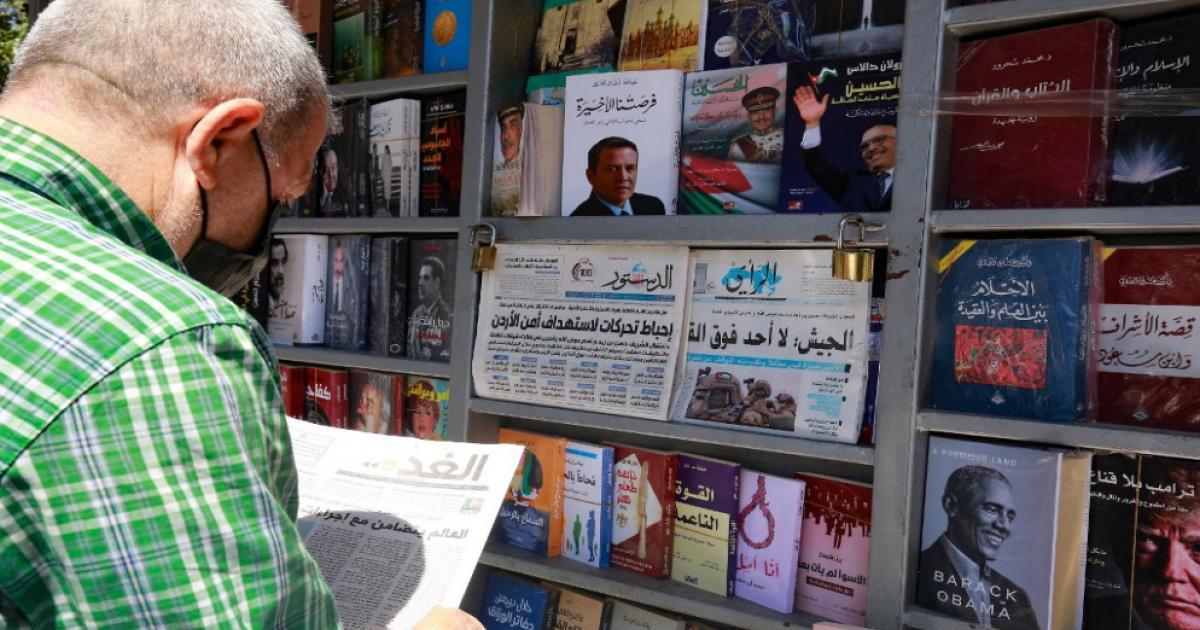
Jordanian Columnists Focus On Political Reform, Regional Turmoil, And Public Polarization
(MENAFN- Amman Net) Four major issues dominated opinion and political analysis columns in Jordanian newspapers today: the future of the political modernization project, the decline in the quality of public discourse in the digital sphere, the rapid developments in U.S.-Iran negotiations and their implications for the Gulf region, and the political, security, and economic repercussions of regional crises on Jordan.Abu Rumman: Calls for Review Could Become a Gateway to Rolling Back Political Modernization
Columnist Mohammad Abu Rumman examined the ongoing debate surrounding Jordan's political modernization project, warning against the growing number of voices calling for what they describe as a“review” of the modernization process while, in reality, seeking to reverse or freeze it.
Abu Rumman argues that political reviews are both natural and necessary for any reform process, particularly as Jordan is undertaking a new experiment in building party-based and parliamentary political life. He stressed that assessing the experience after parliamentary and university elections requires a serious and critical evaluation of both its strengths and weaknesses.
However, he draws a distinction between reviews aimed at improvement and those intended to undermine the process. In his view, some advocates of“review” are using the term as a political cover for retreating from the broader modernization agenda. He argues that many of these critics were never genuine supporters of the project but were unable to oppose it openly because it is closely linked to the King's vision for Jordan's political future.
The columnist maintains that calls to freeze the project because of current regional instability lack political logic. On the contrary, he argues that a turbulent regional environment makes reform more urgent, not less. Political modernization, he writes, strengthens national cohesion, reinforces the domestic front, and gives citizens and political forces a greater role in decision-making during critical periods.
Abu Rumman further contends that the modernization project has become one of Jordan's most important sources of soft power in the region, presenting a model of stability based on political participation, moderation, and inclusion rather than exclusion or heavy-handed security measures.
Defending the party system experiment, he rejects premature judgments that political parties have failed. He argues that the experience remains in its early stages and that evaluating it after such a short period is politically and methodologically unfair. Rather than abandoning the project, he calls for supporting political parties, strengthening their positive aspects, and addressing their shortcomings in order to gradually achieve the ultimate goal of parliamentary party-based governments.
Malkawi: Public Debate Is Turning into Identity Battles Rather Than an Exchange of IdeasMeanwhile, columnist Muwaffaq Malkawi highlighted a growing crisis in the public sphere, namely the erosion of meaningful dialogue and the transformation of debates into highly polarized confrontations.
Malkawi argues that many controversial issues are no longer subjected to rational discussion or evidence-based examination. Instead, they have become markers of ideological and political identity. People quickly divide into opposing camps, defending their positions as extensions of their identity rather than viewpoints open to scrutiny or revision.
He describes this shift as the core of the current crisis. Healthy debate, he argues, requires common ground that allows participants to exchange arguments and revise their views when confronted with new evidence. Social media platforms, however, have increasingly become arenas for mobilization and confrontation rather than spaces for thoughtful reflection.
According to Malkawi, the problem is rooted in the nature of digital platforms themselves. These platforms reward provocative content and sharp rhetoric, while balanced analysis receives far less attention and engagement. Users are encouraged to take immediate positions rather than engage in careful consideration.
One of the most dangerous consequences of this trend, he writes, is the transformation of intellectual disagreement into moral judgment. Those who agree with us are viewed as enlightened and virtuous, while those who disagree are dismissed as ignorant, complicit, or self-interested. Such attitudes undermine the possibility of genuine dialogue.
Malkawi emphasizes that defending rational debate does not mean remaining neutral between right and wrong. Rather, it means distinguishing between criticizing ideas and dismissing the individuals who hold them. Societies, he argues, advance when ideas are tested through evidence and knowledge, not when debates devolve into battles between“us” and“them.”
He concludes that the persistence of this pattern weakens collective thinking and creates intellectual echo chambers in which people hear only reflections of their own views. Restoring the ethics of dialogue, he argues, has become both a moral and intellectual necessity for maintaining a healthy public sphere.
Khaitan: A U.S.-Iran Deal May Be Near, but Gulf Security Remains Absent from the EquationColumnist Fahd Khaitan focused on developments surrounding U.S.-Iran negotiations, highlighting signs that a broader understanding capable of ending the conflict and consolidating the current truce may be approaching.
Khaitan argues that statements by Donald Trump regarding the lifting of restrictions on Iranian ports and the reopening of the Strait of Hormuz reflected considerable optimism. However, those remarks soon appeared to move ahead of the actual negotiations, as many key issues remain unresolved.
The columnist notes that the U.S. administration appears more eager than Iran to finalize an agreement. Tehran, by contrast, is conducting negotiations calmly and confidently, seemingly convinced that Washington is unlikely to return to military confrontation.
He adds that this perception is no longer limited to Iranian officials. Many analysts and political observers, including figures within the Israeli government, increasingly believe that a renewed war has become unlikely.
Khaitan devotes significant attention to Qatar's mediation role, arguing that Doha's involvement helped achieve breakthroughs after earlier efforts had stalled, particularly regarding complex financial issues related to frozen Iranian assets.
Yet, for the columnist, the most important issue is not whether an agreement will be reached but what it will contain. He points out that details emerging from the proposed understanding do not appear to include clear security guarantees for Gulf states or protections against threats posed by Iran and its regional proxies.
Khaitan warns that overlooking this issue could have profound consequences for Gulf-U.S. relations. Excluding meaningful security guarantees, he argues, could place a historic strategic partnership between Washington and the Gulf states at risk.
Al-Maaytah: The Region Is Entering a New Phase of Conflict and Jordan Is Paying Its Share of the CostIn a separate column, Samih Al-Maaytah reflected on the challenges that have shaped the region in recent months, describing them as“months of hardship” marked by one crisis after another.
Al-Maaytah argues that the end of the war in Gaza did not usher in a period of genuine stability. Instead, the region quickly moved into a new confrontation driven by escalating tensions between the United States and Iran, followed by a conflict that lasted for weeks and generated significant political, security, and economic consequences.
He believes the recent conflict exposed deep vulnerabilities within Arab societies and highlighted divisions and cross-border loyalties at a time when regional states were facing direct threats to their security and stability.
According to Al-Maaytah, the Iranian issue will not disappear simply because an agreement is reached with Washington. Rather, the post-war period is likely to witness a new phase of rivalry between Iran and several Arab states, particularly Gulf countries and Jordan, although the methods and intensity of that rivalry may vary.
He argues that the region is entering a fundamentally different era. The United States has moved beyond merely threatening military action to using force directly, a shift that will influence regional relationships and power balances in the years ahead.
Regarding Jordan, Al-Maaytah stresses that the kingdom has been directly affected by regional crises and has borne significant security, economic, and political costs. Nevertheless, he believes Jordan successfully passed a major test by demonstrating its ability to manage crises and respond to military and political challenges.
He concludes that Jordan's accumulated experience in confronting difficult circumstances has helped it navigate an exceptionally challenging period. However, the coming months remain uncertain, with outcomes ranging from gradual relief to the continuation of instability that may require new policies and tools to manage.
Today's Jordanian opinion columns reveal a strong focus on four central issues: defending the continuity of political modernization, warning against growing polarization in public discourse, monitoring major shifts in U.S.-Iran relations and their implications for Gulf security, and assessing the consequences of a turbulent regional environment on Jordan.
Across these diverse topics, a common theme emerges: the next phase will require greater internal cohesion and an enhanced capacity to navigate rapid political and regional transformations.

Legal Disclaimer:
MENAFN provides the
information “as is” without warranty of any kind. We do not accept
any responsibility or liability for the accuracy, content, images,
videos, licenses, completeness, legality, or reliability of the information
contained in this article. If you have any complaints or copyright
issues related to this article, kindly contact the provider above.
Most popular stories
Market Research

More Story





Comments
No comment