




403
Sorry!!
Error! We're sorry, but the page you were looking for doesn't exist.
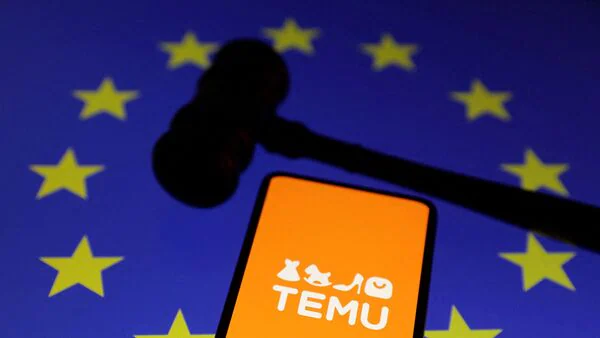
EU Slaps $232 Million Fine On Chinese Online Retailer Temu For Violations Under Its Digital Services Act
(MENAFN- Live Mint) Chinese online retailer Temu was hit with a 200 million euro ($232 million) fine on Thursday after a European Union investigation found that the company failed to protect consumers from illegal products such as toxic or hazardous toys and unsafe electronics.
The 27-member bloc's fine comes after preliminary findings last year that Temu was exposing its customers to a high risk of products sold on its platform, such as baby toys and small electronics, that did not comply with EU consumer safety rules, AP reported.
Also Read | Mexico unveils new tariffs, popular e-tailers like Shein, Temu may be in crosshairsThe penalty against Temu was issued by the EU's executive arm under the Digital Services Act (DSA), a wide-ranging rulebook that mandates online platforms ensure internet users are safe from harmful content or dodgy goods under the threat of hefty fines.
Why is the EU imposing a fine on Temu?EU investigators carried out a“mystery shopping exercise” that turned up several "non-compliant" products, including many electronic device chargers that failed basic safety tests. The exercise also revealed a very high percentage of baby toys that posed safety risks, either because they contained chemicals at levels that exceeded safety limits or because they had parts that came off and could pose a suffocation risk.
The bloc said the Chinese retailer failed to identify, analyse and assess the systemic risks involved with illegal goods being sold on its platform and the resulting harm to European consumers.
It further said the platform failed to carry out proper risk assessments, which is a particularly serious breach of the bloc's digital rules.
European Commission Executive Vice-President Henna Virkkunen said that risk assessments are "not box-ticking exercises." In a prepared statement, she added, "Temu's risk assessment underestimates concrete risks, lacks specificity, is not grounded in solid evidence, and is not comprehensive."
Also Read | France moves to suspend Shein over sex dolls & weapons on day Paris store opensVirkkunen added that the risk assessment leaves the public, regulators and users in the dark regarding the true scale of potential harm posed by illegal products sold on Temu.
Temu rejects EU's decision, calling it 'disproportionate'Temu said it disagreed with the decision and considered the fine“disproportionate.” The company said the decision relates to the commission's first DSA evaluation of the Chinese retailer in 2024“and does not reflect the current state of our systems."
“Temu engaged constructively with the Commission throughout the process and has since taken further steps to strengthen risk assessment, platform governance, and user protection," it said in a statement.
The Chinese retailer has until the end of August to submit an“action plan” to remedy the problem. It could face additional daily, weekly or monthly fines if it fails to comply.
The company has gained popularity for selling low-cost products, ranging from clothing to household items, shipped directly from sellers in China. The platform has 92 million users across the EU and is owned by PDD Holdings Inc., which also operates the Chinese e-commerce platform Pinduoduo.
Second fine under DSAThe penalty against Temu is the second time Brussels has issued a fine under the DSA, the three-year-old law, following a 120 million euro ($140 million) penalty imposed last year on billionaire Elon Musk 's social media site X.
In December last year, Musk's X was fined for breaches of the bloc's digital regulations, in a move that risked rekindling tensions with the United States over free speech.
The Commission, the bloc's executive arm, said it was punishing X for three different breaches of the DSA's transparency requirements. The decision could rile President Donald Trump, whose administration has lashed out at digital regulations, complained that Brussels was targeting US tech companies, and vowed to retaliate, AP reported at the time.
Regulators said X's blue checkmarks violated rules on“deceptive design practices” and could leave users vulnerable to scams and manipulation.
Also Read | Elon Musk's X limits 'dislike button' to verified users to curb spam botsBefore Elon Musk acquired X, then known as Twitter, the blue checkmarks served as verification badges typically reserved for celebrities, politicians and other prominent figures, including Beyoncé, Pope Francis, writer Neil Gaiman and rapper Lil Nas X.
However, after Musk bought the platform in 2022, X began offering the badges to anyone willing to pay $8 a month.
According to the European Commission, the change means X no longer meaningfully verifies the identities of account holders, making it harder for users to determine whether the accounts and content they interact with are authentic.
(With AP inputs)
Key Takeaways- The EU is rigorously enforcing the Digital Services Act to ensure online platforms protect consumers. Failure to conduct proper risk assessments can lead to significant financial penalties for companies. Temu's case underscores the importance of compliance with safety regulations, especially for platforms selling consumer goods.

Legal Disclaimer:
MENAFN provides the
information “as is” without warranty of any kind. We do not accept
any responsibility or liability for the accuracy, content, images,
videos, licenses, completeness, legality, or reliability of the information
contained in this article. If you have any complaints or copyright
issues related to this article, kindly contact the provider above.
Most popular stories
Market Research

More Story








Comments
No comment