



403
Sorry!!
Error! We're sorry, but the page you were looking for doesn't exist.
What Keir Starmer Got Wrong About Zionism And Antisemitism
Author: Matthew Bolton
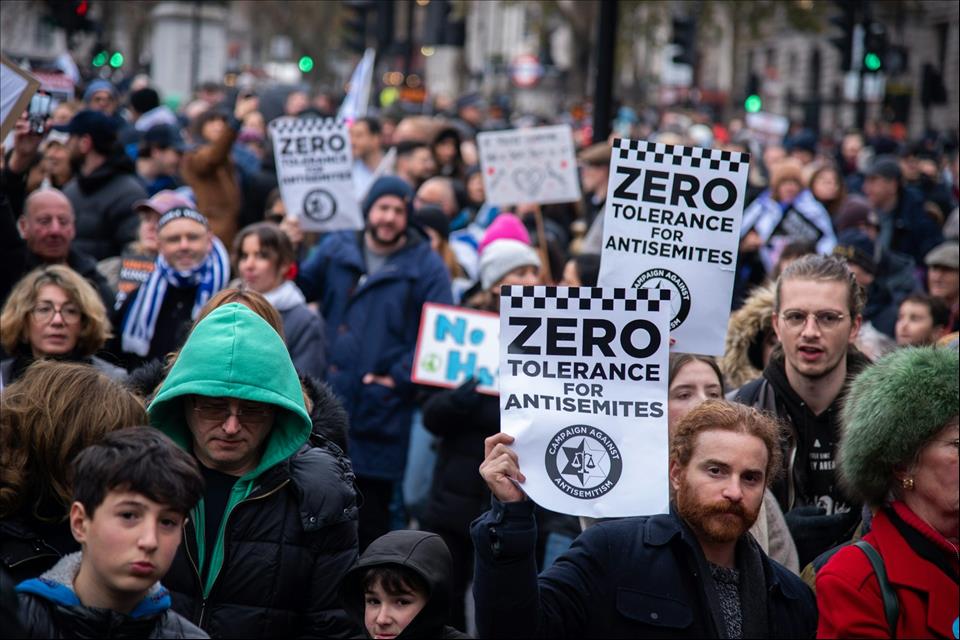
(MENAFN- The Conversation) Police are investigating an attack on a Jewish man in Golders Green, London, just weeks after two Jewish men were stabbed in the area. These are the latest in a series of violent attacks on Jewish people and institutions. They have also given fresh impetus to a long-running debate about the extent of antisemitism in the UK.

My research explores how the law approaches the thorny question of where political critique of Israel ends and antisemitism begins. This is a sensitive topic, which events like this have brought to public attention once again.
In a statement, Prime Minister Keir Starmer identified three causes of what he described as a“crisis for all of us”. First, he cited“hate preachers” and“charities that promote antisemitic extremism”. Second, Starmer referred to“the malign threat posed by states like Iran,” after a group with Iranian links was investigated in relation to arson attacks on Jewish charity Hatzola ambulances in Golders Green.
The third was more controversial: the prime minister pointed the finger at those who“diminish” the antisemitism faced by Jews today. Standing alongside those who chant“globalise the intifada” at marches is, according to Starmer,“calling for terrorism against Jews”.
Read more: Why banning pro-Palestine marches is a risky response to antisemitic violence
“Intifada” is an Arabic term used to describe Palestinian uprisings against Israel in the late 1980s and early 2000s – the latter involving suicide bombings aimed at civilian targets in Israel. Starmer went as far as saying that people who approvingly use that phrase should be prosecuted.
Responses from some of the British Jewish community seemed to back Starmer up. Many expressed a sense of vulnerability and isolation, exacerbated by betrayal at a perceived lack of solidarity from anti-racist activists.
Similar feelings surfaced after the Hamas atrocities of October 7, 2023. For many Jews, a lack of empathy – at best – for the victims and the scale of the trauma testified to an “indifference to Jewish death... across the world”. Throughout the subsequent war in Gaza, many felt that the military threat posed by Hamas was routinely erased from public debate.
The rising popularity of zero-sum arguments pitting Israeli “settler colonialism” against Palestinian“indigeneity” further squeezed the space for dialogue. This led to a defensive hardening of positions. Even British Jews sceptical of – or appalled by – the war's conduct felt unable to express that opposition, for fear that it might be used to delegitimise Israel's existence and encourage antisemitic reprisals.
But it also contributed to the widespread adoption of a new critique of“antizionist ideology”. While recognising that some of the more outlandish claims about Israeli conduct can draw on an older repertoire of anti-Jewish conspiracies, in its more crude variations this ends up classing almost any accusation of Israeli wrongdoing as a“libel”.
The claim that Israeli actions in Gaza could amount to genocide, for example, is regarded as akin to the“blood libel” – the antisemitic fantasy that Jews kill Christian children for religious rituals. Often, no distinction is made between, say, the careful analysis of an Israeli scholar and the wild-eyed rantings of a social media provocateur.
There are diverse modes of opposition to Israel, ranging from Islamist rejections of the concept of Jewish sovereignty, to sober reports of Israeli human rights abuses. In the current framing of antizionism, these are reduced into a singular, undifferentiated ideology, which is then inflated into an existential threat to “the west”.
This mirrors the equally reductive characterisation of Zionism by some of the pro-Palestinian movement: a single, innately malign ideology that is “the enemy of world peace”, responsible for climate change, and a danger to the world.
At its worst, this new movement against antizionism denies Palestinian suffering in much the same way as those who refuse to“open their eyes to Jewish pain”, as Starmer put it.
Jewish identity and IsraelStarmer's claim that slogans like“globalise the intifada” should be simply understood as“terrorism against Jews” owes something to this reductive approach. It is true that some Jews interpret such phrases in this way, particularly in light of the sometimes casual attitude to political violence among protesters. And there are clearly times when they could be hate speech – if directly targeted at Jewish people, communal buildings or even pro-Israel protesters for instance.
But there are other rational interpretations for its non-targeted use – using“intifada” as substitute for“revolution”, perhaps, or as an attempt to link the Palestinian cause to wider opposition to global capitalism. Regardless of how convincing one finds such explanations, such uses of the word cannot be automatically classed as calls for antisemitic violence.
To insist that this is the only meaning is to eradicate any distinction between Jews in general and Israel in particular. This is troublingly similar to those who call for violence against Jews in retaliation for Israeli actions – albeit for very different reasons.
Conflating Jews and Israel, from whatever direction, simplifies the complex historical relation that exists between modern Jewish identity and Israel. The two are certainly not identical, as confirmed by the rising number of Jews who are rejecting any connection, or warning of an impending clash between “Jewish values” and an Israel controlled by far-right factions.
Yet it is also too easy to pretend that they have nothing to do with each other. Like other 19th-century nationalisms, Zionism sought to revive and transform older modes of (Jewish) collective belonging. Meanwhile, the post-Holocaust reconstruction of Jewish identity was inextricably linked to the establishment of Israel as a Jewish-majority state.
The connection might vary from person to person – from the belief that Israel is needed to guarantee Jewish safety, to national, religious, cultural and familial reasons. But the significance of Israel to the majority of Jews cannot be lightly skipped over by repeating truisms like“not all Jews are Zionists” – even if it categorically does not mean Jews are politically responsible for what the Israeli government does.
But neither is Israel a simple extension of Jewish identity, in the way that Starmer suggests. The risk is that – as shown by the misguided proscribing of the Palestine Action group – pouring police resources into arresting those who chant indeterminate slogans will divert attention away from protecting communities like Golders Green.
Institution:Queen Mary University of London

Legal Disclaimer:
MENAFN provides the
information “as is” without warranty of any kind. We do not accept
any responsibility or liability for the accuracy, content, images,
videos, licenses, completeness, legality, or reliability of the information
contained in this article. If you have any complaints or copyright
issues related to this article, kindly contact the provider above.
Most popular stories
Market Research

More Story






Comments
No comment