




403
Sorry!!
Error! We're sorry, but the page you were looking for doesn't exist.
Guns Over People: Rising Military Spending Is Eroding Quality Of Life Around The World
Author: Ruolz Ariste
(MENAFN- The Conversation) As Canada celebrates meeting the North Atlantic Treaty Organization (NATO) target of spending two per cent of GDP on defence, it's important to remember this spending isn't counted within the concept of what's known as social GDP, an alternative metric focused on measuring a nation's social development, well-being and sustainability rather than just monetary production.

Excessive military spending, in fact, can harm economic and social development, which raises concerns about NATO's new five per cent target by 2035, transitioning to 3.5 per cent by 2029.
GDP measures the total value of goods and services produced in an economy. It's an accounting of economic activity, not a judgment of social value. Therefore, military expenditures are included in the GDP.
But the social GDP concept used in the United Nations Human Development Index (HDI) does not regard military spending as a positive contribution. In fact, such spending doesn't contribute to the HDI at all, and represents significant costs to national economies.
Read more: Are Canadians ready to ditch GDP as a key prosperity indicator?
Military spending erodes other investmentsThe current global environment is volatile and inequitable. While every country needs the ability to defend itself against another nation's threats, that shouldn't lead to states becoming more aggressive or defending themselves disproportionately or recklessly.
Military spending should not come at the cost of public investments in health, education, the environment or transportation, because it carries significant tangible and opportunity costs.
It's clear in many countries around the world that military spending erodes and crowds out civilian spending.
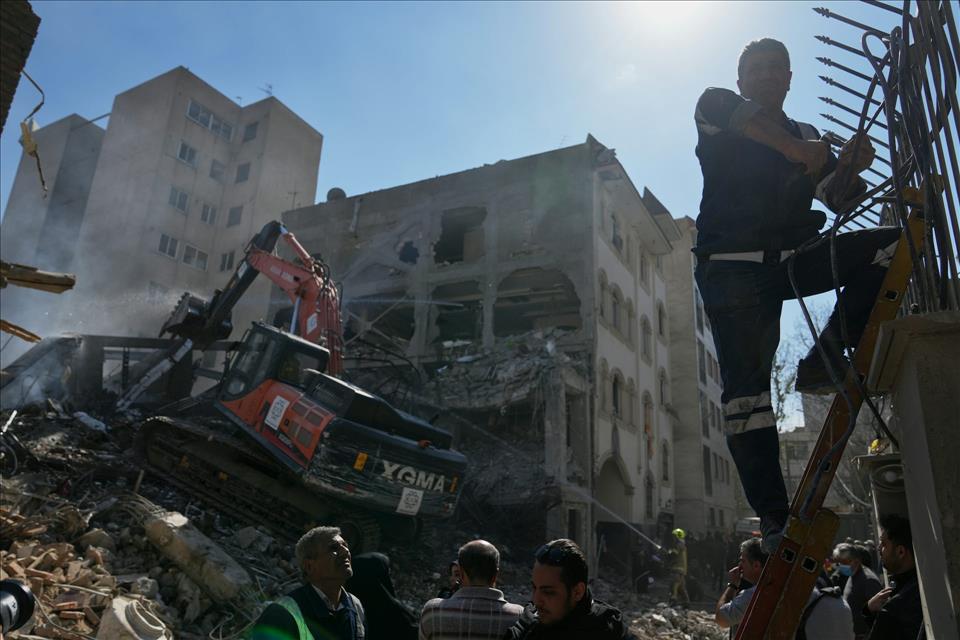
The United States is a case in point. The second Donald Trump administration has been attacking countries with no regard for national or international law. The U.S.-Israeli war against Iran is the latest case in point.
While the Trump administration has increased military spending by about 13 per cent from 2025 levels to reach more than $1 trillion for the first time, it's been cutting spending in areas specified as critical by the UN'S HDI.
The Trump administration wants massive cuts to civilian appropriations for 2026 - a 21 per cent reduction compared to 2025 - but U.S. congress has largely rejected those proposals. Nevertheless, approved 2026 funding for social programs doesn't keep pace with inflation; it's nearly two per cent below the 2025 level and seven per cent below 2020 levels after adjusting for inflation.
This has been also the case for Russia and Israel.
Canadian sacrificesCanada certainly hasn't waged war on any country and doesn't have a strong military culture. But it's not exempt from the “guns versus butter” funding challenge.
It reached the two per cent NATO target by increasing the Department of National Defence (DND) budget by $9 billion, counting defence-related spending across departments and shifting some programs to DND.
In the process, other federal departments are required to reduce their budgets by 15 per cent over a three-year period, though some temporary social programs have been maintained (school food program, Build Canada Homes office) or created (funding for Women and Gender Equality Canada). This may suggest a more moderate guns versus butter approach in Canada than in countries like the U.S., Russia and Israel.
However, with a new 3.5 per cent NATO target by 2029 and five per cent by 2035 that the Carney government has suggested it endorses, deeper cuts to social programs and bigger budget deficits are probably on the horizon.
The impact of war on well-beingAs the war in Ukraine approached its fourth year, the number of casualties had reached 1.8 million (1.2 million in Russia and 600,000 in Ukraine). This includes as many as 465,000 deaths (325,000 in Russia and 140,000 in Ukraine).
Between Oct. 7, 2023 and Jan. 5, 2025 during the Israeli-Hamas war, there were 75,200 violent deaths and 8,540 deaths attributed to disease, lack of care and malnutrition.
The majority of deaths in Gaza have been women and children. Peacekeepers, journalists and medical personnel have also died.
In the Israel-Hezbollah war in Lebanon, more than 1,000 people have been killed; there have been 3,000 casualties.
War increases the ranks of displaced people as well. Close to 10 million Ukrainians have been displaced because of the conflict with Russia (3.7 million internally and 5.9 million refugees). This represents about a quarter of the total Ukrainian population, making it the largest displacement crisis in Europe since the Second World War.
At least two-thirds of Gaza's population of 2.1 million people has been displaced due to war. They are sheltered in precarious conditions across approximately 1,000 displacement sites.
As for Lebanese, the war has already displaced nearly one million or close to 15 per cent of Lebanon's total population.
Reconstruction costsThe costs of physical destruction and reconstruction are also part of war. Estimates suggest the total cost of reconstruction and recovery in Ukraine will be almost US$588 billion over the next decade, which is nearly three times the estimated nominal GDP of Ukraine for 2025.
A staggering 84 per cent of all structures in Gaza were destroyed or damaged during the war. That will require more than US$70 billion in reconstruction.
For the 14-month Israel-Hezbollah war (up to December 2024, so not including the series of attacks starting on March 2026), the World Bank estimates US$11 billion will be needed to rebuild Lebanon.
There are also direct and indirect costs incurred by the displaced.
Direct costs include loss of employment and income, increased cost of living in general and health-care costs in particular. Indirect costs involve poor mental health and long-term well‐being, loss of livelihoods and businesses, education disruption, poverty and criminality. These costs are massive, multi‐layered and long‐term, and they compound the aforementioned broader national economic losses.
Making aggressors payHow can sharp increases in military spending be justified given their potentially catastrophic consequences? And how can the world shift the way it thinks about war?
When countries expand their military budgets or enter into conflict, the costs go far beyond equipment and munitions. One possible approach would be to establish an international mechanism requiring aggressor states to bear the full economic and human costs imposed on the countries they attack.
This could include estimating the loss of human life using measures such as the value of a statistical life - an economic tool that assigns a monetary value to risk and mortality - alongside reconstruction costs and broader economic damage. These combined costs could then be imposed on the aggressor.
Such a framework could help curb the arms race and discourage ever-increasing military spending. With NATO targets rising toward 3.5 or even five per cent of GDP, the risk of crowding out social investment grows. Reconsidering these targets could ultimately benefit societies around the world.
Institution:Carleton University

Legal Disclaimer:
MENAFN provides the
information “as is” without warranty of any kind. We do not accept
any responsibility or liability for the accuracy, content, images,
videos, licenses, completeness, legality, or reliability of the information
contained in this article. If you have any complaints or copyright
issues related to this article, kindly contact the provider above.
Most popular stories
Market Research

More Story



Comments
No comment