




403
Sorry!!
Error! We're sorry, but the page you were looking for doesn't exist.
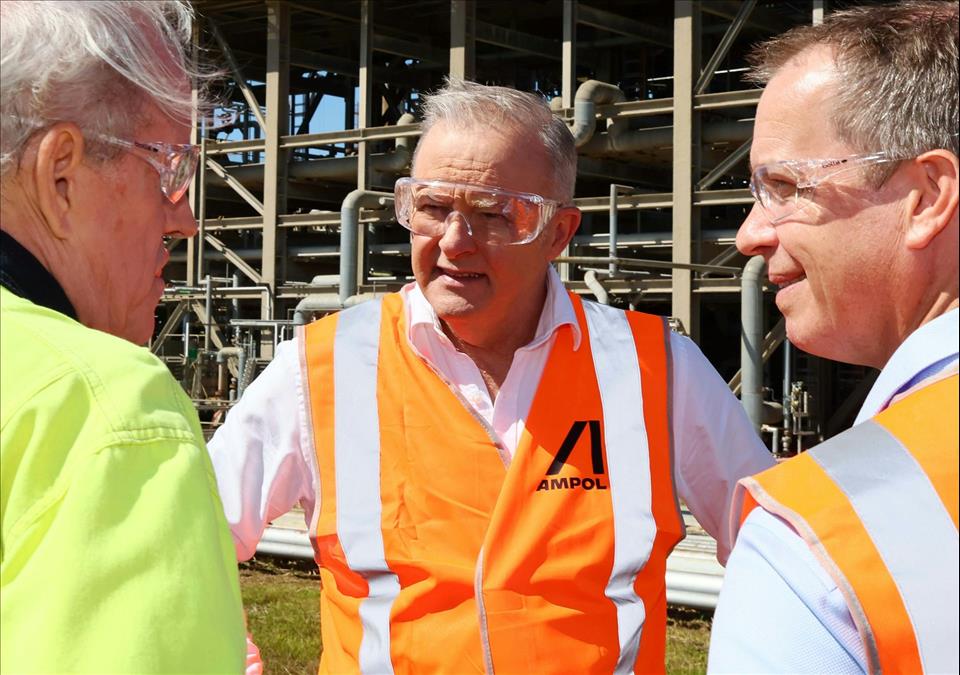
Second Fuel Security Trip To Asia For PM
Author: Michelle Grattan
(MENAFN- The Conversation) Prime Minister Anthony Albanese will leave on Tuesday for his second fuel security mission within a week.

He will visit Brunei and Malaysia, after his trip to Singapore last week won assurances that the country would not be putting restrictions on its exports of liquid fuel.
In Brunei Albanese will meet Sultan Hassanal Bolkiah to discuss energy, food security, and the bilateral flow of essential goods.
Brunei supplies 9% of Australia's diesel imports, and 11% of its fertiliser-grade urea imports. Australia exports food and agricultural products to Brunei.
In Malaysia, Albanese will meet Prime Minister Anwar Ibrahim, to discuss the supply of fuel and other critical goods.
Malaysia is Australia's third-largest source of refined fuel. It supplies 10% of Australian imports of fertiliser-grade urea. Australia supplies 95% of Malaysia's imported natural gas.
Foreign Minister Penny Wong will also be on the trip, before she goes separately to Singapore.
Albanese said:“We are taking every step to reinforce relationships and engage with key partners to keepour fuel supply flowing”.
The government at the weekend announced a $20 million national advertising campaign on the theme“Every little bit helps”, aimed at encouraging people to save fuel by using public transport, and handling their vehicles more efficiently.
Economist Chris Richardson says crisis has budget upsideAs Albanese pursues fuel security, independent economist Chris Richardson has estimated the pluses of the crisis for the budget.
Richardson calculates that even allowing for cost-of-living support such as cuts in fuel tax, the budget is likely to be about $30 billion better off between now and 2028-29.
One way the war boosts the budget is through increases in prices for our exported gas and coal, and also a high gold price.
“In effect, the world just gave Australia a pay rise, and the government gets a chunk of that,” Richardson says.
“And although the ceasefire has also reduced the fire under fuel prices, there's enough damage to infrastructure and ongoing uncertainty to ensure the pay rise the world has granted us disappears slowly rather than fast.”
Second, a rise in inflation will act“like a tax, taking money from families and giving it to the government.”
“That first factor is boosting the size of the pie being taxed, and the second is increasing the taxman's share.
"The uncomfortable fact is that war is a moneymaker for the Australian federal budget – partly because war boosts inflation (which effectively acts as a tax), but mostly because the war has bid up the price of what Australia sells to the world.”
Richardson estimates the effect will likely be smaller-than-budgeted deficits this year ($6 billion smaller than the official forecast of $37 billion), next year ($20 billion smaller than the forecast $34 billion), and the year after ($9.6 billion smaller than the forecast $36 billion). But, he says, the deficit may be bigger than budgeted (by $5.6 billion compared to the forecast of $36 billion) in 2028-29 as war-driven budgetary positives pass.
Also“net debt is set to be a smaller share of national income than the official forecasts had it being.
"That's because inflation isn't just good for the budget in the next couple of years. Inflation also shrinks existing debt, as that debt can now be paid off in 'inflated dollars'. (And that's true for all debtors, including recent homebuyers – inflation transfers wealth from creditors to debtors.)”
Institution:University of Canberra

Legal Disclaimer:
MENAFN provides the
information “as is” without warranty of any kind. We do not accept
any responsibility or liability for the accuracy, content, images,
videos, licenses, completeness, legality, or reliability of the information
contained in this article. If you have any complaints or copyright
issues related to this article, kindly contact the provider above.
Most popular stories
Market Research

More Story




Comments
No comment