







403
Sorry!!
Error! We're sorry, but the page you were looking for doesn't exist.
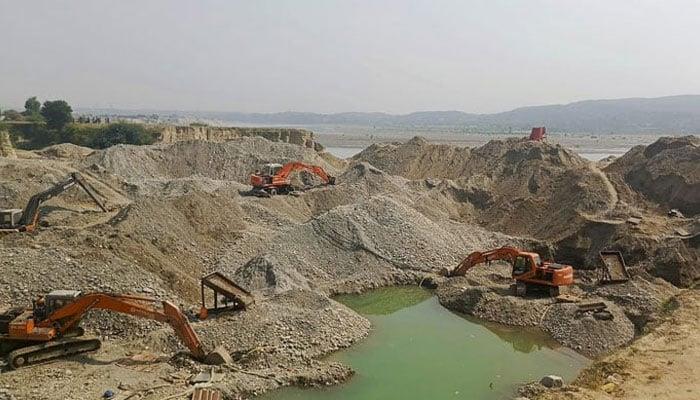
Swat's Lifeline Under Siege As Illegal Mining Devastates River Ecosystem
(MENAFN- Tribal News Network) Muhammad Iqbal, a resident of Aligrama, tehsil Kabul Swat, has spent nearly 31 years as a fisherman. Since he was 14 years old, fishery has been his family's main source of income.
“This is the only work we know,” Iqbal says.“My family's survival depends on it.”
He is not alone. Many people in his area rely on fishing to make a living. However, over the years, human activities have caused severe damage to the river ecosystem. Fish species have disappeared, and others are on the brink of extinction.
The distance between River and their house is approximately 1 hour. They start(fish-catching) journey from Tehsil Kabal in the night, and reach Landaki (located in the Tehsil barikot) where they take some rest and deliver 2-3 kilograms of fish (to the hotels). After taking rest for a while, they resume their journey and go downstream along the river Swat until they arrive Chakdara (Tehsil Headquarter of Tehsil Adenzai).
“The river has changed so much,” Iqbal explains.“Before, we could travel 15 to 20 kilometers in river, and catch enough fish to survive. Now, we go as far as 60 to 70 kilometers, and we don't even get a quarter of what we used to.”
Once famous for its pristine waters and diverse fish populations, the river Swat is facing a grave environmental threat as a result of excessive and illegal mining activity on its banks and within its riverbed. For centuries, this river has provided livelihoods to thousands of people throughout the region through fishing, agricultural production, tourism, as well as providing for the day-to-day household and family requirements of its residents.
Also Read: Section 144 enforced in four KP districts over illegal riverbed mining
The primary focus of mining activities is the removal of sand, gravel, gemstones and building materials for use in construction in various civil engineering works, including concrete production, road construction, and other infrastructure development activities. The main source of these materials is either directly taken from the bottom of the river or from the adjacent floodplain. In most cases, these materials are extracted using mining heavy equipment, including excavators and dump trucks occurring in and around the river Swat.
Environmental specialists have determined that the removal of the river's bottom will result in the complete alteration of the river's natural course, as well as destabilization of its banks, speeding up sediment erosion and altering the structure of the river's habitat, which will put it at risk of flooding and ecological collapse.
These illegal mining is the violations of the Khyber Pakhtunkhwa Mines and Minerals Act 2017, KP River Bed Rules 2022, and Section 144 Cr.P.C imposed by the District Administration. The Mineral Development Department of the Khyber Pakhtunkhwa is the custodian of the minerals, however the committee has been notified by the government of Khyber Pakhtunkhwa like District Mining Liason Committee at district level to take actions against the illegal mining,impose fines and imprison the offenders, confiscate the machineries and recovered the assessed dues from the offenders.
The KP Mines and Minerals Act, 2017, provides the primary legal framework for the regulation of mining activities, while the KP Mining of Minor Minerals from River Bed Rules, 2022 specifically concerning the mining of riverbed. Under the above referenced KP Mining Rules, Assistant Commissioners and Mineral Departments have the authority to stop any illegal mining, to impose penalties, to confiscate any equipment used for illegal mining activities and to file First Information Report (FIR) against violators.
The KP Mines and Minerals Act 2017 has categorized mining activities in Swat as either major or minor minerals. Major minerals found in Swat include limestone, marble, granite, as well as various dimension stone, metals, and gems that are found primarily in mountainous and hilly areas of Swat.
Minor minerals extracted for use in construction are abundant in the entire district of Swat. The minor minerals extracted in Swat include sand, gravel, shingle, boulders, and many other materials that are located within the river beds of the Swat River and its tributaries and adjacent to river beds. The areas of minor mineral extraction within the district are located around the Mingora bypass, Matta, and Barikot, and their surrounding areas.
According to a confidential source at the Mines and Minerals Department, major mineral mining operations require the approval of a mining plan, an environmental clearance, and a long-term lease with the Mines and Minerals Department, in addition to technical supervision. The extraction of major minerals is a capital-intensive and highly regulated activity due to the complex geology of the region, access, and local issues. As a result, major mineral mining in Swat remains limited in scale.
“Compared to major mineral mining, minor mineral operations are more susceptible to illegal and unregulated extraction due to the ease of access, seasonal variability of river flows, and limited on-site monitoring.” He continues“Riverbed mining, in particular, presents significant challenges in terms of environmental degradation, erosion, and public safety, especially during periods of low river flow when large portions of the riverbed are exposed and easily accessible.”
The deterioration of water quality in River Swat has been scientifically measured using the Water Quality Index (WQI). A national water quality assessment classified several stretches of the river as“poor” and unsuitable for drinking purposes. Aquatic animals are among the most severely affected by these changes. The decline in fish populations in River Swat provides biological evidence of this environmental degradation.
Increased concentrations of heavy metals such as zinc, chromium, nickel, and lead in fish tissues, demonstrating bioaccumulation through the aquatic food chain. According to research paper, 46 species were found in 2007 while only 17 species have been found after flood 2010 in river Swat. Mahseer fish is the national fish of Pakistan and it was abundantly available in the river swat before 2 decades but the mining activities and flood 2010 has caused much damage to Mahseer fish population. Mahseer population of brooder has completely disappeared, and its habitats are destroyed due to mining because it needs gravel and rock as substrate for their survival.
Furthermore, mass number of fish deaths (especially Swati machli scientific name“Shizothorax plagiostomus”) were reported by the local fisherman in 2016 due to water pollution caused by water turbidity. In a scientific paper published in the Marine Pollution Bulletin it was determined that there is heavy metal contamination of those species of common fish found being eaten by people that are found in the Swat River, such as G. cavia, S. plagiostomus, G. gotyla, M. Armatus, and T. macrolepis, indicating that there are pollution-related risks to the ability of fish to survive, present a human health risk through eating those fish, and continue to threaten biodiversity in the Swat River ecosystem.
Excavation has been proven through scientific study to generate enormous amounts of suspended sediment into rivers. This increases turbidity and, in turn, blocks sunlight from reaching aquatic plants and microorganisms. As turbidity increases, so too does the reduction of dissolved oxygen, which can greatly affect aquatic organisms and cause large ecological imbalances.
Professor Murad Ali, a water resources and climate change expert from Malakand University, argues that poor-quality research is the primary cause of mining.
"Government give no priority to high-quality research. As a result, it has hindered students from developing updated research to support and implement the type of changes we need. In order to solve these problems, the provincial government must develop sustainable practices; conduct rigorous scientific research to establish true needs; and create regulations to appropriately govern the mining industry."
According to Ali, Pakistan is "laws in a lawless land." He continues "In order to reform the mining industry and mitigate the environmental disasters caused by mining, there has to be an immediate focus on evidence-based research, regulation of the industry and public education about the harmful environmental impacts from mining,".
Illegal riverbed mining has caused deep pits to form in the rivers, altered their water courses, and produced very dangerous flood conditions leading to many deaths through drowning. There were 31 reported drowning incidents in 2024, with 26 fatalities among those victims. In 2025, there continues to be an increase in these incidents with 38 emergency calls having been made between January 1st and September 26th, 2025 that resulted in 32 fatalities, of those, only a few victims were rescued alive.
Experts believe that the illegal nature of mining also creates additional hazards by deepening the river channel and causing the banks of the river to become unstable, further increasing the hazards associated with flooding and accidents. Additionally, illegal mining operations in the Swat Valley are routinely believed to be controlled by powerful networks that the local residents refer to as the“mining mafia.” This will include contractors, transporters, and sometimes public officials, all of whom benefit from a lack of enforcement of the laws.
Fayaz Zafar, a local journalist and activist from Swat, has produced numerous videos highlighting the ongoing illegal mining activities in the region. He points out that despite regulations restricting mining, these activities continue unchecked.
“Illegal mining is still happening because government officials, including those from the administration and the mineral and mines department, are involved,” Fayaz explains.“They accept bribes from those carrying out the mining, allowing them to dig into the riverbed without any regulation.”
Abid Ali Jan, a social worker and who work against illegal mining activity, said that Swat's environment is in jeopardy as a result of illegal mining, which poses a significant threat to the region's natural beauty.“Our valley is one of Pakistan's top tourist sites because of its rivers and forests, which draw people from all over the country,” Jan told,“Yet, from Shamozai to Kalam, the majority of the natural areas along the water's edge where people can picnic have been ruined, either due to flooding or because of illegal mining activity.”
In addition to the dangers posed by illegal mining operations, Jan mentioned that there is a mafia network involved in these illegal operations.“They have an enormous power behind the scenes,” he stated.“I myself have received threats because of my opposition to illegal mining, and a friend of mine was held at gunpoint.”
As per official sources as of now about 1000 murasilas (correspondence) issued since June 2022 under sections 56 and 86 have resulted in the recovery of approximately 4 million as penalty. The government has also used administrative methods to control mining operations, especially during high-risk periods and temporary bans under section 144 Cr have been imposed during flood periods, emergencies, and after fatal accidents.
Such enforcement actions are indicative of the government's current enforcement efforts; however, many of the penalties imposed were below the minimum legal penalty for such an offence that section 86 stipulates is not less than Rs 500,000. Some operators of illegal mines have been fined as little as Rs 2,000 – 3,000, thereby undercutting the deterrent effect of the law.
According to the official,“Flash floods in June 2025, resulted in the loss of life and destruction of riverbanks in Swat, and resulted in the suspension of all mining activity on the riverbed. During these types of emergencies, the administration focuses on public safety, environmental protection, and enforcement of mining regulations and many leases that violate approved mining plans or regulations are suspended, or cancelled, to ensure compliance with the regulation.”
He further said that It is less about willful negligence and more about systemic failure. The department is under-equipped, lacking drones and enough technical staff to be deputed at the grassroot level to monitor the entire Swat River effectively.
Illegal mining of riverbeds in Swat is subject to seasonal variations. Typically, winter is the season when you would find the greatest amount of illegally mined riverbeds because during this time there is limited flow of water in the rivers so portions of riverbeds are exposed allowing for easier access to remove minerals. While the mining activity decreases in monsoon or flooding when the government normally puts a suspension order under Section 144 to help prevent accidents from occurring.
Fayaz said that these unregulated activities are causing severe environmental damage. Fish species are endangered, and the decline in fish populations has already been observed. Moreover, the dangerous digging operations have led to fatal accidents, with people losing their lives in these mining areas.
“The lack of enforcement and accountability is destroying our natural resources and threatening human lives and species,” he emphasizes.“Immediate action is needed to stop illegal mining and protect both the environment and the people of Swat.”
However, government officials indicated that they are engage in eliminating illegal mining in Swat despite the challenges posed by social and political barriers. The government has plans to improve the enforcement of regulations regarding illegal Mining in Swat, by implementing more stringent application of the Laws under; Sections 56 and 86, Decentralization of authority, providing more Technical Staff, Field Staff, and implementing improvements to the Monitoring of these activities through: GPS, Drones, Surveys, direct Year-round Monitoring of Riverbeds, Joint Enforcement Operations, and Emergency Response Teams.
“The Government is committed to providing an environmentally sustainable Mining operation by regulating extraction methods, reclamation of the mining site, and community participation, in order to minimize the risk of floods and maximize the reduction of adverse impacts on the environment.”
According to Iqbal, the situation is worsening with time. The destruction of the river not only threatens aquatic life but also endangers the livelihoods of entire communities.
“We demand that the government and relevant organizations take action to stop these harmful activities and protect our river,” Iqbal urges.“This is not just about fish; it's about people's lives and jobs. We are losing our work day by day, and we need help before it's too late.”
Additionally, Professor Murad Ali stated that“If we do not make research a priority, have regulations for mining, and raise awareness regarding mining, we will continue to lose our rivers, ecosystems, and safety. While sustainable options exist, they can only be done through collaboration between society and government.”

Legal Disclaimer:
MENAFN provides the
information “as is” without warranty of any kind. We do not accept
any responsibility or liability for the accuracy, content, images,
videos, licenses, completeness, legality, or reliability of the information
contained in this article. If you have any complaints or copyright
issues related to this article, kindly contact the provider above.
Most popular stories
Market Research

More Story





Comments
No comment