




403
Sorry!!
Error! We're sorry, but the page you were looking for doesn't exist.
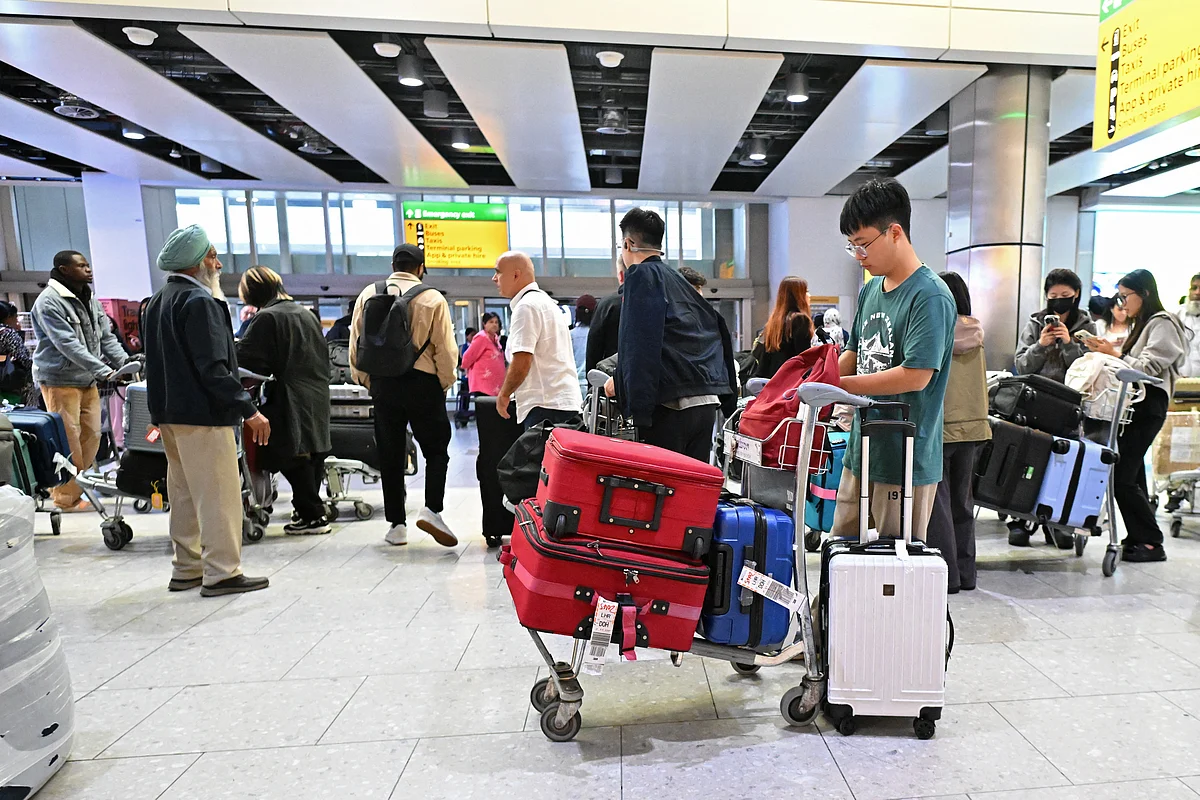
War Turbulence Costs Aviation $50B+ Amid Flight Disruptions, Fuel Price Surge
(MENAFN- Khaleej Times) The escalating conflict involving Iran is delivering the aviation industry its most severe geopolitical shock since the Covid-19 pandemic, wiping more than $50 billion off airline market value, disrupting tens of thousands of flights worldwide and sharply raising fuel and insurance costs across global route networks.
Fresh operational data from the International Air Transport Association (Iata) shows airlines have already downgraded near-term capacity expansion forecasts after widespread airspace closures across the Middle East forced carriers to reroute Europe-Asia traffic and suspend key regional services.
Recommended For You UAE airlines update entry, transit rules for Iranian nationalsGlobal capacity growth slowed to 3.3 per cent year on year in March 2026, a sharp downward revision from earlier projections of 5.2 per cent, reflecting what Iata described as“substantial capacity cuts” linked directly to the conflict.
“The safety of civil aviation is paramount and the conflict is forcing airlines to make significant operational adjustments,” said Willie Walsh, Iata director general, warning that both passenger connectivity and cargo logistics across Gulf hubs have come under pressure.
Airspace closures across multiple Middle East corridors triggered the cancellation or disruption of tens of thousands of flights during March, with airlines forced into longer detours over Central Asia, the Caucasus and southern Europe. The rerouting has increased fuel burn, extended journey times and tightened aircraft utilisation across intercontinental fleets.
Since hostilities began in late February, airline equities have collectively shed more than $53 billion in market value, while jet-fuel prices surged by as much as 80 per cent during peak volatility periods, briefly approaching $175 per barrel in some trading windows. The spike has sharply raised operating costs for long-haul carriers already facing narrow margins.
The strategic vulnerability of the aviation sector reflects its dependence on Gulf airspace as the primary bridge linking Asia, Europe and Africa. Restrictions across traditional east-west corridors have forced airlines including Emirates, Etihad Airways and Qatar Airways to adjust schedules and redeploy aircraft across alternative routes to maintain connectivity.
Cargo operations have been particularly affected. Iata warned that disruptions across Gulf logistics hubs are slowing high-value freight flows between Asia and Europe, threatening supply chains for electronics, pharmaceuticals and automotive components. Freight yields, which had stabilised after pandemic volatility, are rising again as available capacity tightens.
European carriers face an additional layer of risk because roughly 25 to 30 per cent of their jet-fuel supply originates from the Gulf region. Any prolonged disruption to refining or shipping through the Strait of Hormuz could keep aviation fuel prices elevated well into the summer travel season, analysts warn.
Industry analysts say the conflict has interrupted what had been expected to be aviation's strongest expansion phase since 2022. Entering 2026, airlines anticipated robust long-haul demand supported by resilient tourism flows and strong Gulf hub connectivity. Instead, escalating geopolitical uncertainty is forcing carriers to reassess route economics, fleet deployment strategies and seasonal capacity plans.
Aviation analysts said the outlook has become more uncertain after Donald Trump signalled that military operations against Iran could intensify in the coming weeks, raising the likelihood of prolonged airspace instability across one of the world's most critical aviation corridors. Markets interpret the escalation risk as increasing the probability of sustained route disruptions through the second quarter.
Aircraft utilisation rates are already falling across some intercontinental fleets, and insurers have raised war-risk premiums for flights operating near conflict zones. Leasing markets are also showing early signs of caution as airlines reconsider expansion timelines amid uncertainty over long-haul profitability.
Despite the near-term turbulence, Gulf carriers are expected to remain more resilient than many global peers because of their geographic advantage, diversified route structures and strong sovereign backing. Airlines such as Emirates, Etihad Airways, flydubai and Air Arabia have demonstrated operational flexibility by rapidly adjusting flight paths and maintaining connectivity across alternative corridors linking Asia, Europe and Africa.
Taken together, the latest indicators suggest the Iran conflict is evolving into a structural risk event for global aviation - one that could delay capacity expansion, push fares higher and reshape long-haul route economics if instability persists into the second half of 2026.

Legal Disclaimer:
MENAFN provides the
information “as is” without warranty of any kind. We do not accept
any responsibility or liability for the accuracy, content, images,
videos, licenses, completeness, legality, or reliability of the information
contained in this article. If you have any complaints or copyright
issues related to this article, kindly contact the provider above.
Most popular stories
Market Research

More Story







Comments
No comment