



403
Sorry!!
Error! We're sorry, but the page you were looking for doesn't exist.
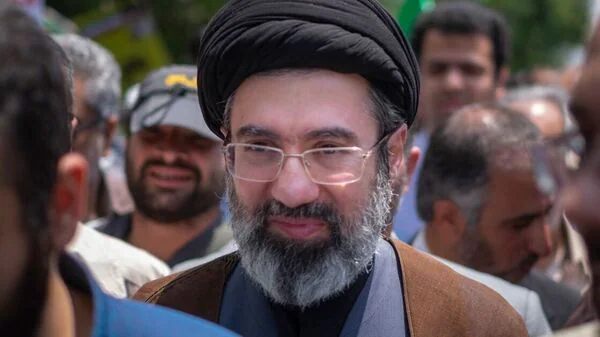
Who Is Mojtaba Khamenei? The Low-Profile Cleric With Deep IRGC Ties Who Became Iran's New Supreme Leader
(MENAFN- Live Mint) Iran has named Mojtaba Khamenei the country's next supreme leader, state media reports, following the killing of his father Ayatollah Ali Khamenei. US President Donald Trump previously said Khamenei's son would be an“unacceptable” selection. The announcement came hours after Israel launched fresh strikes which hit oil storage sites in Tehran.Who Is Mojtaba Khamenei, Iran's New Supreme Leader?
Mojtaba Khammenei has never delivered a Friday sermon. He has never run for office, addressed a public gathering, or - by most accounts - allowed his voice to be heard by the Iranian public at large. Yet Mojtaba Khamenei, the 56-year-old second son of the late Ayatollah Ali Khamenei, has spent decades quietly accumulating power at the very heart of the Islamic Republic, cultivating ties to Iran's most feared security institution and positioning himself as the inevitable heir to his father's absolute authority.
Also Read | Mojtaba named Iran's new Supreme Leader after wartime killing of Ali Khamenei?Now, following the killing of Ayatollah Ali Khamenei in a US-Israeli strike on his Tehran compound on Saturday, 28 February, Mojtaba Khamenei has been formally selected as Iran's new supreme leader - an ascension that signals the hardline factions of the establishment remain firmly in control, and that the prospect of near-term negotiations or a diplomatic settlement may be considerably more remote than some had hoped.
How Was Mojtaba Khamenei Selected as Supreme Leader?Iran's Assembly of Experts - the 88-member clerical body constitutionally empowered to select the country's supreme leader - confirmed the appointment on Sunday, describing the outcome as a "decisive vote." In a statement circulated through state media, the assembly called upon all Iranians, "especially the elites and intellectuals of the seminaries and universities", to“pledge allegiance to the leadership and maintain unity.”
Also Read | Middle East conflict: Iran hints Khamenei's son will be named supreme leaderThe speed of the selection - coming within days of the elder Khamenei's death - reflects both the pre-existing consensus around Mojtaba's candidacy within the establishment and the urgency of projecting continuity during an active military conflict. The younger Khamenei was reportedly not present at his father's compound when it was struck, and has so far survived the ongoing campaign.
His mother, wife, and one of his sisters were killed in the same strike that killed the elder Khamenei.
A Dynasty the Islamic Republic Spent Years DenyingThe manner of Mojtaba Khamenei's rise to power carries a historical irony that will not be lost on Iranians of a certain age. The 1979 Islamic Revolution that swept away the Pahlavi monarchy was, in part, a revolt against inherited dynastic rule. Mojtaba's ascension to the position of supreme leader - following his father, who held absolute power for 36 years - effectively reconstitutes the very dynastic model the revolution claimed to have abolished.
Also Read | Khamanei's son Mojtaba new Supreme Leader? Iran denies Israeli media reportsIt is a sensitivity Mojtaba Khamenei appeared acutely aware of throughout his years of preparation. He has never publicly addressed the question of succession, a topic considered politically toxic precisely because of what his elevation would represent. Instead, he cultivated influence through institutions - particularly the Islamic Revolutionary Guard Corps (IRGC) - rather than through the public platform that might have invited scrutiny.
Deep Roots in the IRGC - and Decades of InfluenceMojtaba Khamenei's ties to the IRGC are not incidental; they are foundational to understanding his rise. He served in the Habib Battalion during the Iran-Iraq War in the 1980s, forging relationships with fellow soldiers who subsequently rose to senior positions across Iran's security and intelligence apparatus. Those networks have underpinned his authority for decades, even as he maintained the outward appearance of a cleric rather than a political operator.
In recent years, opponents and human rights organisations have linked his name to some of the Islamic Republic's most violent episodes of repression. During the Green Movement of 2009 - which erupted after the controversial re-election of Mahmoud Ahmadinejad - the reformist camp within Iran first accused Khamenei of manipulating election results and directing the IRGC's Basij paramilitary force against peaceful protesters.
Also Read | Who is Mojtaba Khamenei? Will he be Iran's next Supreme Leader?Basij forces have since been at the centre of successive crackdowns, most recently during protests two months ago in which the United Nations and international human rights groups say state forces killed thousands of people, predominantly on the nights of 8th and 9th January. The Iranian establishment has attributed the killings to what it describes as "terrorists" and "rioters" backed by the United States and Israel - a characterisation it has deployed consistently across multiple rounds of unrest.
A Financial Empire and Sanctions ExposureAway from the political and security sphere, Khamenei has also been associated - through investigative reporting by Western media outlets - with a substantial financial empire spanning assets in multiple countries. His name is not believed to appear directly in the alleged transactions; he is reported to have moved significant sums through a network of associates and insiders connected to the Iranian establishment.
Bloomberg linked Khamenei to Ali Ansari, whose Bank Ayandeh was forcibly dissolved by the Iranian state after it collapsed under the weight of insider loans and accrued debts - a failure that pushed Iran's already severe inflation higher and required partial compensation from public funds. Neither Khamenei nor Ansari has publicly addressed the reported connection. Separate allegations include the acquisition of luxury property across European countries.
Khamenei is currently subject to US and Western sanctions.
A Religious Rank That Required a Workaround - and May AgainThere is also the matter of religious credentials. Mojtaba Khamenei holds the rank of hojatoleslam - a mid-level clerical designation - rather than the more senior rank of ayatollah typically associated with the supreme leadership. It is the same challenge his father faced when he assumed the role in 1989: the elder Khamenei was also not an ayatollah at the time of his appointment, and the relevant law was amended to accommodate him.
Also Read | Ayatollah Khamenei hands power to military as Israel tensions escalateA similar legislative or clerical accommodation is widely expected for Mojtab, though the precise mechanism - and its timing - remains to be determined, particularly as Iran continues to impose nationwide internet blackouts and information restrictions amid the ongoing bombing campaign.
What Mojtaba Khamenei's Ascension Means for Iran's WarFor those watching the conflict, the most consequential implication of Mojtaba Khamenei's selection may be what it signals about Iran's near-term strategic posture. Analysts have noted that his ascension represents a clear consolidation of power by hardline factions - those with the least appetite for compromise and the deepest institutional stake in continued resistance.
Whether a supreme leader who built his authority through the IRGC, and who has never subjected himself to public accountability, will prove willing to negotiate an end to a war that killed his father, mother, wife and sister is a question the coming weeks may begin to answer - though few regional observers are expecting an early resolution.

Legal Disclaimer:
MENAFN provides the
information “as is” without warranty of any kind. We do not accept
any responsibility or liability for the accuracy, content, images,
videos, licenses, completeness, legality, or reliability of the information
contained in this article. If you have any complaints or copyright
issues related to this article, kindly contact the provider above.
Most popular stories
Market Research

More Story
Comments
No comment