




403
Sorry!!
Error! We're sorry, but the page you were looking for doesn't exist.

Polymarket War Contract Volumes Hit Highs Arabian Post
(MENAFN- The Arabian Post)
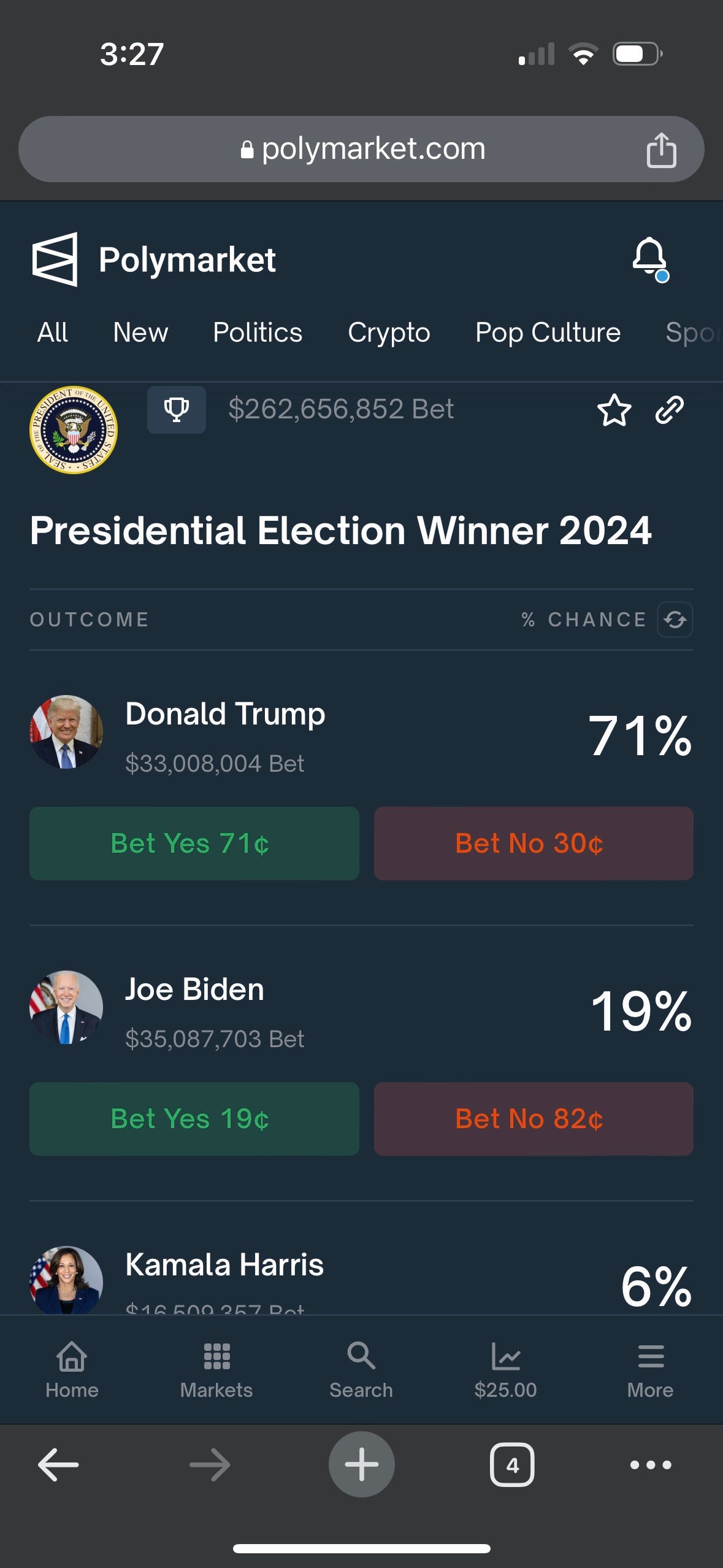
Polymarket has drawn record global trading activity after a contract tied to possible military strikes involving the United States and Iran surged past $529 million in cumulative volume, placing it among the most heavily traded markets in the platform's history.
Data published on the decentralised prediction platform show that wagers on whether the United States would carry out military action against Iran before a specified deadline eclipsed volumes typically associated with presidential election cycles. The contract, structured as a binary bet, asks traders to price the probability of a defined military event taking place within a set timeframe, with shares trading between zero and one dollar to reflect perceived odds.
The spike in activity has propelled the contract into the same league as Polymarket's most prominent political markets, including those tracking outcomes in the 2024 presidential race. Analysts say the figures underscore how geopolitical flashpoints are becoming a powerful driver of liquidity in online prediction markets, particularly during periods of heightened regional tension.
Polymarket operates on blockchain infrastructure, allowing users to buy and sell event-linked contracts using cryptocurrency. The platform has gained prominence over the past two years as traders sought real-time signals on elections, macroeconomic decisions and global crises. Its model, supporters argue, aggregates dispersed information into market prices that can act as crowd-sourced forecasts.
The contract focused on US-Iran military action gained traction amid escalating rhetoric and incidents across West Asia, including exchanges involving regional proxy groups and strategic infrastructure. Although no formal declaration of hostilities has been made, traders reacted swiftly to each diplomatic development, military movement and public statement by officials in Washington and Tehran.
See also X set to embed crypto and stock trading on platformMarket data show that implied probabilities fluctuated sharply following reports of naval deployments, air defence activity and warnings issued by both governments. At certain points, the contract priced the odds of direct military action significantly higher than earlier in the year, before retreating as tensions appeared to ease.
The surge in trading volumes has reignited debate over the role of prediction markets in sensitive geopolitical matters. Critics question whether financial incentives tied to conflict-related outcomes risk trivialising grave international security issues. Others argue that such markets merely reflect collective expectations and do not influence decision-making at state level.
Polymarket has previously faced regulatory scrutiny in the United States. In 2022, the Commodity Futures Trading Commission reached a settlement with the platform's operator over allegations that it offered event-based binary options without proper registration. The company agreed to pay a civil monetary penalty and to wind down certain markets for US-based users. Since then, Polymarket has restricted access for US residents, although its markets continue to attract participants globally.
Despite those constraints, political and geopolitical contracts have driven substantial growth in user engagement. Industry observers note that prediction markets have historically shown strong performance during election years, when public interest and information flow are intense. The elevation of a military-strike contract into the same tier as presidential election wagers marks a notable shift in trading focus.
Researchers who study prediction markets often highlight their ability to incorporate diverse information rapidly. Academic work dating back decades has suggested that, under certain conditions, such markets can outperform traditional polling or expert forecasts. However, the reliability of markets tied to rare or unprecedented events remains contested, particularly when outcomes hinge on confidential intelligence or rapidly evolving security assessments.
See also Clarity Act momentum grows as Fed leadership doubts unsettle cryptoThe US-Iran contract also reflects a broader pattern in digital asset markets, where geopolitical risk increasingly intersects with speculative trading. Cryptocurrency prices have in the past reacted to regional conflicts, sanctions announcements and diplomatic breakthroughs. Platforms like Polymarket amplify that connection by allowing direct bets on the occurrence of specific events.
Volume exceeding $529 million places the contract among the most liquid in Polymarket's history, according to publicly available platform data. For comparison, some of the largest election-related markets during the 2024 cycle recorded cumulative volumes in the hundreds of millions of dollars. The parity between a war-related contract and a presidential contest underscores the scale of global attention fixed on US-Iran relations.
Officials in Washington have maintained that policy aims to deter escalation while protecting regional interests, while leaders in Tehran have issued statements warning against foreign military action. Diplomatic channels, including indirect talks facilitated by regional intermediaries, have remained active, even as tensions periodically intensify.
Arabian Post – Crypto News Network
Notice an issue? Arabian Post strives to deliver the most accurate and reliable information to its readers. If you believe you have identified an error or inconsistency in this article, please don't hesitate to contact our editorial team at editor[at]thearabianpost[dot]com. We are committed to promptly addressing any concerns and ensuring the highest level of journalistic integrity.

Legal Disclaimer:
MENAFN provides the
information “as is” without warranty of any kind. We do not accept
any responsibility or liability for the accuracy, content, images,
videos, licenses, completeness, legality, or reliability of the information
contained in this article. If you have any complaints or copyright
issues related to this article, kindly contact the provider above.
Most popular stories
Market Research

More Story







Comments
No comment