




403
Sorry!!
Error! We're sorry, but the page you were looking for doesn't exist.
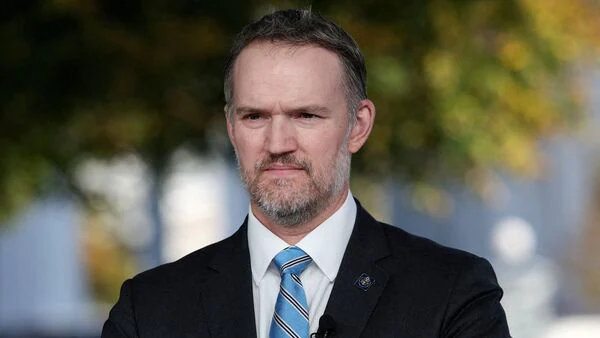
India Offers 'Best-Ever' Deal As US Pushes Farm Access In Trade Negotiations
(MENAFN- Live Mint) New Delhi: US Trade Representative (USTR) Jamieson Greer told the American Senate on Tuesday that India has put forward the“best offer the US has ever received", as his deputy Rick Switzer met commerce secretary Rajesh Agarwal to advance negotiations on a free trade agreement.
Switzer will hold discussions on Thursday as well for a proposed bilateral trade agreement, even as Greer described New Delhi as a“very difficult nut to crack” on market access for American farm products.
Both sides aim to close the deal by the end of this month, with the first tranche likely to focus on tariffs, as announced by Agarwal on 28 November.
Also Read | Exporters told to wait as govt eyes US trade deal by Nov; interim relief likelyBriefing the Senate Appropriations Committee on the status of negotiations, Greer said that the US trade team is currently in New Delhi working with Indian officials to secure deeper access for American agriculture and biofuel producers, signalling a clear push from Washington on farm-centric demands without indicating what it may offer India in return.
Greer said,“India continues to resist opening its market for certain row crops and meat products,” but added that New Delhi has recently been“quite forward-leaning” in the talks. He further noted that the proposals on the table position India as a viable alternative market for US exporters looking beyond China. The US is also seeking to expand sales of soybean-based biofuels as part of the negotiations, he said.
The Senate Appropriations Committee is the responsible for writing legislation that allocates US federal spending and oversees how government funds are used.
Politically sensitiveRow crops, including corn, soybeans, wheat, cotton, rice, sugarcane, barley, sorghum and canola, remain politically-sensitive in India because of farmer livelihood and food-security concerns, making any concessions in this category highly contentious.
Trade ties have taken a hit after US President Trump imposed punitive tariffs on India for buying Russian oil. Mint reported on 18 November that India's exports to the US showed signs of recovery in October after four straight months of decline. Commerce ministry data showed India's merchandise exports to the US stood at $6.3 billion in October, up 14.5% from September-the first month-on-month increase since May-despite Washington's 50% tariff on most Indian goods. However, at $6.3 billion, the figure remains lower than the $6.9 billion recorded in October 2024.
Greer also pointed out that other countries, including Cambodia, have already reduced trade barriers, and that global demand for biofuels including those derived from soybeans is creating new opportunities.
Also Read | Grape shortage threatens India's wine industry as prices surgeGreer said that the US is working to“touch every base in every country” to ensure its exports remain diversified.
“The testimony provides a rare on-record glimpse into the direction of the ongoing trade negotiations but reflects only Washington's priorities, with no clarity yet on reciprocal benefits for Indian exporters,” said Ajay Srivastava, co-founder of the Global Trade Research Initiative (GTRI), a trade-focused think-tank.
“The US has maintained a sharp focus on expanding access for its agricultural commodities and biofuels, while the Senate hearing offered no indication of restoring parity for Indian goods facing the 50% reciprocal tariff,” he said.
“Greer's characterisation of India's offer as the strongest the US has received also drew quiet scepticism in policy circles, as several other economies, including Malaysia, have ceded far greater policy space in their trade agreements with Washington,” Srivastava added.
Positive progressEarlier, Mint reported on 22 October that talks with the US are progressing in a positive direction, and that India is in discussions to consider Washington's demand for market access for key agricultural goods such as maize (corn) and soymeal.
At the same time, Greer emphasised the importance of maintaining trade ties with China.“They need our product and we want to sell it,” he said.
Besides this, US under secretary of state for political affairs Allison Hooker held discussions with India's foreign secretary Vikram Misri in New Delhi on 9 December. Both sides focused on turning the vision outlined by President Donald Trump and Prime Minister Narendra Modi during their February meeting into tangible outcomes.
Also Read | Why your bank's AI just got a mandatory data checkupHooker is on a five-day visit to India to strengthen strategic and economic cooperation.
Hooker said, "The meeting was an opportunity to translate President Trump and Prime Minister Modi's vision from their February meeting into concrete progress that enhances US security, jobs, and competitiveness, while supporting India's long-term goals."
As per the joint statement issued on 13 February, the two leaders resolved to expand trade and investment to make their economies more innovative, their supply chains more resilient and their citizens more prosperous. They also set a new target for bilateral trade under“Mission 500”, aiming to more than double total India–US trade to $500 billion by 2030. The joint statement further noted that the leaders committed to creating opportunities for US and Indian companies to make greenfield investments in high-value industries in each other's countries.

Legal Disclaimer:
MENAFN provides the
information “as is” without warranty of any kind. We do not accept
any responsibility or liability for the accuracy, content, images,
videos, licenses, completeness, legality, or reliability of the information
contained in this article. If you have any complaints or copyright
issues related to this article, kindly contact the provider above.
Most popular stories
Market Research

More Story








Comments
No comment