




403
Sorry!!
Error! We're sorry, but the page you were looking for doesn't exist.
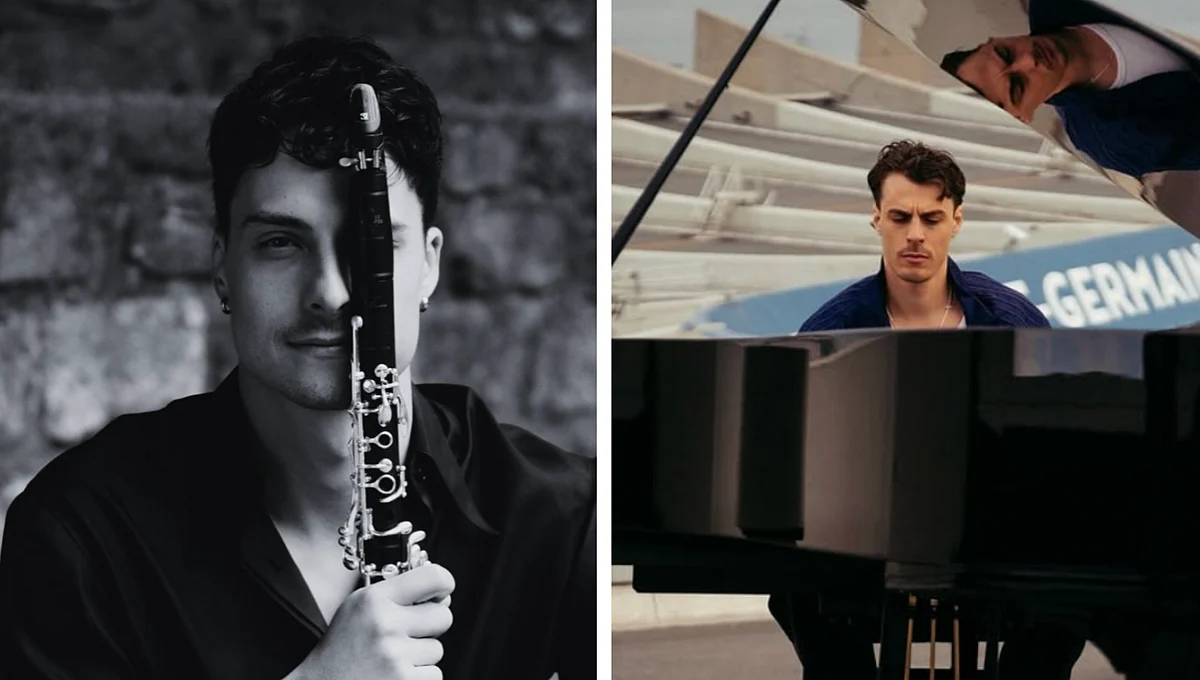
UAE: How 'Brothers In Rhythm' Made Classical Music Go Viral, From Paris Streets To Global Feeds
(MENAFN- Khaleej Times)
They didn't start behind a stage - they started on the street. Clarinet in hand, a piano on a Paris sidewalk, and within hours thousands of strangers stopped, listened, and shared.
For Raphaël and Aurélien Froissart - the duo known as Brothers in Rhythm - those spontaneous street performances have become more than fleeting moments. Speaking at the Bridge Summit 2025 in Abu Dhabi, they described how raw, unpolished emotion has carried classical music across borders and into the digital mainstream.
Recommended For YouStay up to date with the latest news. Follow KT on WhatsApp Channels.
'Music is universal'Onstage, Raphaël said he has always been struck by how far an unfamiliar piece of music can travel when delivered authentically.“Music is universal,” he said.“You can play a piece that is not known from a whole culture, and it can go viral in another country... music really talks to anyone and goes across borders.” Even his instrument, the clarinet -“not a mainstream instrument,” as he put it - has reached a massive global audience through these moments.
Music builds long-term audienceAurélien spoke about the illusion of overnight virality. While a single clip can hit millions of views by chance, he said that sustaining a long-term audience requires understanding what actually creates impact.“You can make one video that goes 10 million views, but what is difficult is long-term,” he explained.“You have to understand the process, the patterns... and how to give people emotions.” Consistency, he added, only matters if paired with evolution.“Many people do the same type of video a hundred times without reflecting. It doesn't work.”
Both brothers noted that their most powerful videos grow from spontaneity - not staging. Raphaël said that virality often comes when there is“a very strong connection to the musician,” which is why they choose to perform close to the public. Their most-watched moments, he added, often involve unexpected guests whose presence carries a personal story or striking emotional energy.“It's the surprise element,” Aurélien pointed.
They also reflected on how music sparks engagement, unlike other online formats. Aurélien pointed out that most digital content relies on drama or negativity to spread, but music doesn't.“Music uses emotions to touch people,” he said.“People shut down the usual mindset and they just listen... they are present in the moment.” Raphaël added that their content is deliberately positive and barrier-free.“It's wholesome... you don't need any language.”
From Paris to DubaiThe brothers acknowledged that their French identity - especially the imagery of Paris - still plays a defining role, even though their audience is global. Aurélien said viewers recognise the streets, the atmosphere and the fantasy of musicians performing against the backdrop of the city. Now preparing to move to the UAE, they said they hope to capture Dubai's iconic locations in the same way, creating videos“that reflect the beauty of the city and its typical places.”
They also highlighted how bureaucracy can hinder creativity. Filming in Paris, they said, is often disrupted by layers of authorisations and security restrictions. Aurélien's message to governments was simple:“The easiest answer is just don't do anything that stops us.” Raphaël added that they often lose extraordinary moments because someone intervenes before they can finish recording.“It's too bad for me,” he said.
Authenticity firstAs their process evolves, the brothers have become more deliberate about what makes content shareable - but they insist that authenticity comes first. Raphaël said he always looks for“the intersection between what moves me and what people like,” and that he cannot create videos based solely on trends. Aurélien noted that although early videos were fully spontaneous, today they must invest time and resources, so strategy plays a bigger role - but emotion remains the core.
After a viral moment, they keep momentum by analysing what worked, learning from audience reactions and leveraging visibility to open new collaborations. The fast feedback cycle of digital platforms, they said, makes the creative process more dynamic.“You know very quickly if it's a good video... it's like a product,” Raphaël explained.
Humanising classical musicAsked about bringing classical music to everyday spaces, Raphaël said people often feel intimidated by traditional concert culture.“Classical music is a very elite thing... the best way to share it is to bring it to the street where people don't expect it,” he said. Aurélien added that familiar melodies can help new audiences connect, though there is a balance - familiarity can also limit excitement. Still, he noted that the format they've created offers“the best way” to introduce their own original compositions in the future.
The session closed with the brothers reiterating a belief that underpins all their work: classical music doesn't need to be modernised - it needs to be humanised. And for millions around the world watching two brothers play their hearts out on a street corner, that seems to be more than enough.

Legal Disclaimer:
MENAFN provides the
information “as is” without warranty of any kind. We do not accept
any responsibility or liability for the accuracy, content, images,
videos, licenses, completeness, legality, or reliability of the information
contained in this article. If you have any complaints or copyright
issues related to this article, kindly contact the provider above.
Most popular stories
Market Research

More Story







Comments
No comment