




403
Sorry!!
Error! We're sorry, but the page you were looking for doesn't exist.
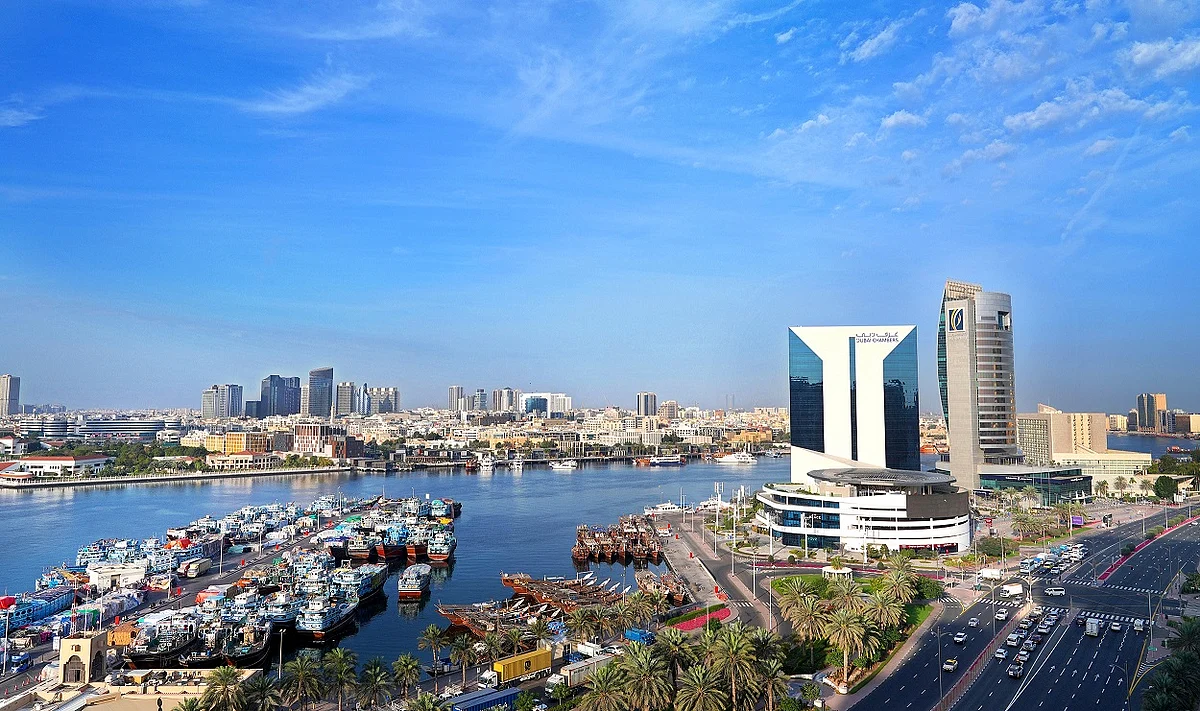
GCC Markets Anchor Dubai's 2025 Trade Boom As Cepas Expand UAE's Global Reach
(MENAFN- Khaleej Times)
GCC countries accounted for nearly half of all exports and re-exports by members of Dubai Chamber of Commerce during the first nine months of 2025, new data show.
With Dh125.3 billion worth of goods heading into the Gulf, the latest figures from Dubai Chamber of Commerce reaffirm the GCC's central role in Dubai's global trade leadership, even as the emirate broadens its reach worldwide.
Recommended For YouThe full breakdown of destinations for 2025 underscores Dubai's diversified trade strategy. The Middle East outside the GCC took Dh75.7 billion (29.1 per cent), African markets absorbed Dh26.1 billion (10 per cent), Asia-Pacific received Dh21.9 billion (8.4 per cent), Europe accounted for Dh7.8 billion (3 per cent), with North America and Latin America drawing about Dh1.8 billion (0.7 per cent) and just over Dh1 billion (0.4 per cent) respectively. In total, Dubai Chamber-member exports and re-exports reached roughly Dh260 billion during the first nine months of 2025 - up 16 per cent year on year.
However, GCC's dominance in Dubai's trade landscape has eased slightly compared with 2024, when Gulf markets made up 52 per cent of exports and re-exports (Dh161 billion) and total Chamber-member trade hit a record Dh309.6 billion - a 9.2 per cent increase from 2023. Non-GCC Middle Eastern markets, Africa, Asia-Pacific and other regions collectively captured a larger slice of the pie, signaling Dubai's expanding global orientation.
That shift reflects broader dynamics across the UAE. According to recent trade data, the country's non-oil foreign trade reached Dh2.997 trillion in 2024 - a 14.6 per cent rise from the previous year. The rapid growth owed much to a wave of Comprehensive Economic Partnership Agreements (Cepas), which significantly boosted non-oil exports and re-exports. Cepas contributed Dh135 billion to non-oil trade in 2024 alone, marking a 42 per cent year-on-year jump. Non-oil exports rose to Dh561.2 billion, or 18.7 per cent of total trade, up from 16.8 per cent in 2023.
The Cepas initiative has become a strategic cornerstone of the UAE's trade expansion, offering preferential access and tariff reductions across dozens of partner countries and facilitating the growth of re-exports, manufacturing, logistics and services. As UAE trade ties deepen with countries in Africa, Asia, Latin America and beyond - often far outside traditional Gulf or Middle East partners - Dubai's role as a global re-export and logistics hub strengthens.
Looking ahead to 2026, the 2025 data point to strong potential for further growth. If Chamber members maintain steady or improved performance with both GCC and non-GCC markets, total exports and re-exports could easily exceed Dh300 billion. That scenario assumes continued global demand, stable regional logistics networks and further use of Cepa-enabled trade corridors.
Moreover, the expanding Cepa network may unlock additional markets and smooth barriers, encouraging companies to diversify both destination and supply-chain geographies. As new agreements come into force - and existing partners deepen trade flows - Dubai stands to consolidate its competitive edge as a gateway between Gulf markets, emerging economies in Africa and Asia, and key global trade corridors.
For GCC economies, Dubai's trade flows remain vital. The 48.2 per cent share of Chamber-member trade going to Gulf states in 2025 affirms the GCC's role as a stable backbone of regional commerce. For Gulf-based businesses, Dubai continues to serve as a re-export hub, supply-chain anchor and trade-logistics centre, reinforcing Gulf-wide economic integration.
At the same time, the shift in share toward non-GCC destinations signals that Dubai - and by extension the UAE - are positioning for a more global footprint. As trade with Africa, Asia-Pacific, Europe and the Americas grows, Dubai's merchants are leveraging its world-class logistics, free zones and trade infrastructure to access far-flung markets.
Trade experts argue that the emerging picture is one of a dual-engine trade strategy: one rooted firmly in regional Gulf commerce, the other increasingly global in scope, driven by Cepa-enabled partnerships, re-exports and supply-chain diversification.
“If 2026 unfolds along these lines, Dubai Chamber member trade could surpass previous peaks - and the UAE's overall non-oil trade may continue its upward trajectory. For policy-makers, investors and businesses, the 2025 results underscore the value of a hybrid trade model: one that balances Gulf stability with global ambition,” trade analysts said.
“While the GCC markets remain the anchor for Dubai's trade, increasingly they are just one part of a broader, globalised commerce network - one that the UAE is methodically building through Cepa diplomacy, logistics investment and export diversification,” they added.

Legal Disclaimer:
MENAFN provides the
information “as is” without warranty of any kind. We do not accept
any responsibility or liability for the accuracy, content, images,
videos, licenses, completeness, legality, or reliability of the information
contained in this article. If you have any complaints or copyright
issues related to this article, kindly contact the provider above.
Most popular stories
Market Research

More Story








Comments
No comment