




403
Sorry!!
Error! We're sorry, but the page you were looking for doesn't exist.
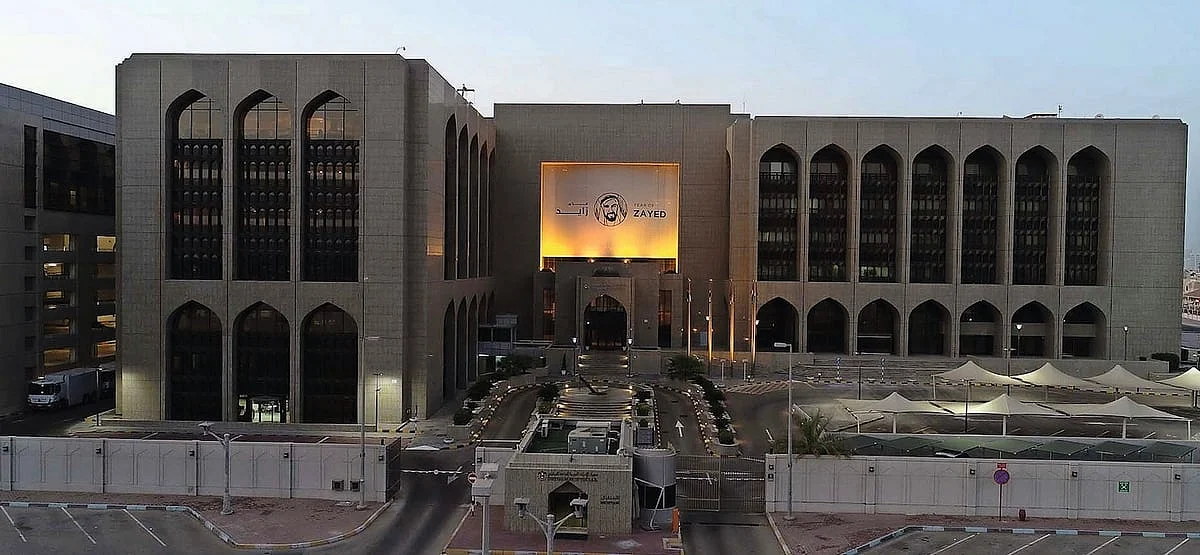
'Meaningful Savings': UAE Loan Costs To Drop After Central Bank Cuts Interest Rates
(MENAFN- Khaleej Times)
Consumers in the UAE are likely to enjoy lower borrowing costs soon as the UAE Central Bank lowered its benchmark rates on Wednesday.
In a statement, the Central Bank of the UAE announced that it has decided to cut the Base Rate applicable to the Overnight Deposit Facility (ODF) by 25 basis points, from 3.90 per cent to 3.65 per cent, effective from Thursday.
Recommended For YouThis decision was taken following the US Federal Reserve's announcement today to reduce the Interest Rate on Reserve Balances (IORB) by 25 basis points.
The CBUAE has also decided to maintain the interest rate applicable to borrowing short-term liquidity from the CBUAE at 50 basis points above the Base Rate for all standing credit facilities.
As the UAE dirham is pegged to the US dollar, the Central Bank of the UAE typically mirrors US monetary policy moves, meaning local borrowing costs will ease further. Mortgage rates in the UAE currently range between 3.49 per cent and 4.75 per cent, while personal loans average 3 per cent to 9 per cent, with premium profiles seeing offers as low as 2.59 per cent.
“Following the cut, fixed mortgage rates are forecast to move closer to 3.75 per cent–4.25 per cent, and variable rates will adjust downward as EIBOR declines. For consumers, this translates into meaningful savings: a Dh2 million mortgage at 4 per cent costs about Dh10,550 per month compared to Dh11,700 at 5 per cent, a difference of Dh1,150 monthly. Lower rates create opportunities to refinance existing loans at better terms and make homeownership more attractive, especially as rents remain high in Dubai and Abu Dhabi,” Hamza Dweik, Head of Trading (MENA), Saxo Bank, told Khaleej Times.
The Fed rate cut of 25 basis points, pushing the target range to 3.50 per cent–3.75 per cent, marks an important turning point for the UAE economy.“This will only serve to reinforce a lower-rate regime that positively impacts households, businesses, and the non-oil sectors of the economy because the dirham-dollar peg is secure,” Vijay Valecha, Chief Investment Officer, Century Financial, told Khaleej Times.
This is the third successive rate cut of 2025, cutting overall borrowing rates by a total of 75 basis points. This brings several benefits for residents of the UAE. The 3-month EIBOR rate, used as a benchmark for home and personal loans, is expected to strengthen, bringing forth significant savings. For the average variable-rate home loan, which typically ranges between 5.50 per cent to 6.00 per cent, and with a principal of Dh1 million, borrowers can expect annual savings of around AED 2,500- AED3,600. Apart from home loans, the personal loan segment is already showing signs of revival, growing by 17.8 per cent on a yearly basis, with lower borrowing costs passed on to customers by banks for bigger purchases, cars, and education.
Additionally, the easing of the monetary policies offers a powerful fuel for the growth of the domestic demand. Consequently, because of the reduced debt service costs, the disposable income for the nation is on the rise, thus contributing to estimated consumer spending growth of 13 per cent for the year 2025, higher than the estimated average growth for the world.“The injection of funds into the economy is actually awakening the retail, tourism, and entertainment sectors, where the public, confident enough, is redirecting their savings into spending,” Valecha said.
Regarding the real estate industry, the reduced interest rates can be considered a stabiliser and a trigger. On the other hand, the increasing supply of homes, along with the affordability factor, is encouraging tenants to own their homes.“Cheaper borrowing for developers and investors will ensure that the construction industry continues to remain active. Meanwhile, the resilience of the banking industry continues. The banks are increasing their loans, thus maintaining the credit engine of the economy,” Valecha said.
However, cheaper loans are not guaranteed, stressed Aliasgar Tambawala, Co-CIO at Klay Group.“Banks price retail credit based on liquidity conditions, regulatory requirements, capital costs, competition, and loan demand. Pass-through may therefore be gradual. Borrowers with floating-rate mortgages and personal loans benefit fastest, while fixed-rate borrowers gain mainly through refinancing options,” he said. Hence, while Fed rate cuts should, at the margin, support lower borrowing costs in the UAE, the pace and extent of relief will depend on a multitude of factors specific to the UAE banking system, he added.

Legal Disclaimer:
MENAFN provides the
information “as is” without warranty of any kind. We do not accept
any responsibility or liability for the accuracy, content, images,
videos, licenses, completeness, legality, or reliability of the information
contained in this article. If you have any complaints or copyright
issues related to this article, kindly contact the provider above.
Most popular stories
Market Research

More Story








Comments
No comment