




403
Sorry!!
Error! We're sorry, but the page you were looking for doesn't exist.
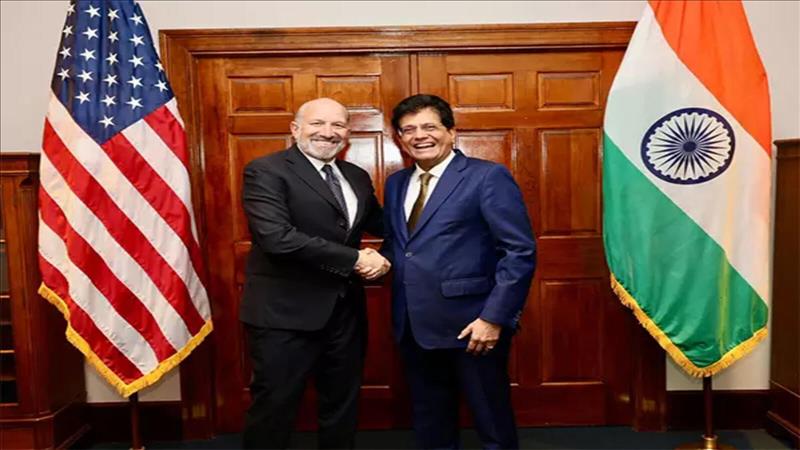
US Officials' Delhi Trip Takes Trade Negotiations Into A Decisive Stage
(MENAFN- The Arabian Post)
By K Raveendran
Trade negotiations between Washington and New Delhi have moved into a critical phase as senior American trade officials arrive in India with the stated intention of clearing the final hurdles to a long-discussed agreement. The presence of Deputy US Trade Representative Rick Switzer and chief India-deal negotiator Brendan Lynch underscores the renewed push by both governments to close a chapter that has stretched far longer than either side had originally anticipated. Their visit signals that a decisive moment may be approaching, even though the issues on the table reflect the broader complexities shaping the political and economic priorities of both countries.
The negotiations, which have meandered through multiple rounds with intermittent pauses, have been weighed down by differences on tariffs, market access, data regulations, and agricultural trade rules. Officials on both sides maintain that a mutually beneficial deal is within reach. That confidence, however, sits alongside a backdrop of tactical posturing that has shaped the latest exchanges. Washington's approach has been influenced heavily by President Trump's protectionist economic agenda, which has prioritised tariff leverage as a primary negotiating instrument. His threat of further tariff hikes targeting India falls squarely within this pattern.
The claim used to justify such measures has centred on the alleged dumping of Indian rice in the US market. Tariffs on Indian products are already among the highest faced by any country exporting to the United States, and Trump's warnings appear calibrated to exert political pressure rather than reflect market realities. The structure of Indian rice exports offers a clear counterpoint to the dumping allegation. India's shipments to the US are predominantly aromatic basmati varieties, which cater to niche consumer segments and ethnic markets. These exports are well within the compliance parameters laid down under WTO norms. Moreover, the tariffs already imposed have had a discernible effect on India's export revenue from the US, reducing the trade surplus that Washington often describes as a strategic concern. The disconnect between the rhetoric and the economic evidence suggests that the tariff threat is a negotiating tactic rather than a conclusion drawn from trade analysis.
See also Fertiliser Import Price Surge May Hit India's Rabi Crop OutputIndia's response has been shaped by an entirely different strategy, one that relies less on direct confrontation and more on signalling alternative avenues of economic partnership. New Delhi has been deepening its trade linkages with Moscow, extending the scope of cooperation well beyond the longstanding defence relationship. The expansion into broader commercial, energy, and technology-related domains is intended to demonstrate that India retains strategic flexibility even while engaging its most important Western partners. This calibrated shift conveys that India possesses viable options in a changing global trade environment and that Washington's pressure may not yield unilateral concessions.
These manoeuvres underscore an essential reality that defines the current phase of negotiations: neither side is approaching the talks with altruism or ideological sentiment. The motivations are rooted in the economic self-interest of two large markets attempting to extract maximum benefit from a bilateral compact. For the United States, India represents a strategically significant destination for American goods and services, particularly in sectors such as energy, defence manufacturing, agriculture, pharmaceuticals, and advanced technologies. American firms have long considered India a market that could deliver considerable commercial gains if tariff and regulatory barriers were eased.
For India, access to the US market remains critical not only for trade volumes but also for value-added exports that bolster domestic industry. The United States is one of India's most important trade partners, and maintaining strong ties in this arena supports a broader economic strategy that aims to position India as a major global manufacturing and services hub. The macroeconomic incentives on both sides are therefore aligned, even if the paths to achieving them are clouded by political constraints and competing priorities.
The present atmosphere also reflects the broader geopolitical context in which the negotiations are occurring. The US-India relationship has expanded substantially over the past two decades, spanning defence cooperation, strategic dialogue, technology partnerships, and energy agreements. Yet trade has remained a friction point. Washington has often voiced concerns about India's tariff regime and regulatory frameworks, while India has argued that US measures disproportionately target emerging markets and undermine the principles of fair access. These disagreements have created periodic tension even as the strategic partnership continues to grow.
See also Modi-Putin Summit Reinforces India's Geopolitical Identity Amidst HeadwindsThe extended nature of the talks highlights the difficulty both sides face in reconciling domestic political pressures with long-term economic imperatives. In the United States, protectionist sentiment has influenced policy across different sectors, and trade officials must navigate a political environment where concessions are often interpreted as weaknesses. India, simultaneously, must manage the interests of domestic industry groups wary of opening the market too widely to foreign competition. The balancing act on both sides has slowed progress, but it has also pushed negotiators toward more innovative approaches aimed at making the final agreement politically and economically palatable.
Despite the complications, the renewed push for a deal reflects the urgency felt in both capitals. Trade tensions, if allowed to escalate further, could spill over into other areas of cooperation that have been central to the bilateral relationship. The growing alignment on strategic matters, especially those involving regional security and technology supply chains, is a factor encouraging both sides to avoid prolonging the impasse. For India, concluding a deal with the US strengthens its leverage in other trade negotiations and supports its broader goal of entering high-value global markets. For Washington, securing trade terms with India offers an advantage in a region where economic influence is increasingly contested.
The visiting US delegation's mission is to smooth the final contours of the agreement, addressing the technical barriers that have persisted despite political assurances. Their presence in New Delhi allows negotiators to accelerate discussions across sensitive sectors, from agricultural imports to intellectual property frameworks. Over the next few days, attention will shift to how the two sides manage to bridge the remaining divides and whether both governments are willing to make calibrated adjustments to reach a workable compromise. (IPA Service)
The article US Officials' Delhi Trip Takes Trade Negotiations Into A Decisive Stage appeared first on Latest India news, analysis and reports on Newspack by India Press Agency).

Legal Disclaimer:
MENAFN provides the
information “as is” without warranty of any kind. We do not accept
any responsibility or liability for the accuracy, content, images,
videos, licenses, completeness, legality, or reliability of the information
contained in this article. If you have any complaints or copyright
issues related to this article, kindly contact the provider above.
Most popular stories
Market Research

More Story







Comments
No comment