



403
Sorry!!
Error! We're sorry, but the page you were looking for doesn't exist.
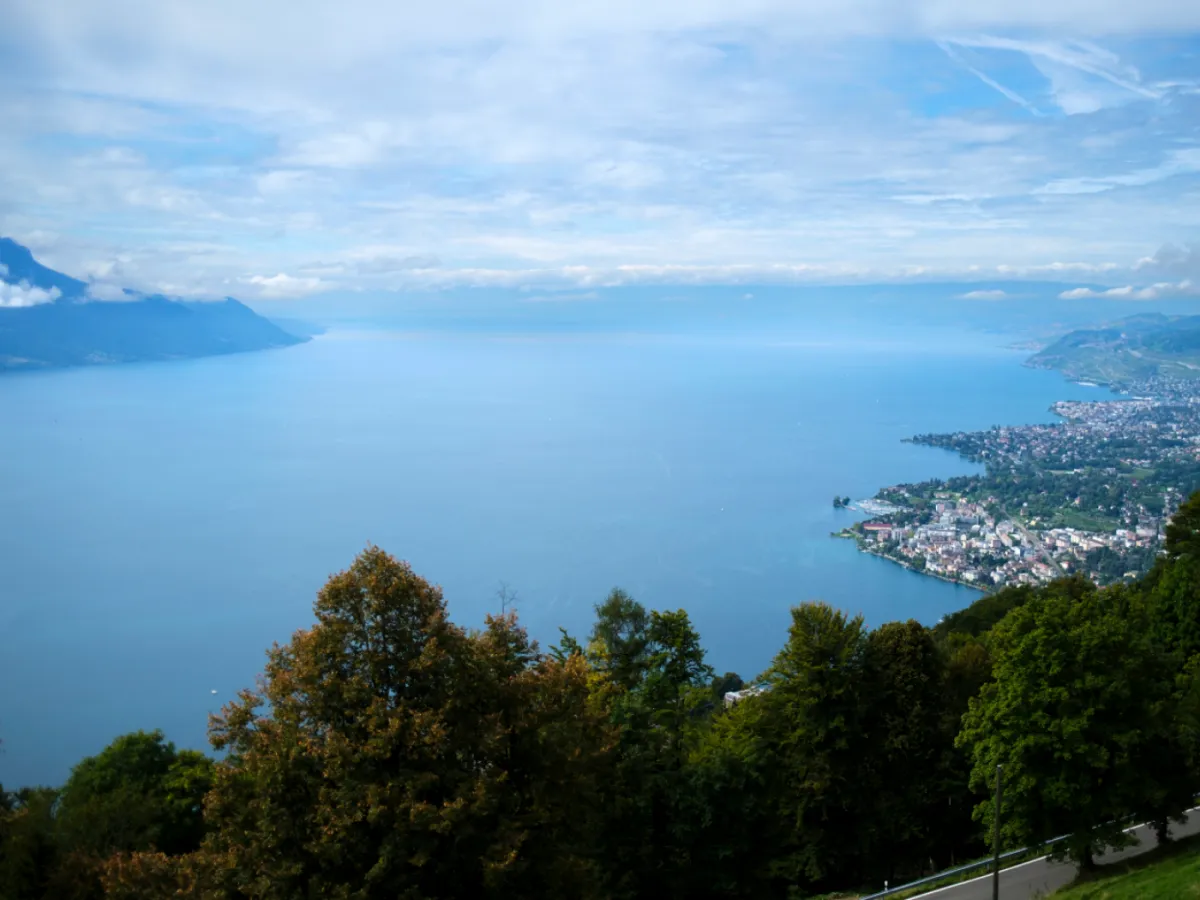
Researchers Discover New Type Of Wave In Lake Geneva
Alternative Headline:
(MENAFN- Swissinfo)
A research team has discovered a new type of wave in Lake Geneva: the V2 Kelvin wave. It meanders underwater along the shore and influences the distribution of pollutants and nutrients in the lake.
This content was published on
December 2, 2025 - 09:58
3 minutes
Keystone-SDA
-
Deutsch
de
Forscher entdecken neue Wellen-Art im Genfersee
Original
Read more: Forscher entdecken neue Wellen-Art im Genf
As the Swiss National Science Foundation (SNSF) announced on Tuesday, this wave only occurs in summer, when several clearly separated temperature layers build up in the lake. While the temperature at the surface is around twenty degrees Celcius, the water at great depths is only around six degrees.
There is a so-called thermocline between the warm upper layer and the cold lower layer.
When strong winds sweep over the water, they push the upper layers of water away in one direction. As soon as the wind dies down, this water sloshes back and begins to oscillate.
The special thing about the wave form that has now been identified is that not just two, but all three temperature layers start to move at the same time and shift against each other. This creates the V2 Kelvin wave, a form of internal wave previously overlooked in Lake Geneva.
Around the lake in five daysIn addition, the Coriolis force, the deflection caused by the Earth's rotation, gives it a subtle twist. As a result, the wave does not simply dissipate in one direction, but moves once anti-clockwise around the entire shore in five days.
The wave was discovered and measured by a research team led by Rafael Reiss from the Swiss Federal Institute of Technology in Lausanne (EPFL). The researchers presented the new type of wave to the scientific community in a study published in the Geneva. Journal of Geophysical Research: Oceans.
The measured effect is strongest at a depth of 30 metres, about one kilometre from the shore. As the wave passes through, the temperature layers under water move up and down by around 25 metres. The speed is up to 30 centimetres per second.
“The resulting current is by far the strongest we have measured this summer. This makes it one of the strongest in the lake,” Reiss was quoted as saying by the SNSF.
The researchers assume that similar V2 Kelvin waves could also occur in other large and deep lakes, such as Lake Constance.
Translated from German by DeepL/mga

Legal Disclaimer:
MENAFN provides the
information “as is” without warranty of any kind. We do not accept
any responsibility or liability for the accuracy, content, images,
videos, licenses, completeness, legality, or reliability of the information
contained in this article. If you have any complaints or copyright
issues related to this article, kindly contact the provider above.
Most popular stories
Market Research

More Story







Comments
No comment