(MENAFN- The Conversation) Alongside the horrors of the war in Ukraine, many in the west have been confused by the insistence from Russian president Vladimir Putin that he is trying to free the country from“nazi control” , accusing his Ukrainian counterpart, volodymyr zelensky , and his supporters of crimes against the people of Ukraine.
On the face of it, Putin's allegations seem bizarre, not least because Zelensky is Jewish and has said that members of his family were killed during the second world war . While it's true Ukraine has had issues with the far right within its borders, there is no evidence to support what seem wild claims.
But for students of 20th-century history, Putin's rhetoric should be no surprise. It stems from the end of the second world war and in some ways was anticipated in 1945 by a british foreign correspondent who had spent the key years of the war reporting from Moscow.
paul winterton was the Moscow correspondent for the news chronicle and a regular contributor to the BBC World Service. He was among the first to report the Holocaust, filing an eyewitness account of the atrocities perpetrated by the Nazis at majdanek as it was liberated by the Red Army in August 1944 – some eight months before Richard Dimbleby's famous broadcast about belsen . In his unpublished memoirs, Winterton wrote:
The cover of Paul Wintertons's book reporting from Russia during WWII. Author provided The report – which he filed twice to make sure it had been received – went on to give more and graphic detail.“Experiences like these colour one's view for life,” he said.
The BBC held back his report for some weeks, concerned that any suggestion that British lives were being sacrificed to save Jewish people in Europe might cause a surge in antisemitism in the UK.
Winterton was also among the first to report from stalingrad in 1943 when the battle was over, calmly describing the devastation he found there.
Reports censored
At the end of the war he returned to London and reflected on his experience reporting from behind Russian lines. During the war his reports had been censored – something he had to accept in order to keep his accreditation. He warned his paper :
In his books Report on Russia and inquest on an ally he was at last free to speak his mind. His observations of the Russians during the war – and the growing tensions with the west – resonate today in the context of Putin's attack on Ukraine.
In Inquest on An Ally, Winterton reports that Pravda had accused the American and British zones of becoming“a refuge for notorious criminals, for Hitler-ite hangers on”. There was deep suspicion of the western allies and their motives.
In spite of such frictions, Roosevelt saw US-Soviet collaboration as the necessary basis of post-war peace, hoping Russians might be weaned away from suspicion and dogma. But of course any pro-Soviet appeasement did not work and the cold war began.
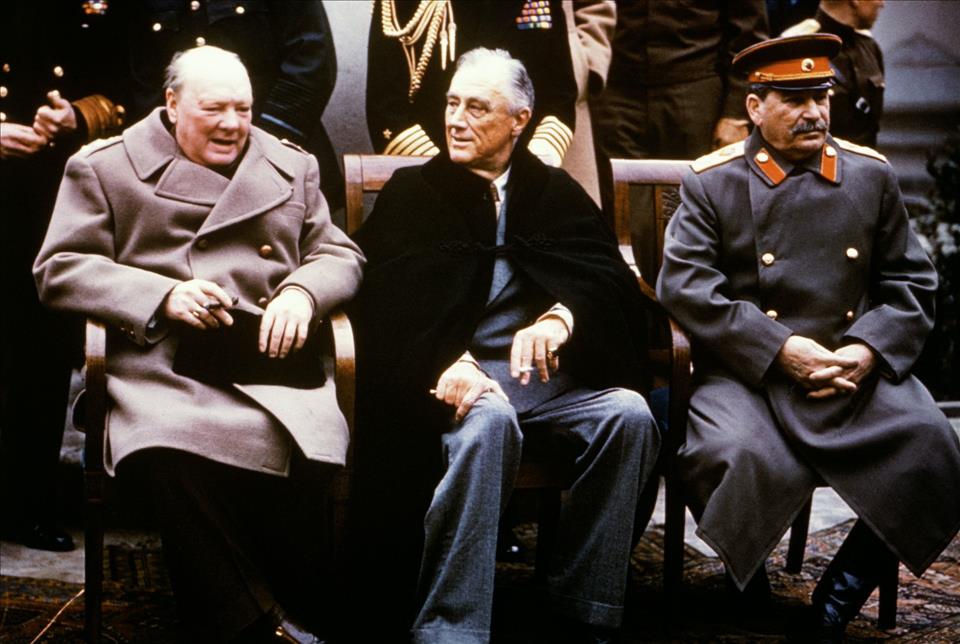
Discussions were opened in Yalta in Crimea about forming the un . Stalin demanded three seats – for the USSR, Byelorussia (now Belarus) and Ukraine. This was intended to give the Soviet Union three votes and three opportunities to speak on any topic. Ukraine and Byelorussia did join the un as founding members, even though they weren't independent states.
Either a friend or a 'fascist'
Winterton emphasises in Report on Russia that any Ukrainian or Byelorussian asserting independence would be arrested as an enemy of the state or – significantly – a“fascist”:
In this observation from 75 years ago we see the root of Putin's attitude to Ukraine, his use of the fascist label, which reflects Soviet-era paranoia about the west and grievances about its losses, and early signs of the“fake news” policy of dezinformatsiya (disinformation) – or active measures – which have mushroomed since the advent of digital media.
Winterton went on to offer advice on how the west should handle the Soviet Union:
What seemed clear advice in 1945 of course became more complex in the following 75 years with the cold war, the fall of the berlin wall and soviet communism , the development of nato and the European Union. But it offers a valuable perspective, from an eyewitness to history, on today's diplomatic dilemmas and Russian rhetoric.









Comments
No comment