



403
Sorry!!
Error! We're sorry, but the page you were looking for doesn't exist.
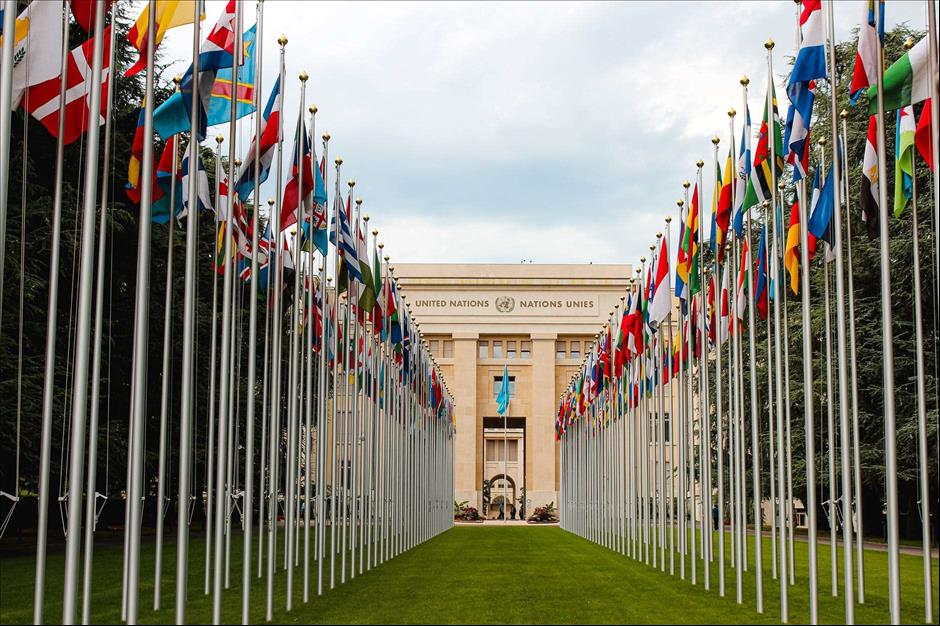
Resolution On Sri Lanka Passed At UNHRC
(MENAFN- Colombo Gazette) Welcomes the oral update presented by the United Nations High Commissioner for Human Rights to the Human Rights Council at its forty-ninth session and the report of Office of the United Nations High Commissioner for Human Rights presented to the Council at its current session; Also welcomes the engagement of the Government of Sri Lanka with the Office of the High Commissioner and the special procedures of the Human Rights Council, encourages the continuation of such engagement and dialogue, and calls upon Sri Lanka to implement the recommendations made by the Office and to give due consideration to the recommendations made by the special procedures; Expresses concern at the human rights impact of the economic crisis, including as a result of increased food insecurity, severe shortages in fuel, shortages in essential medicines and reductions in household incomes, while stressing the need to promote and protect the rights of the most marginalized and disadvantaged individuals, including daily wage earners, women, children, older persons and persons with disabilities; Also expresses concern at other human rights developments since April 2022, including violence against and the arrests of peaceful protestors, as well as violence against government supporters, resulting in deaths, injuries, destruction and damage to the houses of members of Parliament, and stresses the importance of independent investigations into all attacks and that those found responsible be held to account; Stresses the importance of protecting civilian government functions from militarization and of addressing the independence of the judiciary and key institutions responsible for the promotion and protection of human rights and fundamental freedoms; the grievances and demands of Tamil and Muslim populations; prolonged internal displacement; land disputes; the surveillance, intimidation and harassment of journalists, civil society activists, human rights defenders, families of disappeared persons, and persons involved in memorialization initiatives; and of combating sexual and gender-based violence; Also stresses the importance of a comprehensive accountability process for all violations and abuses of human rights committed in Sri Lanka by all parties, including those abuses by the Liberation Tigers of Tamil Eelam; Notes the persistent lack of independent, impartial, and transparent domestic mechanisms, and stresses the importance of ensuring investigations into, and accountability for, grave violations of human rights; Recognizes the importance of preserving and analysing evidence relating to violations and abuses of human rights and related crimes in Sri Lanka with a view to advancing accountability, and decides to extend and reinforce the capacity of the Office of the High Commissioner to collect, consolidate, analyse and preserve information and evidence and to develop possible strategies for future accountability processes for gross violations of human rights or serious violations of international humanitarian law in Sri Lanka, to advocate for victims and survivors, and to support relevant judicial and other proceedings, including in Member States, with competent jurisdiction; Notes the initial outreach of the Government of Sri Lanka to overseas persons of Sri Lankan origin encompassing all communities and generations, and encourages the Government to engage further in a broad-based consultative process with stakeholders from all affected communities and to provide remedies to achieve meaningful reconciliation, devolution of political authority, an improved situation of human rights, and lasting peace; Urges the Government of Sri Lanka to foster freedom of religion or belief and pluralism by promoting the ability of all religious communities to manifest their religion, and to contribute openly and on an equal footing to society; Also urges the Government of Sri Lanka to take measures to address the marginalization of and discrimination against persons from the Muslim community, and to ensure that Muslims and members of other religions are able to continue to practice their own religious rites, including burial rites; Calls upon the Government of Sri Lanka to ensure the prompt, thorough and impartial investigation and, if warranted, prosecution of all alleged crimes relating to human rights violations and serious violations of international humanitarian law, including for long-standing emblematic cases, with the full participation of victims and their representatives; Also calls upon the Government of Sri Lanka to address the ongoing economic crisis, including by investigating and, where warranted, prosecuting corruption, including where committed by public and former public officials, and stands ready to assist and support independent, impartial and transparent efforts in this regard; Stresses the importance of the effective and independent functioning of the Office on Missing Persons and the Office for Reparations, while noting that the tangible results expected by victims and other stakeholders are yet to be achieved, including resolving the many cases of enforced disappearance so that the families of disappeared persons can know their fate and whereabouts, and also the importance of the effective and independent functioning of the Human Rights Commission of Sri Lanka; Calls upon the Government of Sri Lanka to protect civil society actors, including human rights defenders, to investigate any attacks and to ensure a safe and enabling environment in which civil society can operate free from hindrance, surveillance, insecurity and threat of reprisals; Notes the introduction in March 2022 of amendments to the Prevention of Terrorism Act, that detentions under that law continue, and the expressed intention of the Government of Sri Lanka in this regard to introduce new legislation on combating terrorism, and encourages the Government to engage in consultations with civil society, the Office of the High Commissioner and relevant special procedure mandate holders in the preparation of new legislation, in order to ensure that any legislation on combating terrorism complies fully with the State's obligations arising from international human rights law and international humanitarian law; Notes with appreciation the continued engagement of the Government of Sri Lanka with the special procedures of the Human Rights Council, and encourages the Government to continue that cooperation, including by responding formally to outstanding requests from them; Encourages the Office of the High Commissioner and relevant special procedure mandate holders to provide, in consultation with and with the concurrence of the Government of Sri Lanka, advice and technical assistance on implementing the above-mentioned steps; Requests the Office of the High Commissioner to enhance its monitoring and reporting on the situation of human rights in Sri Lanka, including on progress in reconciliation and accountability, and on the impact of the economic crisis and corruption on human rights, and to present an oral update to the Human Rights Council at its fifty-third and fifty-fifth sessions, and a written update at its fifty-fourth session and a comprehensive report that includes further options for advancing accountability at its fifty-seventh session, both to be discussed in the context of an interactive dialogue.
A resolution on Sri Lanka was passed by the UN Human Rights Council (UNHRC) today with 20 members voting for, 7 against and 20 abstentions.
Japan and India were among the countries that abstained from voting.
The resolution was presented to the Council by the United Kingdom on behalf of the Core Group on Sri Lanka.
UK Ambassador Simon Manley said that the text is largely based on last year's resolution but has been updated to reflect some of the key developments over the last 18 months in what has been a rather dramatic time for Sri Lanka – an economic crisis, mass protests, and a change in Government, all of which have had a significant bearing on the human rights situation in the country.
The draft both recognises the challenges which Sri Lanka has faced during this period and acknowledges progress where this has occurred.
It reflects some of the more recent concerns outlined in the High Commissioner's report, especially the human rights impact of the economic crisis.
“And it also addresses several longstanding issues which still need to be addressed. These include the lack of accountability for past violations, the many unresolved cases of enforced disappearances, the need for Sri Lanka to meet its own commitments on the devolution of political authority, as well as the need to uphold the rights of all people in Sri Lanka including Tamils and Muslims,” Ambassador Simon Manley said.
Albania, Australia, Austria, Belgium, Bosnia and Herzegovina, Bulgaria, Canada, Croatia, Cyprus, Czechia, Denmark, Estonia, Finland, Germany, Greece, Iceland, Ireland, Italy, Latvia, Liechtenstein, Lithuania, Luxembourg, Malawi, Malta, Montenegro, Netherlands, New Zealand, North Macedonia, Norway, Portugal, Romania, Slovakia, Slovenia, Sweden, Switzerland, United Kingdom of Great Britain and Northern Ireland and United States of America have signed the draft resolution so far.
The Sri Lanka Government has already rejected the resolution titled 'Promoting reconciliation, accountability and human rights in Sri Lanka'.
Sri Lanka, in particular, opposes Operative Paragraph 8 of the resolution which recognizes the importance of preserving and analysing evidence relating to violations and abuses of human rights and related crimes in Sri Lanka with a view to advancing accountability, and decides to extend and reinforce the capacity of the Office of the High Commissioner to collect, consolidate, analyse and preserve information and evidence and to develop possible strategies for future accountability processes for gross violations of human rights or serious violations of international humanitarian law in Sri Lanka, to advocate for victims and survivors, and to support relevant judicial and other proceedings, including in Member States, with competent jurisdiction. (Colombo Gazette)
Full text of the draft resolution:
Promoting reconciliation, accountability and human rights in Sri Lanka
The Human Rights Council,
Guided by the purposes and principles of the Charter of the United Nations, reaffirming the Universal Declaration of Human Rights, and recalling the International Covenants on Human Rights and other relevant instruments,
Recalling General Assembly resolution 60/251 of 15 March 2006 and Human Rights Council resolution 5/1 of 18 June 2007,
Recalling also Human Rights Council resolutions 19/2 of 22 March 2012, 22/1 of 21 March 2013, 25/1 of 27 March 2014, 30/1 of 1 October 2015, 34/1 of 23 March 2017, 40/1 of 21 March 2019 and 46/1 of 23 March 2021 on promoting reconciliation, accountability and human rights in Sri Lanka,
Recalling further that, in its resolution S-11/1 of 27 May 2009, the Human Rights Council welcomed the resolve of Sri Lanka to begin a broader dialogue with all parties in order to seek a political settlement and to bring about lasting peace and development in Sri Lanka based on consensus among and respect for the rights of those from all ethnic and religious groups, and endorsed the joint communiqué of 26 May 2009 of the President of Sri Lanka and the Secretary-General, in which the Secretary-General, inter alia, underlined the importance of an accountability process for addressing violations of international humanitarian law and human rights law,
Reaffirming its commitment to the sovereignty, independence, unity and territorial integrity of Sri Lanka,
Reaffirming also that it is the primary responsibility of each State to respect human rights and to ensure the full enjoyment of all human rights and fundamental freedoms by its entire population,
Recognizing the severe economic crisis that has deteriorated in Sri Lanka since late 2021, exacerbated by the coronavirus disease (COVID-19) pandemic, and the profound impact that this has had on the people of Sri Lanka, including women-led households,
Underscoring the importance of addressing the underlying governance factors and root causes that have contributed to that crisis, including deepening militarization, lack of accountability in governance and impunity for serious human rights violations and abuses, which remains a central obstacle to the rule of law, reconciliation and sustainable peace and development in Sri Lanka,
Recognizing the recent efforts of the Government of Sri Lanka to address the ongoing economic crisis, and welcoming the staff-level agreement reached between the Government and the International Monetary Fund,
Recognizing also that the promotion and protection of human rights and the prevention of and fight against corruption are mutually reinforcing, that corruption can have a serious negative impact on the enjoyment of human rights, and that the poor and those in marginalized and vulnerable situations, including women and girls, are at particular risk of suffering from the adverse impact of corruption on the enjoyment of human rights,
Emphasizing that peaceful protests can make a positive contribution to the development, strengthening and effectiveness of democratic systems and to democratic processes, including elections and referendums, as well as to the rule of law, and stressing the importance of full respect for the freedom to seek, receive and impart information, including the fundamental importance of access to information, and for democratic participation, transparency and accountability, and of combating corruption,
Noting the declaration of four states of emergency in Sri Lanka since August 2021, and stressing the obligation to comply with article 4 of the International Covenant on Civil and Political Rights, including in the context of declarations of states of emergency,
Acknowledging the stated commitment of the Government of Sri Lanka to constitutional reforms while stressing the importance of the independence of key commissions and institutions, including the Human Rights Commission of Sri Lanka, the Election Commission, the National Police Commission, the Judicial Service Commission and the Commission to Investigate Allegations of Bribery or Corruption, and of the judiciary,
Calling upon the Government of Sri Lanka to fulfil its commitments on the devolution of political authority, which is integral to reconciliation and the full enjoyment of human rights by all members of its population, and encouraging the Government to respect local governance, including through the holding of elections for provincial councils, and to ensure that all provincial councils, including the northern and eastern provincial councils, are able to operate effectively, in accordance with the thirteenth amendment to the Constitution of Sri Lanka,
Reaffirming that all individuals in Sri Lanka are entitled to the full enjoyment of their human rights without distinction of any kind such as religion, belief or ethnic origin, and the importance of a peaceful and unified land to the enjoyment of human rights,
Acknowledging the progress made by the Government of Sri Lanka in rebuilding infrastructure, demining, land return, facilitating the voluntary resettlement of internally displaced persons and improving livelihoods, and encouraging further efforts in these areas,
Welcoming the continued commitment of the Government of Sri Lanka to remain engaged with the United Nations and its agencies, including human rights mandates and mechanisms, in capacity-building and technical assistance, and to achieve sustainable peace,
Reaffirming its unequivocal condemnation of all acts, methods and practices of terrorism, including those committed in Sri Lanka in April 2019 that led to a large number of injuries and deaths, and reaffirming also that all measures taken to combat terrorism must comply fully with States' obligations under international law, in particular international human rights law, and, as applicable, international refugee law and international humanitarian law,
Emphasizing the importance of a comprehensive approach to dealing with the past, incorporating judicial and non-judicial measures, to ensure accountability, to serve justice, to provide remedies to victims, to avoid the recurrence of violations of human rights and to promote healing and reconciliation,
Recognizing that mechanisms to redress past abuses and violations work best when they are independent, impartial and transparent, and use consultative and participatory methods that include the views of all relevant stakeholders, including, but not limited to, victims, women, youth, representatives of various religions, ethnicities and geographic locations, as well as people from marginalized groups,
Recalling the responsibility of States to comply with their relevant obligations under human rights law and international humanitarian law, including, where applicable, to prosecute those responsible for gross violations of human rights law or serious violations of international humanitarian law,
Noting with appreciation the work of the Office of the United Nations High Commissioner for Human Rights towards the promotion and protection of human rights and truth, justice, reconciliation and accountability in Sri Lanka,

Legal Disclaimer:
MENAFN provides the
information “as is” without warranty of any kind. We do not accept
any responsibility or liability for the accuracy, content, images,
videos, licenses, completeness, legality, or reliability of the information
contained in this article. If you have any complaints or copyright
issues related to this article, kindly contact the provider above.
Most popular stories
Market Research

More Story



Comments
No comment