


Reflections on the Moroccan Educational System: Part 1: Pitfalls


Educational challenges of 2000
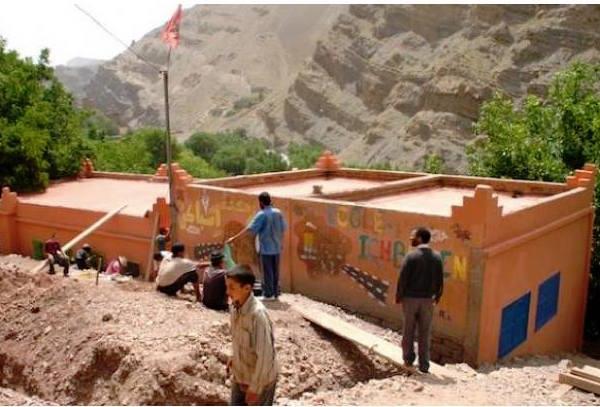
At the dawn of the third millennium Morocco was in the grips of a grave educational crisis the system in place failed to create the necessary responsible elites able to solve the problems of the country and chief among them: education. The existing elites entertained hypocritical discourse about national education. Publicly they opted for an arabized system but in practice they all sent their children to foreign educational institutions accredited in Morocco such as the French Spanish and American schools and later on to European or American universities for higher education. Miserable school conditionsPolitical pressures and international processes leading to the change
Pressure on the government to reform education came from various sides be they national or international on the grounds that the system in place is outdated and totally inadequate for a country that is aspiring to develop fast and become competitive on the international scene.What was wrong with the system in the 80s and 90s of the last century?
The educational system was flawed since independence for the following reasons:Archaic and outdated:
The educational system was inherited from the French Protectorate in the 20s of the last century. It was put in place to educate the children of the notables cooperating with the French colonial powers and to train and form functionaries for its administration no more. When Morocco gained its independence in 1956 one of its sovereign decisions was to generalize education to all Moroccans and by so doingabrogate the colonial law that made it elitist. As such important state funds where made available to the Ministry of National Education that embarked on an ambitious program of building schools and training teachers and “morocconizing” curriculum and school personnel. However these changes did not concern the teaching methods and the philosophy of the system. The system aimed only at training people to become state functionaries police and military in general. As such people sent their children to school not to learn and become literate but to get a job and a means of living. In this fashion the state guaranteed explicitly every graduate a job in the administration and the latter preferred this sector to the nascent private one because employment with the state is for life and no return is expected from the civil servant. Teaching Tamazight in schools situated in Amazigh areasKoranic school pedagogy:
The whole educational system adopted a philosophy based on 'blind obedience' which finds its origin in the religious realm. The learner is a disciple:“moored”and the teacher a master: “sheikh.”In this interesting relationship the learner remains a learner in presence of his master even if he ultimately becomes himself a master. The parents out of religious indoctrination encouraged this patron-client system in the school: the teacher is always right even if he is wrong and the student has always to show obsequious obedience. The parents even went one step further in this imbalanced educational relationship and assured the master of their allegiance to his pedagogy by stating that he could well kill their son if he resists his teachings and they will wholeheartedly oblige to bury him without any contestation whatsoever. Sadly this pedagogy finding its origin in the dogmatic religious school of thought produced obedient “subjects” and not responsible “citizens.” This educational system ultimately molded followers and not leaders and outlawed any form of critical reflection and sense of responsibility.Feeding pedagogy:
The general approach in the Moroccan educational system is to feed the student information have him digest it and on the day of the examination regurgitate it. The teachers encouraged this controversial concept of: bida3atuna ruddat ilayna meaning'our merchandise duly returned to us.' This system being an offshoot of the Koranic Pedagogy discouraged reflection critical discussion and any form of personal initiative and sense of responsibility. All learners whether in the primary secondary or tertiary phases are considered 'minors' and not adults able of acceptable reflection and healthy thinking.Authority first and foremost:
The whole educational system is based on the concept of authority: sulta and in this it is a mirror image of the political system. For the holders of this philosophy any loss at any time of the educational process of this leads to the loss of respect: hiba and the total crumbling of the whole teaching process. The problem with this approach is not so much the authority but the fact that the instructor is always right and cannot accept any form of questioning of his work. This entails two important and dangerous conclusions: the instructor is always right and there is as such no room for feedback and ultimately evaluation of the teacher and the system. The concept of evaluation for improvement is still today foreign to the Moroccan educational system and students are discouraged from evaluating their teachers curriculum teaching strategies and school administration.Limited horizon:
In higher secondary students were either sent to study “lettres”(liberal arts) or “science”(scientific subjects) and the choice is not theirs but it is rather made by the school. After getting their baccalaureate if they are good students and have excellent grades they will recruited by the prestigious “GrandesEccles” if they are average they will go to the public universities that offer all the same curriculum and are plagued by repetitive strikes not for pedagogical matters but for political reasons. Because of repetitive strikes students never complete their curriculum and by the time they graduate unless they land a job with the state the private sector shuns them.Data vs skills:
The Moroccan educational system was flawed because it advocated cramming students' heads with useless information and no skills or competencies whatsoever. So by the time they graduate they are unable to function and as a result their employability is jeopardized greatly.Accessibility:
In the time of the Protectorate the French divided Morocco into two zones: Maroc utile (Useful Morocco) and Maroc inutile (Useless Morocco). Useful Morocco was the rich agricultural plains that showed no resistance to French colonization and Useless Morocco the poor and less accessible mountain areas that opposed French colonization for two decades. So the French privileged the plains at the expense of mountains. Thus all the schools were built in the plains and only few in the mountains which after all were reserved exclusively to the sons of Amazigh notables collaborating with the colonial powers. Consequently some Moroccans had more ability and opportunity to learn than others a situation that led to a high rate of illiteracy among the Amazigh people.Alarming rate of illiteracy:
The lack of accessibility to education in mountainous and remote areas led to a high rate of illiteracy in these areas and especially among girls and women. On independence in 1956 King Mohammed V launched a vast campaign of literacy all over the country nicknamed nour (light). The response was very high but unfortunately this campaign was suspended in 1963 when his son Hassan II became king. Critics and political opposition figures argue that this monarch in his Machiavelli approach to power declared to his aids that literacy is a bad thing for the regime because it produces challenging citizens and he wants instead obedient subjects. If the campaign nour was allowed to continue then Morocco would have had a high rate of literate people today and this would have had a positive impact on society and on economy. Fighting female illiteracy in MoroccoBibliography:
Conseil Superieur de l'Enseignement. 2008. Etat et Perspectives du Systeme d'Education et de Formation. Vol. 1. Reussir l'Ecole Pour Tous. Rabat: Rapport annuel 2008. COSEF.1999. Charte Nationale de l'Education et de la Formation (CNEF). Chtatou. M. 2010. Mother Tongue in Education: the African Experience.Yamina El Kirat El Allame (ed) Globalization and Mother Tongues in Africa: Between Exclusion Threat of Loss or Death and Revival and Maintenance Measures. Rabat Universite Mohammed V Agdal Faculte des Lettres et des Sciences Humaines Ennaji M. 2005. Multilingualism Cultural Identity and Education in Morocco. New York Springer Eickelman D. F. 1992. Knowledge and Power in Morocco: The Education of a Twentieth-Century Notable. Princeton Princeton University Press. MEN/UNESCO/UNICEF. 2001. Evaluation des conditions d'enseignement et d'apprentissage dans le premier cycle de l'enseignement fondamental. Education pour tous: Bilan a l'an 2000. Direction de l'evaluation du systeme educatif. Secretariat general. Ministere de l'Education Nationale. Rabat. MEN/UNICEF. 2004. Les couts de la non-scolarisation et de la descolarisation. Rabat. Royaume du Maroc. 2005. Rapport national sur les Objectifs du Millenaire pour le developpement. Sayeh A. Y. 2013. The Impact Of Arabization On The Educational System In Morocco. FrankfurtLAP LAMBERT Academic Publishing. Tawil S. 2006. 'Quranic Education and Social Change in Northern Morocco: Perspectives from Chefchaouen' Comparative Education Review Vol. 50 3: 496-517. UNESCO. 2001. Programme d'appui au developpement du premier cycle de l'enseignement fondamental marocain (700/MOR/13). Rapport d'evaluation externe. Wagner D. A. 1994. Literacy Culture and Development:Becoming Literate in Morocco. Cambridge Cambridge University Press. [1]United Nations Educational Scientific and Cultural Organization (UNESCO) Institute for Statistics.;UNESCO Institute for Statistics.Source tables [2] UNESCO. Literacy and Adult Education in the Arab World: Regional Report for the CONFINTEA V Mid-Term Review Conference. (Bangkok September 2003) 12. Morocco World News. All Rights Reserved. This material may not be published rewritten or redistributed without permission The views expressed in this article are the author's own and do not necessarily reflect Morocco World News' editorial policy
Legal Disclaimer:
MENAFN provides the
information “as is” without warranty of any kind. We do not accept
any responsibility or liability for the accuracy, content, images,
videos, licenses, completeness, legality, or reliability of the information
contained in this article. If you have any complaints or copyright
issues related to this article, kindly contact the provider above.


Comments
No comment