




403
Sorry!!
Error! We're sorry, but the page you were looking for doesn't exist.
New Middle Class In Modi Govt: India's Economic Transformation And Poverty Alleviation
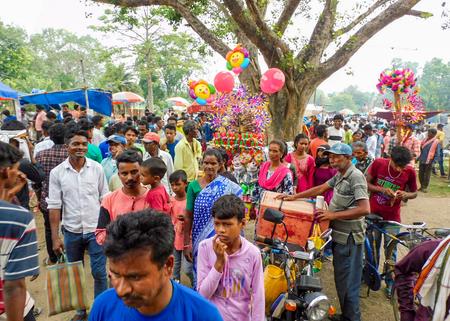
(MENAFN- IANS) New Delhi, June 10 (IANS) Under Prime Minister Narendra Modi's leadership since 2014, India has witnessed the emergence of a newly expanded middle class driven by economic reforms, digitalisation and infrastructure development, altering the country's economic landscape while contributing significantly to poverty alleviation.
“In these 12 years of the NDA government, the rise of more than 25 crore people out of poverty line illustrates the fact that our policies are correct, our direction is right. This success instils confidence in the people in India that his struggle will end someday, that he too will achieve his dreams one day,” stated the Prime Minister on Wednesday while addressing National Democratic Alliance (NDA) leaders.
Chief Ministers, alliance partners and senior leaders had convened in New Delhi at the conclave marking the completion of 12 years of his government.
In less than one year under Modi 3.0, India lifted 171 million people out of extreme poverty, one of the most remarkable achievements of the past decade. The World Bank acknowledged India's decisive fight against poverty in its Spring 2025 Poverty and Equity Brief.
According to the report, the proportion of people living on less than USD 2.15 a day, which is the international benchmark for extreme poverty, fell sharply from 16.2 per cent in 2011-12 to just 2.3 per cent in 2022-23.
The Poverty and Equity Briefs (PEBs) from the World Bank highlight trends in poverty, shared prosperity and inequality for over 100 developing countries. Development indicators cover various aspects of poverty, including poverty rates and the total number of poor, using both national poverty lines and international benchmarks.
According to an earlier Niti Ayog report, Multidimensional Poverty Index (MPI) estimates highlighted a near-halving of its value in India and a decline in the proportion of the population in multidimensional poverty from 24.85 per cent to 14.96 per cent between 2015-16 and 2019-21.
This reduction of 9.89 percentage points in multidimensional poverty indicates that, at the projected 2021 population, about 13.55 crore people escaped poverty between 2015-16 and 2019-21, said the report.
“It is a major contribution towards achieving SDG (Sustainable Development Goals) target 1.2 that aims to reduce at least by half the proportion of men, women and children of all ages living in poverty in all its dimensions according to national definitions,” it noted.
“This indicates that India is well on course to achieve the SDG target 1.2, much ahead of 2030. At the same time, the Intensity of Poverty, which measures the average deprivation among the people living in multidimensional poverty, also reduced from 47.14 per cent to 44.39 per cent,” the report added.
This growth has been enabled by what is called the Modi government's“four pillars”. These are targeted policy interventions across taxation, healthcare, education and infrastructure that have alleviated financial burdens and unlocked unprecedented opportunities.
The efficient tax system has incubated a healthy, upwardly mobile middle class. Over these years, the Union government has taken initiatives to make a real difference in the lives of the middle class. From lowering income tax rates to simplifying returns, every move has been aligned with the core idea of letting citizens keep more of what they earn.
From fiscal 2013-14 to 2024-25, the number of income-tax payers rose from 5.26 crore to 12.13 crore. This more than doubling in just 11 years reflects one of the largest structural expansions of India's middle class, with citizens voluntarily paying taxes as their economic situation improves.
The middle class now serves as India's economic backbone, poised to drive innovation, consumption and equitable growth toward the vision of a USD 10 trillion economy.
With taxpayers doubling and poverty dropping to historic lows, the Modi regime has successfully created a new economic reality where middle-class expansion and poverty alleviation work as complementary forces rather than competing priorities.
This transformation positions India's middle class as a force in the global economy, representing one of the most significant demographic and economic shifts of the 21st century.
Thus, the Prime Minister stressed,“We have to ensure that those who were poor till the other day, those who are today's new middle class, should not be let to slide back ever. So as the representatives of the people, we have to work day and night and work hard.”

Legal Disclaimer:
MENAFN provides the
information “as is” without warranty of any kind. We do not accept
any responsibility or liability for the accuracy, content, images,
videos, licenses, completeness, legality, or reliability of the information
contained in this article. If you have any complaints or copyright
issues related to this article, kindly contact the provider above.
Most popular stories
Market Research

More Story



Comments
No comment